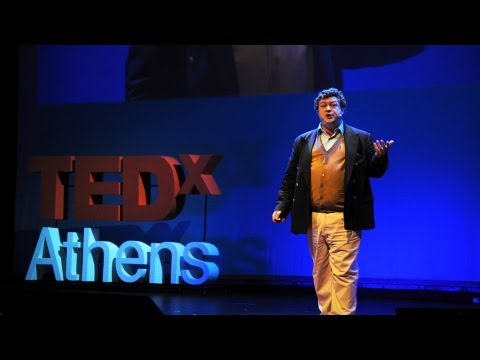
Rory Sutherland: Perspective is everything
The Power of Reframing: Happiness and Control
Introduction to Electronic Cigarettes and Social Dynamics
- The speaker introduces electronic cigarettes, expressing personal happiness derived from them since their invention.
- Reflects on the social dynamics at drinks parties post-smoking ban, highlighting the fatigue of constant conversation.
The Philosophy of Staring Out the Window
- Discusses how smoking changes perceptions; staring out a window with a cigarette is seen as philosophical, while without it, one appears antisocial.
- Emphasizes the importance of reframing experiences to enhance personal happiness.
Happiness in Different Life Stages
- Contrasts the happiness levels between pensioners and young unemployed individuals despite similar life circumstances.
- Notes that upper-middle-class individuals rebrand unemployment positively, showcasing how perception influences emotional responses.
Control Over Circumstances and Its Impact on Happiness
- Introduces an experiment involving dogs to illustrate how control over one's situation affects mental well-being.
- Highlights that perceived control can lead to contentment even in adverse situations, contrasting with feelings of depression when control is absent.
Taxation Perception and Psychological Value
- Proposes a discussion about not just taxation levels but also the perceived control over tax money spent.
- Explores how framing financial contributions (like taxes vs. donations) alters emotional reactions towards them.
The Need for Psychological Models in Economics
- Critiques existing economic models for lacking psychological frameworks alongside technical solutions.
- Suggests that insights into human psychology are often disjointed without a cohesive model compared to robust engineering principles.
Practical Examples of Enhancing Experience Over Efficiency
Understanding Psychological Solutions in Problem-Solving
The Imbalance Between Creative and Rational Approaches
- There exists an asymmetry in how we treat creative, emotionally driven ideas compared to rational, numerical ones. Creative individuals often need to seek approval from more rational thinkers through cost-benefit analyses and feasibility studies.
- Conversely, those with established frameworks (like economics or engineering) tend to believe that logic alone suffices without considering alternative perspectives or seeking input from creative thinkers.
Prioritizing Psychological Insights Over Mechanistic Ideas
- A notable example of a psychological solution is the implementation of dot matrix display boards on London Underground platforms, which improved passenger satisfaction by reducing uncertainty during waits rather than increasing train frequency.
- In Korea, countdown timers for red traffic lights have been shown to decrease road rage and impatience by providing clear wait times, demonstrating the importance of managing expectations during delays.
The Impact of Perception on Decision-Making
- While countdown timers for red lights reduce accidents, applying the same principle to green lights can lead to increased accidents due to drivers rushing when they see limited time left.
- Effective problem-solving should consider psychological factors alongside mechanistic solutions. Successful businesses like Google leverage psychological insights—such as goal dilution—to enhance user perception and effectiveness.
Utilizing Psychology for Behavioral Change
- An innovative approach suggested for improving antibiotic adherence involves "chunking" medication into groups (e.g., 18 white pills followed by 6 blue ones), making it easier for patients to reach milestones in their treatment.
- Economics often overlooks that the meaning behind costs (like waiting times at toll booths or airport security lines) significantly influences people's willingness to pay for expedited services based on personal circumstances.
Reframing Economic Solutions for Public Acceptance
- Introducing express lanes at toll crossings could be economically efficient but may face public backlash if perceived as exploiting delays.
Understanding Value and Perception in Economics
The Role of Money and Perceived Value
- The speaker discusses how the pain associated with spending money is influenced not just by the amount but also by perceptions of where that money goes, suggesting this understanding could transform tax policy and public services.
- Ludwig Von Mises, an Austrian School economist, is highlighted as a key figure whose ideas intertwine economics with psychology, emphasizing that economics should be viewed through the lens of human choice and decision-making.
Praxeology: A New Perspective on Economics
- Praxeology is introduced as the study of human action and choice, which Von Mises argues should precede traditional economic studies.
- Von Mises posits that economics is essentially a subset of psychology, challenging conventional views that prioritize economic theory over behavioral insights.
Marketing's True Value According to Von Mises
- The speaker references Von Mises' critique of traditional economic thought regarding value creation; he argues against distinguishing between 'real' value from production versus 'dubious' value from marketing.
- An analogy involving restaurant operations illustrates that both cooking food and maintaining a clean environment contribute equally to perceived value.
Importance of Context in Value Creation
- A thought experiment about a Michelin-starred restaurant emphasizes that improving customer experience (like cleanliness) can be more valuable than enhancing the product itself.
- The UK postal service example demonstrates how misperceptions about service quality can lead organizations to focus on improving reality rather than addressing public perception first.
Perception vs. Reality in Consumer Experience
- The speaker suggests reframing perceptions can significantly alter perceived value; for instance, highlighting superior performance compared to competitors can enhance satisfaction.
Turn any video into a summary like this
YouTube links, meetings, lectures. With transcripts, search, and chat.