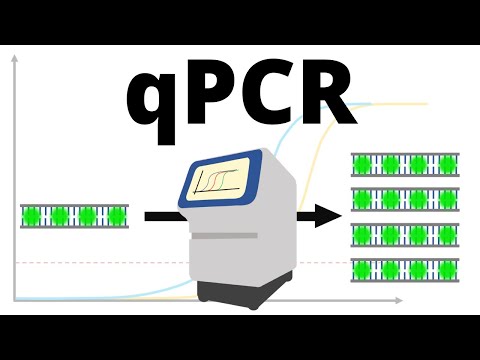
qPCR (real-time PCR) protocol explained
Understanding qPCR: A Key Technique in Viral Detection
Overview of qPCR
- Quantitative PCR (qPCR), also known as real-time PCR, is a technique used to quantitatively assess the presence of specific gene sequences in samples. It is currently the gold standard for testing viral infections like COVID-19.
- The process begins with collecting a swab sample that may contain viral RNA, which is then extracted and reverse transcribed into DNA for analysis.
Mechanism of qPCR
- Unlike conventional PCR, where DNA amplification is detected post-reaction, qPCR allows for real-time monitoring of the amplification process using fluorescent reporters.
- The cycle threshold (Ct value) indicates when the amplified product's fluorescence surpasses background levels, marking sufficient accumulation for detection.
Assay Methods in qPCR
SYBR Green Assay
- In the SYBR Green assay, an intercalating dye binds to double-stranded DNA. Fluorescence increases as more DNA is synthesized during each cycle.
TaqMan Assay
- The TaqMan method utilizes specific probes that bind to target sequences. Upon synthesis of complementary DNA strands, these probes are cleaved, releasing a fluorescent signal detectable after each cycle.
Analysis and Interpretation
- During denaturation in both assays, primers bind to their complementary sequences while fluorescent signals are monitored throughout amplification cycles.
- The Taq polymerase enzyme has 5-prime exonuclease activity that degrades the probe during amplification, leading to increased fluorescence as products accumulate.
Applications and Implications
- Gene expression analysis can compare multiple genes by assessing Ct values; lower Ct values indicate higher concentrations of target DNA.
- qPCR has diverse applications including diagnostics for pathogen detection and gene expression studies.