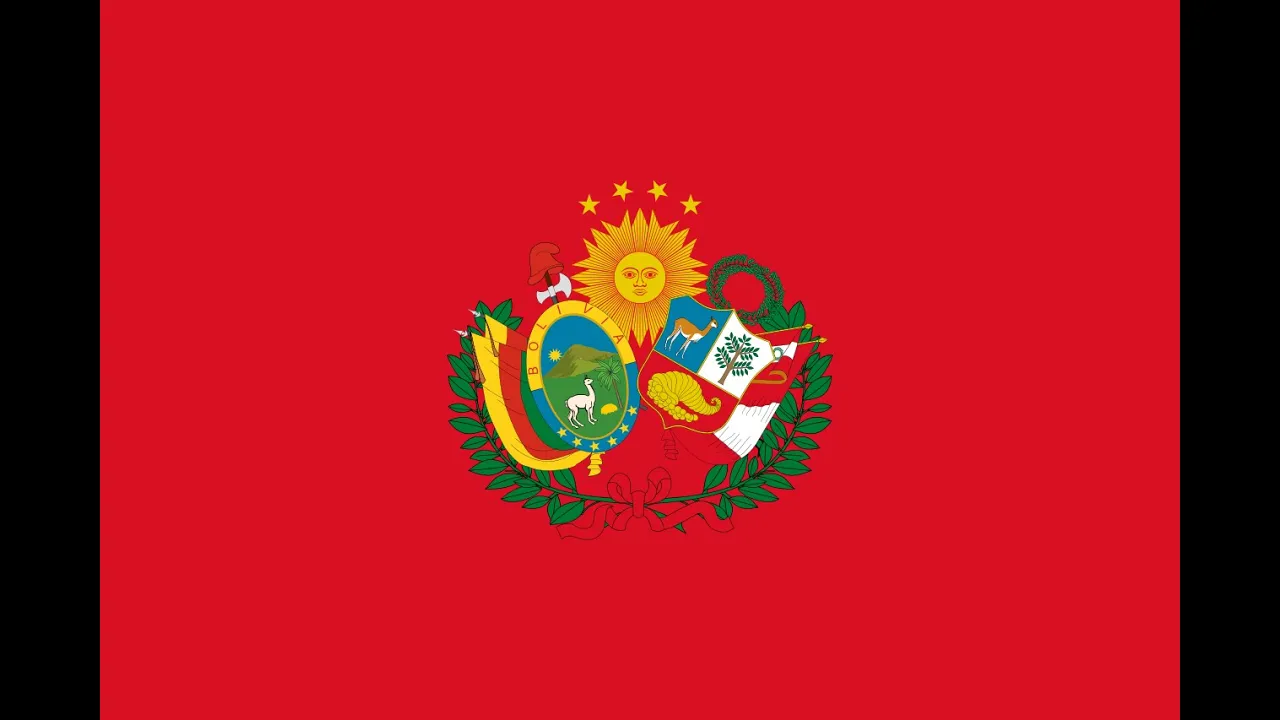
Confederación Perú Bolivia Parte 1, Historia Peruana
New Section
The section introduces the political project of the Peru-Bolivian Confederation between 1835 and 1839, highlighting the union of Peru and Bolivia to form a large country comparable in size to Brazil.
Origins of the Peru-Bolivian Confederation
- Discusses the historical, cultural, and geographical origins of the confederation in the context of South America in the 1830s.
- Mentions key military leaders like José Orbegozo, Felipe Santiago Salaverry, Agustín Gamarra, Andrés de Santa Cruz, and Francisca Subiaga (Mariscal).
- Describes the common pre-Hispanic history between Peru and Bolivia through examples like the Tiahuanaco culture and their geographical connection in the Andean region.
Historical Context: Colonial Period
This part delves into the colonial period's impact on Bolivia within the Viceroyalty of Peru.
Colonial Influence on Bolivia
- Notes that during colonial times, Bolivia was part of the Viceroyalty of Peru known as Charcas Audiencia.
- Explains how reforms by Spanish kings led to Bolivia being transferred from the Viceroyalty of Peru to become part of Rio de la Plata Viceroyalty (Argentina).
Independence Movements and Political Shifts
Explores post-independence developments leading to political shifts in both Peru and Bolivia.
Post-Independence Dynamics
- Details how Simon Bolivar supported Charcas' independence, leading to its formation as a separate nation named Bolivia.
- Highlights Bolivia's separation from Peru after years of unity post-independence.
Confederation Projects and Regional Politics
Examines failed confederation projects amidst regional politics in South America.
Confederation Projects
- Discusses Simon Bolivar's "Confederation of the Andes" idea involving countries like Ecuador, Venezuela, Colombia, Panama, Bolivia, and Peru for power balance against external influences.
- Notes that strong nationalistic sentiments hindered these confederation efforts due to regionalism.
Geographical Unity Amidst Political Divisions
Explores geographical unity despite political divisions between Upper and Lower Peru.
Geographical Significance
- Emphasizes commercial ties between Upper and Lower Peru despite political separations.
Costoso el traslado de mercaderías hacia ellos
The discussion delves into the significance of Arica for Bolivia in its early years of independence and the governance by military caudillos in Spanish American countries.
Significance of Arica for Bolivia
- Arica was crucial for Bolivia in its initial independent years.
- Military caudillos governed many Spanish American countries post-independence.
- Caudillos varied in their abilities to execute political projects, some focused on governance while others sought military confrontation.
- Figures like Agustín Gamarra, Felipe Santiago Salaverry, José de Orbegoso, and Andrés de Santa Cruz played significant roles in Peru's history post-independence.
Influence of Bolívar and Political Projects
This section explores the influence of Simón Bolívar's political ideas on figures like Andrés de Santa Cruz and the concept of creating a large Andean state.
Bolívar's Influence
- Bolívar's idea to create a large Andean state influenced figures like Santacruz.
- Despite the dissolution of Gran Colombia, the notion of forming a large Hispanic American state resonated with followers like Santa Cruz.
- Bolívar recognized Santacruz and La Mar as capable leaders for governing Peru.
Caudillos: Administrators vs. Strategists
Contrasting the administrative skills and strategic prowess of key caudillos such as Andrés de Santa Cruz and Agustín Gamarra.
Caudillo Characteristics
- Santa Cruz was noted for his administrative abilities rather than exceptional battlefield strategy.
- Santa Cruz played a pivotal role in establishing the Peruvian-Bolivian Confederation.
- Agustín Gamarra, another prominent caudillo, had conflicts with Bolívar and Sucre but aimed to annex Bolivia to Peru.
The Exceptional Life of Francisca Subiaga
Highlighting the extraordinary life and political involvement of Francisca Subiaga amidst male-dominated caudillo politics.
Francisca Subiaga: "La Mariscala"
- Francisca Subiaga defied societal norms by actively participating in politics alongside her husband Agustín Gamarra.
- Known as "La Mariscala," she led insurrections and even assumed leadership roles during political upheavals.
New Section
This section discusses the political landscape in Peru before the Peruvian-Bolivian Confederation, highlighting the challenges faced by the young republic due to internal conflicts and power struggles.
Gamarra's Conflict with Orbegoso
- In the years leading up to the Peruvian-Bolivian Confederation, Peru was plagued by anarchy and continuous civil wars among caudillos, hindering political and economic stability.
- Gamarra, at odds with President Orbegoso, sought reconciliation through the "Abrazo de Makinwa" but peace remained elusive.
- Gamarra negotiated with Bolivian President Santa Cruz for a potential unified project between Peru and Bolivia, aiming to remove Orbegoso from power.
New Section
This segment introduces General Felipe Santiago Salaverry as a key figure in the political turmoil of 1835 in Peru.
Emergence of Salaverry
- Salaverry emerges as a young and ambitious general without a clear political agenda beyond engaging in conflicts with other Peruvian military figures.
- In 1835, Salaverry leads a rebellion against President Orbegoso, taking advantage of Orbegoso's absence from Lima.
- Feeling betrayed by Santa Cruz's negotiations with Orbegoso, Gamarra joins forces with Salaverry at Fortaleza del Real Felipe in Callao.
New Section
The focus shifts to Salaverry's rise to power and his leadership style during his brief presidency.
Salaverry's Presidency
- At just 30 years old, Salaverry becomes the youngest president in Peruvian history after proclaiming himself as the supreme leader following his rebellion.
- Despite bold measures such as imposing death penalties for corrupt officials and disarming cannons for profit, Salaverry faces challenges including accusations against Orbegozo regarding Bolivian troop presence in Peru.
New Section
Tensions escalate as Bolivian troops under Santa Cruz collaborate with Orbegozo against forces led by Gamarra and Salaverry.
Escalating Conflicts
- Bolivian troops support Orbegozo against Salaverry's government efforts to modernize administration and address economic crises.
Salaverry vs. Santa Cruz: Political Rivalry in Peru
The rivalry between Salaverry and Santa Cruz, two Peruvian leaders with contrasting characteristics and political agendas, unfolds amidst a backdrop of territorial defense and strategic maneuvers.
Salaverry vs. Santa Cruz
- Salaverry and Santa Cruz were prominent figures in Peru, with distinct traits - Salaverry being impetuous and young, while Santa Cruz was mature and strategic.
- Salaverry's impulsive nature led him to declare a ruthless war against Santa Cruz, Bolivians, and Peruvian collaborators, offering rewards for killing Bolivians.
- Despite Salaverry's controversial actions, he garnered support in northern Peru as a defender against foreign invasion by Santa Cruz.
- Racial differences also played a role in the rivalry; Salaverry was white while Santa Cruz was mestizo, leading to racist attacks from writers like Felipe Pardo y Aliaga.
Felipe Pardo y Aliaga's Perspective
- Pardo y Aliaga's writings reflected disdain towards Santacruz due to racial biases against mestizos like him.
- Pardo y Aliaga used his pen as a weapon against Santacruz, highlighting class divides and racial prejudices prevalent in Lima society.
Lima's Role and Sentiments
- Lima's elite viewed Santacruz negatively due to his plans for federalism that threatened the city's status; Santacruz reciprocated this sentiment by belittling Lima.
- Santacruz referred to Lima as the "Babylon of America," showcasing his disregard for the capital city in favor of southern Peruvian regions.
Military Strategies and Social Unrest
The military strategies employed by Salaverry and the social unrest within Peru during this period shaped the outcome of their conflict.
Military Maneuvers
- Salaverry strategically cut off communication between Santa Cruz and Bolivia by controlling maritime routes and advancing towards Arequipa.
- Arequipa's ambivalence towards joining Bolivia added complexity to the conflict as social unrest fueled by bandits plagued Lima.
Banditry in Lima
- Bandits led by figures like Luis Escobar terrorized Lima during this time of turmoil, exploiting the absence of effective law enforcement due to ongoing wars.
- Ricardo Palma immortalized bandit leader Pancho Fierro through literature, depicting his audacious act of sitting on the presidential chair during turbulent times.
The Fall of Salaverry
The downfall of Salaverry at the hands of Santa Cruz marked a turning point in Peruvian history with significant repercussions for both leaders.
Defeat at Paucarpata
- Despite initial victories, Salaverry faced defeat at Paucarpata on February 7th, 1836, leading to his capture by General Guillermo Miller.
Detailed Summary of the Transcript
The transcript discusses the formation of the Perú-Bolivian Confederation under Santa Cruz's leadership, exploring the political landscape and conflicts that arose during this period.
Santa Cruz's Threat Perception
- Santa Cruz viewed General La Confederación as a significant threat to stability, potentially disrupting any projects and leading to perpetual war.
Execution of General La Confederación
- Santa Cruz ordered the execution of General La Confederación, possibly perceiving him as a destabilizing element in politics. It was uncommon to execute losing generals, sparking debates.
Formation of the Perú-Bolivian Confederation
- In October 1836, the official establishment of the Perú-Bolivian Confederation took place under Santa Cruz's leadership. This confederation faced internal conflicts and wars that later caused issues.
Challenges Faced by the Confederation
- The Perú-Bolivian Confederation encountered bloody wars that led to ongoing problems. Subsequent discussions will delve into its organization, economic policies, trade relations, and reactions from Argentina and Chile.
Future Discussions
- Future discussions will cover topics such as how the Perú-Bolivian Confederation was structured, its symbols, economic policies emphasizing free trade, its relationship with Britain as a hegemonic power at that time, and reactions from Argentina and Chile.