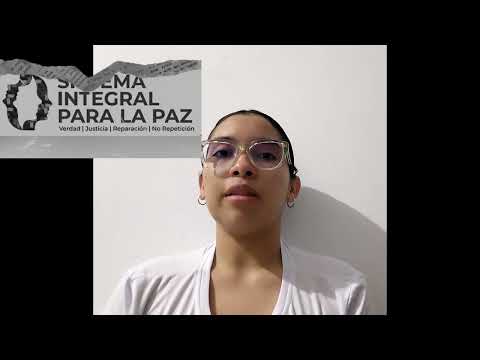
Colombia: Memoria, Paz y Futuro por Mariana Caraballo.
Colombia: Memoria, Paz y Futuro
Introducción al Conflicto Colombiano
- Mariana Caraballo introduces the topic of Colombia's history, challenges, and hopes for peace amidst decades of conflict. She emphasizes the importance of understanding the origins of war and the role of transitional justice in building lasting peace.
Causas del Conflicto
- The Colombian conflict is one of Latin America's longest-standing issues, lasting over 50 years due to deep-rooted causes such as land inequality and social exclusion. These factors have significantly contributed to ongoing violence.
- Land concentration in a few hands and weak institutions led to the emergence of groups like FARC (1964) and ELN with differing ideologies, alongside paramilitary groups linked to economic power and drug trafficking. This situation has exacerbated inequality and weakened state authority.
Clasificación Jurídica del Conflicto
- The conflict is classified as a non-international armed conflict under Protocol II of the Geneva Conventions (1977), which aims to protect civilians who are injured or deprived of liberty during hostilities.
Intentos de Paz y Acuerdos
- Multiple peace attempts began in the 1980s, notably under President Betancur in 1982, which opened political participation avenues. In the early 2000s, demobilization efforts for paramilitaries faced criticism for lacking truth and reparations. The final agreement with FARC was signed in Havana in 2016.
- This agreement addressed structural causes such as rural reform, illicit crop substitution, transitional justice, and transforming FARC into a political party—marking a historic step despite significant implementation challenges ahead. Society remains divided with ongoing actions from ELN and new armed groups; thus, peace is viewed as an ongoing process rather than a final outcome.
Sistema Integral de Verdad y Justicia
- To combat impunity and ensure memory retention, an integral system was established focusing on five key areas:
- Comisión de la Verdad: Clarifies events while giving victims a voice.
- Unidad de Búsqueda: Focuses on locating missing persons.
- Medidas de Reparación Integral: Aims at comprehensive reparations.
- Acciones para No Repetir: Preventive measures against recurrence.
- Jurisdicción Especial para la Paz (JEP): Prioritizes truth-telling over punitive measures; those who cooperate face reparative sanctions instead of imprisonment aligning with international humanitarian law principles that mandate investigation without statute limitations. Thus justice becomes part of peace rather than an obstacle.
Rol de la Universidad en el Proceso de Paz
- As students at Universidad del Atlántico, there’s a call to action regarding their role within this context:
- Researching conflict causes while proposing region-specific solutions.
- Educating on memory, tolerance, and democratic values to cultivate change agents.
- Extending knowledge into communities to support reparative efforts and strengthen social unity.
The speaker emphasizes that peace must be actively constructed daily through educational initiatives within universities as pivotal spaces for fostering change amid Colombia's challenging journey towards reconciliation marked by both scars from conflict and lessons learned along the way.
Reflexiones Finales sobre Justicia y Solidaridad
- Emphasizing equality, justice, respect as essential needs moving forward; agreements made alongside university-led justice systems represent crucial steps toward healing.
Students embody both memory and future potential—highlighting that true progress relies on truth-telling practices rooted in solidarity among all citizens for sustainable development beyond mere agreements alone. Thank you for your attention!