Why great architecture should tell a story | Ole Scheeren
Form Follows Fiction
In this section, the speaker challenges the traditional architectural doctrine of "form follows function" and introduces the concept of "form follows fiction," emphasizing the importance of architecture as a space for stories and experiences.
Rethinking Architecture
- Bernard Tschumi suggests that architecture should follow fiction, viewing buildings as spaces for stories and experiences.
- Architecture is portrayed as a means to create different living, working, cultural, and media spaces that impact people's lives.
Narrative Hybrids in Architecture
The discussion delves into the idea of narrative hybrids in architecture, where multiple stories unfold simultaneously within buildings, creating complex systems of relationships.
Architectural Narratives
- Buildings are seen as organizational structures that generate relationships and narratives through functional and experiential design.
- Introduction of "narrative hybrids" - structures embodying multiple simultaneous stories within architectural designs.
Designing China's National Broadcaster Headquarters
The speaker shares insights into designing China's national broadcaster headquarters with a focus on challenging traditional hierarchical structures in architecture.
Innovative Design Approach
- Designing a broadcasting center focused on collaboration rather than hierarchy in Beijing's vertical landscape.
- Creating interconnected activities within the building to promote exchange and collaboration among users.
Architectural Impact and Community Engagement
The impact of large-scale architectural projects on communities is discussed, emphasizing the importance of understanding user experiences and community dynamics.
Community-Centric Design
- Understanding the significance of community inhabiting large buildings through character-driven design approaches.
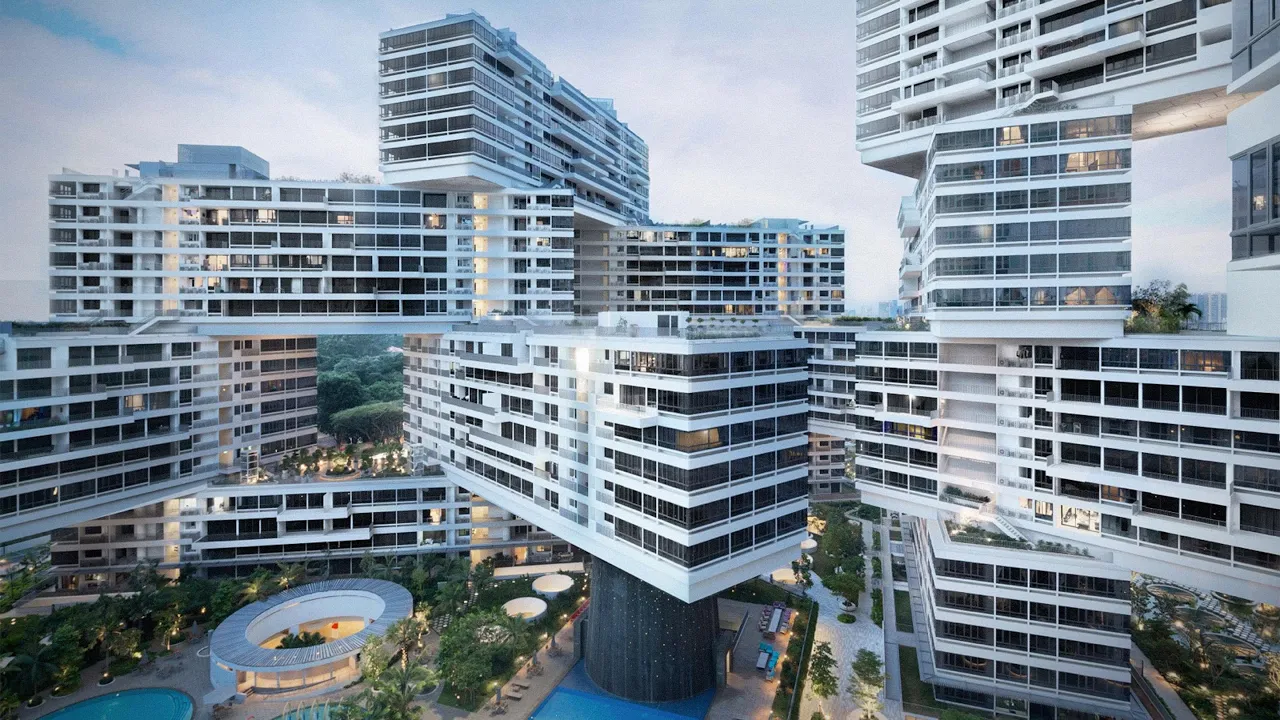
The Interlace: Redefining Urban Living
In this section, the speaker discusses the concept and design process behind "The Interlace" residential development in Singapore, emphasizing community living and sustainable architecture.
Design Philosophy and Concept
- The speaker challenges the traditional tower typology to promote connectedness over isolation in urban living.
- Proposes toppling towers and stacking them horizontally to create a communal environment with shared spaces.
- Introduces "The Interlace" project featuring a hexagonal grid structure for communal courtyards fostering human connections.
Sustainability and Green Spaces
- Emphasizes interconnection between human beings and spaces through thoughtful design elements.
- Highlights the abundance of green spaces within the development, exceeding nature presence without construction.
- Details sustainability efforts including daylight optimization, energy-efficient glazing, and natural shading for usable outdoor areas.
Innovative Office Design for Digital Media Company
This part delves into designing an office space for a German media company transitioning from print to digital media, focusing on fostering collaboration and collective experiences.
Redefining Office Spaces
- Explores why physical offices are still relevant in a digital age, emphasizing the importance of collective experiences.
- Discusses creating a space that embodies the digital identity of the company while promoting collaboration among employees.
Cultural Synergies in London's Architectural Landscape
The speaker explores designing a cultural hub in London's Olympic Park to facilitate interactions between diverse institutions and domains.
Cultural Integration
- Introduces the concept of a "giant culture machine" to orchestrate interactions among different domains within the architectural landscape.
New Section
In this section, the speaker discusses the design of a building adjacent to the Aquatics Centre and opposite the Olympic Stadium. The focus is on creating a complex system where institutional entities maintain their identity within cantilevering volumes.
Design Philosophy and Comparison with Centre Pompidou
- The building's design features cantilevering volumes that engage public space and courtyards to animate the public inside.
- The aim was to create a complex system allowing institutional entities to retain their identity without being subsumed in a singular volume.
- A scale comparison with the Centre Pompidou in Paris highlights both the enormous scale and potential of the project while emphasizing differences in design philosophy.
New Section
This part delves into creating a heterogeneous structure where different entities can interact without losing their individual identities. The speaker emphasizes crafting an organizational structure that accommodates multiple narratives.
Organizational Structure for Multiple Narratives
- Emphasis on creating a multiplicity of a heterogeneous structure enabling various entities to interact while maintaining their identities.
- The goal is to allow for multiple narratives to be scripted, catering to educational aspects, visual arts, dance, and public engagement through diverse trajectories.
New Section
Here, the discussion shifts towards a smaller-scale project involving a floating cinema in Thailand's ocean. The speaker shares insights on designing a modular floating platform for film screenings.
Floating Cinema Project in Thailand
- Introduction of a small modular floating platform designed for film screenings in Thailand's ocean as part of a film festival initiative.
- Collaboration with local communities using recycled materials resulted in creating a fantastical floating platform offering unique cinematic experiences.
New Section
This segment concludes by highlighting an immersive experience at the floating cinema where audience engagement merges with movie narratives like "Alice in Wonderland" from the British film archive.
Immersive Cinematic Experience
- Description of how audience experiences merged with movie narratives while watching films like "Alice in Wonderland" on the floating platform.
Transforme qualquer vídeo em um resumo como este
Vídeos do YouTube, reuniões, aulas. Com transcrição, busca e chat.