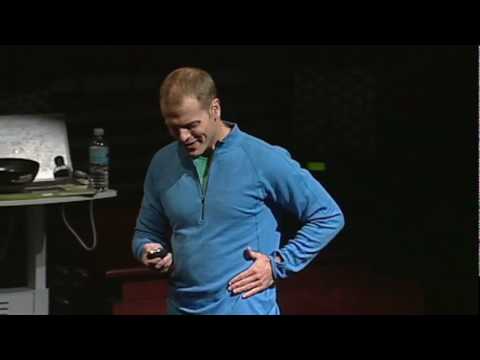
Smash fear, learn anything | Tim Ferriss
Tim Ferriss' Childhood and Fear of Swimming
In this section, Tim Ferriss shares anecdotes from his childhood and how he developed a fear of swimming.
Tim's Childhood Antics
- As a child, Tim had a routine of jumping on the couch, ripping off the cushions, screaming like the Incredible Hulk, and running away.
- He continued this routine for some time until he went to summer camp at the age of seven.
Traumatic Experience at Summer Camp
- At summer camp, there was a pond with floating docks where campers could jump into the deep end.
- Tim had buoyancy problems due to being born premature and having a collapsed lung.
- One day, while diving through an inner tube in the water, another camper grabbed his ankles and held him underwater.
- A camp counselor eventually intervened, but this experience left Tim terrified of swimming.
The Ongoing Fear of Swimming
- Tim admits that his inability to swim has been one of his greatest humiliations and embarrassments.
- Despite trying various methods and even taking lessons with Olympians, he couldn't overcome his fear.
Overcoming the Fear
- At age 31, Tim decided to re-examine swimming and challenge his fear.
- He spent two weeks focusing on swimming techniques and questioning common assumptions about swimming.
- Eventually, he was able to swim one kilometer in open water and felt better than ever before.
Becoming "The Incredible Hulk"
In this section, Tim shares how he wants everyone to feel empowered like "The Incredible Hulk" by becoming excellent long-distance swimmers, world-class language learners, or tango champions.
Empowering Others
- Tim wants everyone listening to feel capable of achieving greatness in different areas of their lives.
- Specifically mentions becoming excellent long-distance swimmers, world-class language learners, and tango champions.
Tim's Art of Conquering Fears
- Tim considers his art to be deconstructing things that scare him the most.
- He finds joy in overcoming his fears and wants to share that with others.
First Principles in Swimming
In this section, Tim discusses the importance of questioning assumptions and false constructs when it comes to swimming.
Challenging Assumptions
- Tim believes that many false constructs and untested assumptions hold people back from achieving their best results in life.
- He shares an example of a friend challenging him to complete a one kilometer open water race if he goes a year without any stimulants.
Seeking Expertise
- Tim sought out triathletes because he found that lifelong swimmers often couldn't effectively teach what they did.
- Tried various swimming tools like kickboards and hand paddles but didn't find success until discovering Total Immersion Swimming by Terry Laughlin.
New Rules of Swimming
- Propulsion is not the main problem in swimming; hydrodynamics is.
- Instead of focusing on kicking harder, it's important to maintain a horizontal body position and allow the lower body to draft behind the upper body.
- Swim by rotating from streamlined right to streamlined left instead of swimming on your stomach.
Biomechanics and Streamlining
In this section, Tim explains the importance of biomechanics in swimming and how streamlining can improve performance.
Hydrodynamics Over Propulsion
- Kicking harder doesn't solve the problem as only about three percent of energy expenditure transfers into forward motion for the average swimmer.
- The focus should be on maintaining a horizontal body position rather than kicking harder.
Streamlined Body Position
- The body is denser than water, so swimming on top of the water is not efficient.
- Instead, rotate from streamlined right to streamlined left while maintaining a fuselage position as long as possible.
Terry Laughlin's Technique
- Terry Laughlin's technique involves extending the arm below the head and far in front to keep the entire body underwater.
- Strategic water pressure helps raise the legs up, especially for individuals with lower body fat.
- Use a small flick of the leg to rotate the hips and reach the opposite side.
Breathing Techniques
In this section, Tim addresses breathing techniques while swimming.
Common Problem with Breathing
- Breathing can be challenging for many swimmers.
- Tim acknowledges that it is a problem that needs to be addressed.
The transcript ends abruptly after this point.
[t=0:06:44s] Learning Spanish and Japanese
The speaker shares their experience of learning Spanish and Japanese in school. They initially struggled with Spanish but later chose to learn Japanese. They had the opportunity to go to Japan, where they faced some language mishaps.
Learning Spanish and Japanese
- The speaker suffered through learning Spanish in junior high and high school but only knew basic phrases.
- They decided to learn Japanese because most of their friends were taking it.
- After six months of studying Japanese, they went to Japan for an exchange program.
- The speaker mistakenly asked their host mother to "rape" them instead of asking her to wake them up at 8 a.m., causing confusion.
- At school, they received a piece of paper written in Kanji, which they couldn't understand.
- They realized that the Japanese classes were not specifically for teaching the language but rather part of the regular curriculum for Japanese students.
[t=0:08:53s] Finding the Joyo Kanji
The speaker shares how they found a valuable resource called Joyo Kanji that helped them excel in learning Japanese. This material became their key tool for language acquisition.
Discovering Joyo Kanji
- The speaker tried various language methods and resources without success until they found Joyo Kanji.
- Joyo Kanji is a tablet or poster containing 1,945 common-use characters determined by the Ministry of Education in 1981.
- Focusing on this material allowed the speaker to improve rapidly and eventually read newspapers within 11 months.
- They continued using this method for learning multiple languages successfully.
[t=0:09:36s] Doing vs. How You Do It
The speaker emphasizes that what you do is often more important than how you do it when it comes to language learning. They share their approach to grammar and acquiring multiple languages.
The Importance of What You Do
- The speaker emphasizes that effectiveness (doing the right things) is more important than efficiency (doing things well, regardless of importance).
- They developed six sentences to deconstruct grammar with native speakers, allowing them to understand sentence structure and language elements.
- By applying this method, they were able to learn multiple languages without interference.
- The speaker mentions their love for languages and briefly touches on other topics like ballroom dancing and implicit versus explicit learning.
[t=0:10:29s] Ballroom Dancing and Implicit Learning
The speaker shares their experience with ballroom dancing in Argentina. Despite initial challenges, they embraced the opportunity to learn and improve through implicit learning.
Ballroom Dancing Journey
- The speaker initially had poor body coordination due to their muscular build but decided to watch a tango class in Argentina.
- They were unexpectedly asked to participate, causing fear and anxiety.
- Despite a previous negative experience with ballroom dancing in college, they decided to give it another try.
- With the guidance of an instructor, they learned the female role first to understand the sensitivities involved.
- Through interviews with championship-winning dancers and focused training, they improved rapidly within a short deadline for a competition.
Due to the length of this section, it has been divided into two parts.
Three Areas to Compete in Tango
The speaker discusses three areas that can be exploited to compete against experienced tango dancers.
Exploiting Competitive Advantages
- Different types of pivots can be used to gain an edge in tango competitions.
- Variation in tempo is another area that can be leveraged for competition.
- The ability to perform well in a small space is also crucial for competing against seasoned dancers.
Achievements in Tango Competitions
The speaker shares their achievements and experiences in tango competitions.
Notable Achievements
- Reached the semi-finals of the Buenos Aires championships four months after starting.
- Made it to the semi-final at the world championships one month later.
- Set a world record just two weeks after the world championships.
Introduction to Gabriel Misse
The speaker introduces Gabriel Misse, an instructor chosen for the male lead role.
About Gabriel Misse
- Gabriel Misse is known as one of the most elegant dancers of his generation.
- He is recognized for his long steps, tempo changes, and pivots.
First Dance with Alicia and Lead Techniques
The speaker highlights their first dance with Alicia and discusses Gabriel's lead techniques.
Strong Lead and Compatibility
- Gabriel's strong lead made their first dance together successful.
- His lead does not rely on leaning forward but focuses on his shoulder girdle and arm strength.
- This technique allows him to lift and break the woman during certain moves.
Breakdown of Pivots
The speaker explains the breakdown of a specific pivot and mentions the variety of pivots in tango.
Example Pivot: Back Step Pivot
- Demonstrates one type of pivot called the back step pivot.
- Mentions that there are many different types of pivots in tango.
- Has categorized hundreds of hours of footage on various types of pivots.
Fear as an Indicator and Motivator
The speaker discusses fear as a useful indicator and motivator in pursuing goals.
Fear as an Indicator
- Fear can show what actions should be avoided.
- More often, fear indicates exactly what actions should be taken.
Overcoming Fears and Pursuing Dreams
- Applying analytical frameworks and capabilities to old fears can help overcome them.
- Encourages applying these frameworks to pursue big dreams.
- Reflects on personal fears related to educational opportunities and efforts to improve or replace the American public school system.
Efforts in Education Reform
The speaker shares their involvement in deconstructing the American public school system for improvement or replacement.
Involvement in Education Reform
- Spent two years trying to deconstruct the American public school system.
- Conducted experiments with approximately 50,000 students so far.
- Built around half a dozen schools at this point with readers' support.
Turn any video into a summary like this
YouTube links, meetings, lectures. With transcripts, search, and chat.