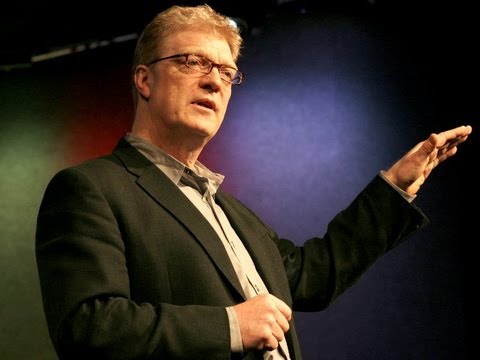
Do schools kill creativity? | Sir Ken Robinson | TED
Introduction and Relevance of Education
The speaker introduces himself and highlights the relevance of education in our lives.
Importance of Education
- The speaker acknowledges the extraordinary evidence of human creativity showcased throughout the conference.
- He emphasizes that we have no idea what the future holds, making education crucial for preparing children for an unpredictable world.
- The speaker shares his personal interest in education and notes that everyone seems to be interested in it as well.
- Working in education may not make one popular at parties, but people are eager to discuss their own experiences with education.
Significance of Creativity
- The speaker believes that creativity is as important as literacy in education and should be given equal importance.
- He mentions that children possess incredible creative abilities, which should not be wasted or suppressed.
- The stories about a child drawing God and another child participating in a Christmas play highlight how children take risks without fear of being wrong.
Importance of Creativity
The speaker continues to emphasize the significance of creativity in education.
Fear of Failure
- As children grow up, they often lose their willingness to take risks and fear being wrong.
- This fear is also prevalent in companies and educational systems, where mistakes are stigmatized.
Diminishing Creativity
- Picasso's quote about every child being an artist resonates with the speaker's belief that creativity diminishes as we grow older.
- Society tends to educate individuals to abandon their creative instincts rather than nurture them.
Conclusion on Creativity and Education
The speaker concludes his talk on creativity and its role in education.
Final Thoughts
- The speaker passionately asserts that our creativity does not increase but rather decreases over time due to the way we are educated.
- He believes that creativity should be valued and fostered in education, just like literacy.
- The speaker ends with a humorous remark about having extra time for his presentation.
The transcript provided is relatively short, so there are only three main sections.
A Reflection on Shakespeare's Childhood
The speaker reflects on the fact that people often forget that Shakespeare had a father and a childhood. They discuss how it is interesting to imagine Shakespeare as a child and how he learned English in someone else's class.
Shakespeare's Childhood
- It is easy to overlook the fact that Shakespeare had a father and a childhood.
- Imagining Shakespeare as a child, learning English in someone else's class, can be intriguing.
Relocating from Stratford to Los Angeles
The speaker shares their experience of moving from Stratford to Los Angeles. They mention their son's reluctance to move due to having a girlfriend in England.
Reluctance to Move
- The speaker's son did not want to move to Los Angeles because he had a girlfriend in England.
- Despite only knowing each other for a month, they celebrated their fourth anniversary together.
- The son expressed his belief that he would never find another girl like Sarah.
Education Systems and the Importance of Dance
The speaker discusses the hierarchy of subjects within education systems worldwide and highlights the lack of emphasis on dance and drama. They argue for the importance of including dance in daily education.
Hierarchy of Subjects
- Mathematics and languages are typically prioritized over humanities and arts in education systems globally.
- Arts such as drama and dance are often given less importance compared to music and visual arts.
- There is no educational system that teaches dance daily with the same dedication as mathematics.
Education Focusing on Mind Over Body
The speaker observes that as children grow up, education tends to focus more on the mind than the body. They highlight the disconnect between the body and education, emphasizing the importance of dance.
Neglecting the Body
- As children grow, education progressively focuses more on their minds rather than their bodies.
- Teachers often prioritize intellectual pursuits over physical activities.
- The speaker believes that dance is important because everyone has a body and can express themselves through movement.
Education System's Goal: Producing University Professors
The speaker reflects on their experience as a university professor and comments on how education systems worldwide seem to aim at producing more university professors. They discuss the peculiar nature of teachers.
Producing University Professors
- Education systems around the world appear to be designed to produce university professors.
- Success in education is often measured by academic achievements and becoming a teacher.
- The speaker acknowledges that while they appreciate university professors, they should not be considered the pinnacle of human achievement.
Teachers Living in Their Heads
The speaker describes teachers as living in their heads, detached from their bodies. They humorously comment on how teachers view their bodies merely as a means to transport their heads to conferences.
Detachment from Their Bodies
- Many teachers tend to live inside their heads, almost literally detaching themselves from their bodies.
- Teachers see their bodies as vehicles for carrying their heads to conferences and events.
- Participating in senior academic conferences reveals evidence of out-of-body experiences when observing mature academics awkwardly dancing at discos.
Industrialization's Influence on Education Hierarchy
The speaker explains that education systems were created during industrialization with an emphasis on useful subjects for work. They argue against this hierarchy and advocate for recognizing diverse talents and abilities.
Industrialization's Influence
- Education systems were established during the industrialization era to meet the demands of the workforce.
- The hierarchy of subjects is based on usefulness for employment, leading to certain interests being discouraged.
- The speaker believes this approach is outdated and fails to recognize diverse talents and abilities.
Academic Aptitude and Misjudging Intelligence
The speaker discusses how academic aptitude has become synonymous with intelligence due to education systems being modeled after universities. They highlight how this misjudges many talented individuals who excel in non-academic areas.
Misjudging Intelligence
- Academic aptitude has come to dominate our perception of intelligence due to education systems mirroring university admissions processes.
- Many highly talented and creative individuals may feel undervalued because their strengths were not valued or even stigmatized in school.
- The speaker argues against continuing down this path, especially considering the increasing number of people graduating worldwide.
Changing Value of Degrees in Today's Job Market
The speaker comments on how degrees have lost their value in today's job market. They provide examples of jobs requiring higher levels of education than necessary, leading to a mismatch between qualifications and job requirements.
Changing Value of Degrees
- In the past, having a degree guaranteed employment, but that is no longer the case.
- Many jobs now require higher levels of education than necessary, creating an oversupply of qualified individuals.
- This shift in job market demands has resulted in people with degrees returning home to play video games instead of finding suitable employment opportunities.
Como pensamos e a interação do cérebro humano
Nesta parte, o palestrante discute como pensamos e como a inteligência é dinâmica. Ele também menciona que o cérebro humano não se divide em compartimentos.
Formas de pensar
- Pensamos auditivamente, cinestesicamente e em termos abstratos.
- A inteligência é dinâmica e interativa no cérebro humano.
Interação das disciplinas na criatividade
- A criatividade muitas vezes surge da interação entre diferentes disciplinas.
- O cérebro é intencionalmente conectado através do corpo caloso, um feixe de filamentos nervosos que conecta os dois lados do cérebro.
Mulheres e multitarefa
- O corpo caloso é mais espesso nas mulheres.
- Isso pode ser uma razão pela qual as mulheres são melhores em multitarefa, de acordo com pesquisas abundantes.
Experiências pessoais sobre inteligência
Nesta parte, o palestrante compartilha suas experiências pessoais relacionadas à inteligência e destaca a diferença entre ele e sua esposa quando se trata de cozinhar.
Multitarefa na cozinha
- O palestrante descreve como sua esposa é capaz de realizar várias tarefas enquanto cozinha.
- Ele brinca sobre sua própria abordagem mais focada ao cozinhar.
Piada sobre comunicação
- O palestrante menciona uma piada sobre um homem falando na floresta sem nenhuma mulher ouvindo.
- Essa piada destaca a importância da comunicação e do entendimento mútuo.
A distinção da inteligência
Nesta parte, o palestrante fala sobre a distinção da inteligência e compartilha sua motivação para escrever um livro baseado em entrevistas sobre como as pessoas descobrem seus talentos.
Livro sobre talentos
- O palestrante está escrevendo um livro chamado "Epifania" baseado em entrevistas sobre como as pessoas descobrem seus talentos.
- Ele está fascinado com as histórias de como as pessoas chegaram onde estão.
Exemplo de Gillian Lynne
- O palestrante menciona uma mulher chamada Gillian Lynne, uma coreógrafa conhecida por seu trabalho em musicais famosos.
- Ele compartilha a história de como ela foi diagnosticada erroneamente na escola, mas acabou se tornando uma dançarina de sucesso.
Importância de repensar a educação
Nesta parte, o palestrante destaca a importância de repensar os princípios fundamentais da educação para explorar plenamente a capacidade humana.
História inspiradora de Gillian Lynne
- Gillian Lynne superou um diagnóstico errôneo na escola e seguiu sua paixão pela dança.
- Ela teve uma carreira bem-sucedida como dançarina e coreógrafa, trazendo alegria para milhões de pessoas.
Repensando a educação
- O palestrante argumenta que nosso sistema educacional precisa adotar uma nova concepção de ecologia humana.
- Devemos reconstituir nossa concepção da riqueza da capacidade humana e repensar a educação de nossas crianças.
Conclusão sobre a importância da ecologia humana
Nesta parte, o palestrante conclui destacando a importância de adotar uma nova concepção de ecologia humana para garantir um futuro melhor.
Adoção de uma nova concepção
- O palestrante cita Al Gore e Rachel Carson como exemplos de revoluções desencadeadas pela adoção de novas concepções.
- Ele acredita que nossa única esperança para o futuro é adotar uma nova concepção de ecologia humana.
Repensando os princípios educacionais
- O sistema educacional atual não serve mais e precisamos repensar os princípios fundamentais da educação.
- Uma frase inspiradora de Jonas Salk destaca a necessidade dessa mudança.
A Importância da Capacidade Criativa e da Educação das Crianças
Neste trecho, o palestrante discute a importância de reconhecer e valorizar nossa capacidade criativa, assim como educar as crianças para um futuro promissor.
Reconhecendo a Capacidade Criativa e Valorizando as Crianças
- A única maneira de reconhecer nossa capacidade criativa é encará-la como uma riqueza.
- Devemos valorizar nossas crianças como representantes da esperança.
- Nosso papel é educá-las integralmente, preparando-as para o futuro.
O Futuro Visto pelas Crianças
- Embora possamos não ver esse futuro, as crianças irão vivenciá-lo.
- Nosso trabalho é ajudá-las a enfrentar os desafios que encontrarão.
Transforme qualquer vídeo em um resumo como este
Vídeos do YouTube, reuniões, aulas. Com transcrição, busca e chat.