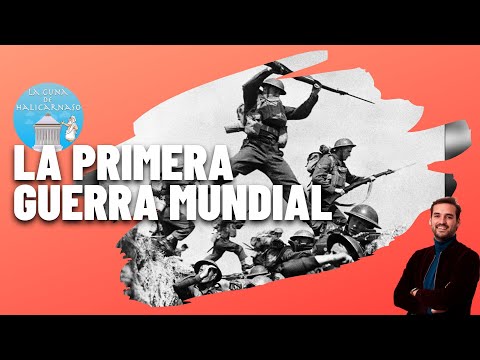
LA PRIMERA GUERRA MUNDIAL (1914-1918) ⚔️ | La Gran Guerra que cambió el mundo
What Was the First World War?
Introduction to the First World War
- The speaker shares a personal anecdote about lying about their age to enlist in WWI, setting a reflective tone for the discussion.
- The First World War, also known as "The Great War," is often overshadowed by WWII but is described as a defining conflict for modern history.
- The war occurred from 1914 to 1918 and is portrayed as the origin of many subsequent global conflicts, including WWII.
Historical Context Leading to WWI
- The early 20th century was characterized by "armed peace," marked by imperialist tensions among European powers vying for control over territories like Africa and Asia.
- Economic rivalries stemming from the Second Industrial Revolution contributed to an arms race among nations preparing for potential conflict.
- A system of alliances formed at the end of the 19th century divided Europe into two main factions: the Triple Alliance (Germany, Austria-Hungary, Italy) and the Triple Entente (France, England, Russia).
Causes of the First World War
- Direct conflict between Germany and France arose from historical grievances following Germany's unification in 1870 after defeating France; this created lasting resentment in France.
- German foreign policy shifted under Kaiser Wilhelm II after Bismarck's dismissal in 1890, moving towards aggressive militarism that escalated tensions.
- Early 20th-century attitudes viewed war as noble and a legitimate means to resolve international disputes, contrasting with contemporary views on warfare.
Balkan Tensions and Immediate Triggers
- Nationalistic movements in the Balkans led to conflicts against Ottoman rule, culminating in wars that established autonomy for nations like Serbia and Bosnia.
- The assassination of Archduke Franz Ferdinand on June 28, 1914, by a Serbian nationalist triggered a chain reaction due to existing alliances.
- Austria-Hungary declared war on Serbia following the assassination; Russia mobilized in defense of Serbia leading other powers into conflict.
Outbreak of Global Conflict
- The interconnected alliance system meant that once one nation entered war, others were drawn in rapidly; thus began what would become known as World War I.
The Impact of World War I on Europe
The Initial Stages of the War
- Germany's strategy involved attacking France through Belgium, leading to a significant confrontation at the Marne River in September 1914, which marked a turning point in the war.
- By 1915, both fronts stabilized quickly, initiating a second phase characterized by trench warfare and high human costs.
Trench Warfare and Its Consequences
- The establishment of extensive trench lines created dire living conditions for soldiers, who faced constant enemy fire and unsanitary environments.
- Military leaders disregarded soldiers' well-being, treating them as mere pawns in battles aimed at exhausting the enemy.
- Notable battles like Somme and Verdun resulted in unprecedented casualties without significant territorial gains.
The Christmas Truce of 1914
- A symbolic event occurred during Christmas 1914 when soldiers from opposing sides temporarily ceased hostilities to exchange gifts and play football, highlighting their shared humanity despite orders from above.
Shifts in Warfare Dynamics (1917 Onwards)
- By 1917, stability on both fronts began to crumble due to two major events: the Russian Revolution leading to Russia's withdrawal from the war and America's entry supporting Allies.
- The year 1918 saw Central Powers facing overwhelming defeats as American forces bolstered Allied strength.
Conclusion of the War and Its Aftermath
- Germany's surrender in November 1918 ended World War I but set the stage for future conflicts due to unresolved tensions.
- The Treaty imposed blame solely on Germany, sowing seeds for World War II.
Technological Advancements and Human Cost
- The war introduced new military technologies such as tanks, submarines, aircraft, and chemical weapons that changed warfare forever.
- Approximately 10 million lives were lost directly due to combat; millions more suffered indirectly from disease and famine caused by the war’s devastation.
Societal Changes Post-War
- Survivors returned with traumatic experiences that altered their lives permanently; economies across Europe were severely damaged.
Consequences of World War I
Political Reorganization in Europe
- The aftermath of World War I led to significant political changes, resulting in the dissolution of major empires such as Germany, Austria-Hungary, and the Ottoman Empire.
- New countries emerged from the remnants of these defeated powers, creating a landscape filled with social tensions and desires for revenge among populations.
- The League of Nations was established as a supranational organization aimed at preventing future global conflicts; however, it ultimately failed to achieve its goals.
Turn any video into a summary like this
YouTube links, meetings, lectures. With transcripts, search, and chat.