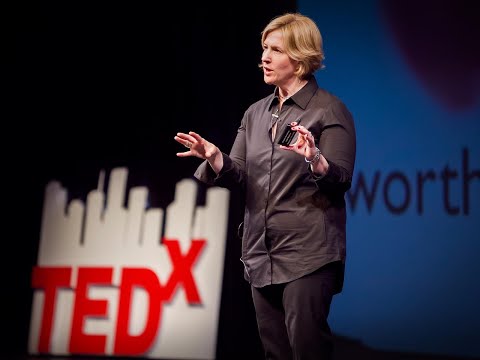
The Power of Vulnerability | Brené Brown | TED
Understanding the Role of Storytelling in Research
The Challenge of Self-Identification
- An event planner struggles to describe the speaker, initially labeling her as a "researcher" but fearing it may deter attendance due to perceived dullness.
- The speaker is identified as a "storyteller," which she initially resists, reflecting on her academic insecurities and questioning the label.
- Ultimately, she embraces the title of "researcher storyteller," recognizing that storytelling is integral to her qualitative research approach.
Expanding Perception Through Research
- The speaker aims to share stories from her research that have significantly altered her perceptions and life experiences.
- She recounts advice from a professor who emphasized measurement as a criterion for existence, contrasting this with her social work background focused on life's complexities.
Connection as a Central Theme
- The speaker's interest lies in understanding connection, which she believes provides purpose and meaning in life.
- She reflects on how evaluations often highlight strengths while focusing on areas for improvement, paralleling this with people's narratives about love and belonging.
Discovering Shame's Impact
- Early in her research, she finds that discussions about connection often reveal underlying themes of disconnection and shame.
- This leads to the realization that shame can be understood as the fear of disconnection—an experience universal among humans.
Vulnerability and Its Challenges
- The speaker identifies vulnerability as essential for connection but admits to hating it personally.
Understanding Worthiness and Connection
The Concept of Worthiness
- The speaker discusses the importance of a sense of worthiness, which is foundational for love and belonging.
- A key distinction is made between individuals who feel worthy of love and those who constantly question their self-worth.
- The core issue preventing connection is the fear of unworthiness, which the speaker aims to explore further.
Research on Wholeheartedness
- The speaker conducted interviews to identify common traits among people who embody a sense of worthiness, labeling this research as "wholehearted."
- Initial data analysis revealed themes related to courage, compassion, and authenticity among these individuals.
Courage vs. Bravery
- The speaker differentiates between courage (from Latin meaning 'heart') and bravery, emphasizing that true courage involves embracing imperfection.
- Compassion towards oneself is highlighted as essential for extending kindness to others; one cannot practice compassion without self-kindness.
Vulnerability as Strength
- Individuals with a strong sense of worthiness view vulnerability not as discomfort but as a necessary aspect of beauty and connection.
- They demonstrate willingness in relationships despite uncertainties, showcasing fundamental beliefs about love and risk-taking.
Personal Journey Through Vulnerability
- The speaker reflects on her struggle with vulnerability amidst her research focus on control and predictability in studies.
- This internal conflict led to what she describes as a breakdown or spiritual awakening, prompting her to seek therapy for guidance.
Therapy Experience
- In therapy sessions, the speaker confronts her issues with vulnerability while recognizing its role in joy and creativity.
- She initially seeks strategies rather than delving into personal history but learns that understanding vulnerability requires deeper introspection.
Embracing Vulnerability
- The journey toward accepting vulnerability was challenging; it involved significant resistance before ultimately leading to personal growth.
Understanding Vulnerability
The Nature of Vulnerability
- The speaker questions the struggle with vulnerability, suggesting that it is a common issue rather than an isolated experience.
- A social media inquiry about defining vulnerability yields 150 responses in a short time, highlighting its widespread relevance and personal impact.
- The speaker notes that society lives in a vulnerable world, where numbing vulnerability has become a coping mechanism.
Numbing Emotions
- Research indicates that one cannot selectively numb emotions; attempting to avoid negative feelings also suppresses positive ones like joy and gratitude.
- This cycle of numbing leads to increased misery and a search for purpose, perpetuating the need for further numbing behaviors.
Certainty vs. Uncertainty
- In response to fear and vulnerability, society tends to seek certainty over faith and mystery, leading to polarized views in politics and discourse.
- Blame is identified as a method of discharging pain; this avoidance strategy complicates genuine conversations about issues.
Parenting and Struggle
- The speaker emphasizes that children are inherently wired for struggle; parenting should focus on acknowledging imperfections rather than striving for perfection.
- Encouraging children’s worthiness despite their struggles can lead to healthier emotional development.
Authenticity and Connection
- Companies are urged to embrace authenticity by admitting mistakes instead of pretending actions have no consequences on others.
- To foster deeper connections, individuals must allow themselves to be seen vulnerably while practicing gratitude amidst uncertainty.
Believing in Self-Worth
Transforme qualquer vídeo em um resumo como este
Vídeos do YouTube, reuniões, aulas. Com transcrição, busca e chat.