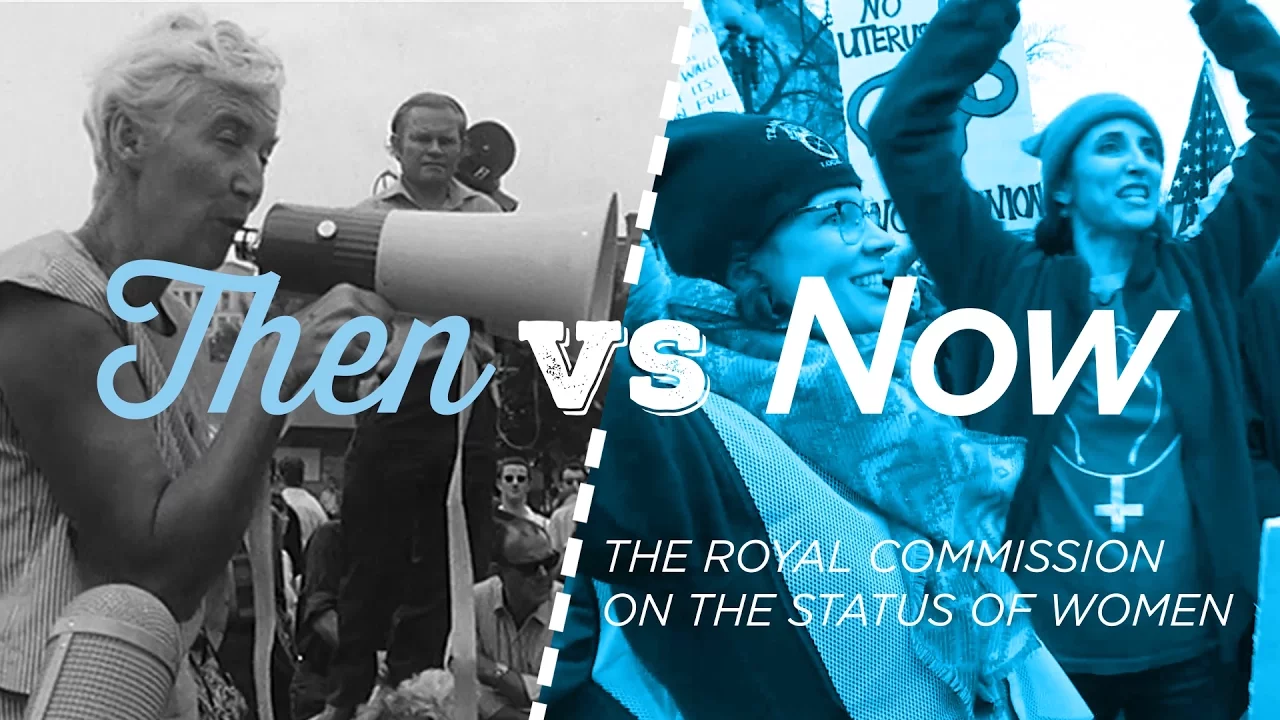
The impact of the Royal Commission on the Status of Women, 50 years later | Then vs Now
The Royal Commission on the Status of Women: Progress and Challenges
Overview of the Commission's Mandate
- The Royal Commission on the Status of Women was established to investigate women's status in Canada, focusing on law, employment, poverty, child-care, and equal access.
- Its goal was to recommend actionable steps for government improvement regarding women's rights.
Historical Context and Initial Findings
- By 1967, women had made some progress since Confederation; they could vote and were recognized as persons under the law.
- Despite advancements, significant issues persisted: wage disparities existed with women earning less than men for equivalent work; divorced women faced legal residence challenges; over 50% of senior women lived in poverty.
The Formation of the Commission
- In response to ongoing discrimination and inequality, a coalition of women's groups prompted Prime Minister Lester B. Pearson to convene the commission in February 1967.
- Some journalists questioned the necessity of such a commission, suggesting that women's status might already be satisfactory.
Recommendations and Government Response
- The final report contained 488 pages with 167 recommendations addressing various issues from legal access to first-trimester abortions to guaranteed income for single parents.
- Although some recommendations were implemented quickly (like creating a Minister for the Status of Women), many remained unaddressed years later.
Ongoing Issues Post-Commission
- Despite changes like raising marriage age and allowing divorce asset claims, many recommendations took years or decades to implement fully.
- Key issues persist today: wage gaps remain significant despite higher education levels among women; stay-at-home caregivers lack pension contributions; no national child care policy exists.
Marginalized Groups and Violence Against Women
- The commission did not address specific challenges faced by marginalized groups such as women of color or refugees.
- Legal recognition of marital rape only came about in 1983, highlighting ongoing violence against women as an area needing attention.
Conclusion on Impact