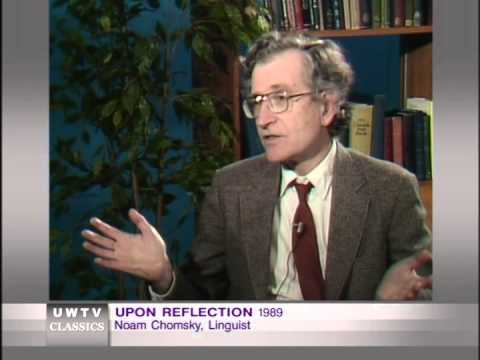
The Concept of Language (Noam Chomsky)
What Determines Language Evolution?
Differences Between Languages
- Professor Chomsky discusses the assumption that French is vastly different from German, noting that such comparisons are complex and subjective.
- He highlights a structural similarity between French and Germanic languages, pointing out unique features of French that align it more closely with German than other Romance languages.
Unique Features of French
- Chomsky explains that unlike other Romance languages, French does not allow for the deletion of subjects in sentences, which is common in Italian and Spanish.
- He mentions the use of clitics in French, where small pronouns attach to verbs differently than in other Romance languages.
Historical Language Change
- The professor notes that Old and Middle French were more similar to other Romance languages before evolving into their current form.
- He emphasizes the misleading nature of discussing language change as a linear progression; instead, he describes it as a mixture of dialects influenced by various factors over time.
Factors Influencing Language Change
- Chomsky compares language evolution to species changing over time due to conquest or political changes affecting dialect mixtures.
- He asserts that while dramatic changes can occur within generations, these shifts often stem from cumulative small changes influenced by external factors.
Predictability of Language Evolution
- When asked about predicting language evolution based on historical understanding, Chomsky states it's nearly impossible due to numerous unpredictable factors involved.
- He likens this unpredictability to weather forecasting, emphasizing the complexity of human life and cultural influences on language.
Multilingualism and National Languages
- The discussion shifts towards multilingualism globally; many regions have significant linguistic diversity compared to relatively homogeneous English-speaking areas.
The Impact of Language Purity and Historical Conquest
The Role of Conquest in Language Homogeneity
- The discussion begins with the notion that historical conquests, particularly by a single language group, led to significant destruction and the establishment of a homogeneous language. This phenomenon is attributed to various factors including the invention of guns and political conquest.
The Mythology of Language Purity
- Some French theorists argue for maintaining the purity of the French language, which raises questions about what "purity" truly means in linguistic terms. This idea reflects a broader mythological perspective on national languages, suggesting that each culture believes its language is the only "pure" form.
Historical Perspectives on Language Clarity
- Reference is made to an 18th-century prediction that French would become the dominant language for science due to its clarity and logical structure compared to German and English, which were seen as more suitable for literature.
Linguistic Perceptions: Truth vs. Fantasy
- The speaker discusses how different languages are perceived based on their ability to convey truth or fantasy. French is viewed as clear and straightforward, while German and English are seen as more complex or convoluted.
Social Constructs Around Language Rules
- The concept of "pure" languages leads to discussions about social constructs surrounding grammar rules taught in schools. These rules often reflect arbitrary standards rather than natural linguistic development.
Power Dynamics in Language Prestige
- The prestige associated with certain dialects can shift based on social power dynamics; for instance, if Black English were dominant socially, it might be regarded as the standard form instead of mainstream English.
Teaching vs. Natural Acquisition of Language
- A critical examination reveals that many grammatical rules taught in schools may not align with natural speech patterns. Children learn their native languages organically through exposure rather than formal instruction.
Variability Across Regions: National Languages as Second Languages
Understanding Language and Its Complexities
The Nature of Language Classification
- The classification of languages, such as Romance languages, is often based on sociopolitical factors rather than linguistic similarities. This comparison highlights the arbitrary nature of language categorization.
- "Good English" is described as an artificial construct taught through legislation, which may not align with natural language rules. This indicates a disconnect between formal education and actual language use.
Teaching Language Rules
- Traditional grammar rules taught in schools can be overly complex and often violate basic principles of human biology related to language structure.
- Historical context reveals that certain grammatical rules were invented by individuals (e.g., a Bishop in the 17th century), emphasizing the artificiality of these constructs.
Pronunciation and Understanding
- Pronunciation plays a crucial role in communication; understanding spoken words requires familiarity with specific accents or dialects, which can vary significantly even within the same language.
- Effective communication relies on a shared decoding system between speakers, which can be artificially maintained despite underlying differences in dialect.
Slang and Innovation in Language
- Slang serves as a form of innovation within language, particularly among teenagers who seek to express individuality and creativity through their speech patterns.
- Rapid changes in slang reflect cultural shifts; different eras may see new terms emerge quickly, showcasing the dynamic nature of language.
Cultural Context and Language Use
- In less technologically advanced societies (e.g., Central Australia), there is significant linguistic innovation tied to cultural practices, highlighting how creativity manifests differently across cultures.
Artistic Expression Through Language
- Artistic uses of language involve established conventions that reflect human aesthetic capacities. These frameworks guide creative expression while allowing for individual interpretation.
- Literary forms like sonnets impose strict structures that challenge creativity but also provide boundaries within which artists operate effectively.
Personal Engagement with Poetry
Understanding the Nature of Language and Humor
The Complexity of Poetry and Creativity
- Poetry's compressed nature requires readers to impose their own structure, making it a unique form of art that engages personal interpretation.
- Formal structures in art challenge intelligence; randomness lacks artistic value, while adherence to rules creates a foundation for meaningful expression.
Humor: An Unexplored Area
- Humor is an innate human response not formally taught, yet universally understood across cultures.
- Non-verbal humor exists (e.g., clowns), indicating that laughter can occur without language instruction.
Human Nature and Language Development
- Certain aspects of humor are rooted in human nature, similar to how physical traits like arms develop instead of wings.
- The study of language offers insights into cognitive processes, but humor remains less understood due to challenges in its analysis.
Emotional Impact of Words
- Words can evoke strong emotions with minimal input; this phenomenon highlights the intricate workings of the human mind.
- Visual stimuli (like caricatures) can also trigger emotional responses, showcasing the brain's complex interpretative abilities.
Language Acquisition in Children
- Children's language development is largely influenced by their environment; exposure shapes their linguistic skills more than parental intervention.
Language Acquisition and Curiosity
The Role of Parents in Language Development
- Children exhibit an innate curiosity about language, constantly asking questions about the names of objects around them. Parents can enrich this learning experience by engaging with their children through reading and showing pictures.
Rapid Vocabulary Growth in Children
- During early childhood, particularly around the age of two, children experience rapid language growth. They are fascinated by new words and concepts, leading to a significant increase in vocabulary acquisition.
Learning New Words: A Unique Ability
- Children can learn new words at an astonishing rate—potentially one word per hour—often after just a single exposure. This contrasts sharply with adults who struggle to learn new languages despite extensive education efforts.
Understanding Word Definitions
- Defining a word is complex; for instance, explaining "table" requires understanding its meaning first. This highlights the challenge of teaching language to organisms not naturally equipped for it.
The Nature of Definitions and Conceptual Understanding
- Traditional definitions (like those found in dictionaries) serve more as hints than true definitions. Children learn concepts from limited exposures rather than detailed explanations, suggesting that they have an inherent ability to grasp complex ideas quickly.
Shared Concepts Among Individuals
- Despite varied experiences, individuals often share similar fundamental concepts (e.g., "table," "person"). This shared understanding indicates that basic concepts are likely pre-existing within us before we encounter specific instances.
Lifelong Fascination with Linguistics