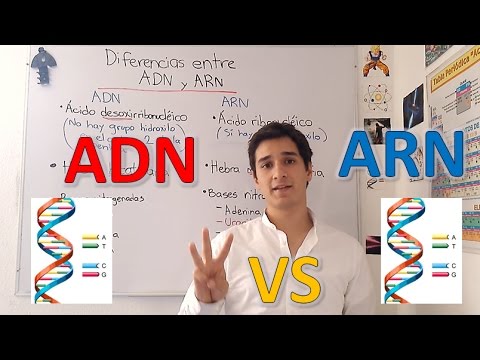
Diferencias entre ADN y ARN nivel experto para principiantes EN 5 MINUTOS
Understanding the Differences Between DNA and RNA
Introduction to DNA and RNA
- The video introduces the topic of differences between DNA (deoxyribonucleic acid) and RNA (ribonucleic acid), emphasizing their importance in protein synthesis.
- It highlights that understanding these differences is crucial as DNA must be converted into RNA during this process.
First Difference: Names and Structures
- The first difference noted is the names: DNA contains "deoxy," while RNA does not, indicating a structural variation.
- The structure of DNA is described as chromosomes in human cells, whereas bacterial DNA appears circular (plasmids).
Unfolding DNA Structure
- When unfolded, DNA resembles two long threads forming a helix shape, which can be visualized through images provided in the video.
- Two representations of unfolded DNA are shown; one detailed with atoms and bonds, another simplified with lines.
Pentose Molecule Comparison
- Both types of nucleic acids contain pentose molecules, which have five carbon atoms.
- A key distinction is made regarding oxygen presence: the pentose in DNA lacks an oxygen atom at carbon number 2, while RNA's pentose includes it.
Second Difference: Strands
- The second difference highlighted is that DNA consists of two strands (double-stranded), while RNA has only one strand (single-stranded).
Third Difference: Nucleobase Pairs
- The third difference pertains to base pairs; in DNA, they include Adenine, Thymine, Cytosine, and Guanine.
- In contrast, RNA substitutes Uracil for Thymine among its base pairs.
Conclusion
- The video concludes by summarizing the three main differences between DNA and RNA: naming conventions, structural characteristics (strands), and variations in nucleobases. Viewers are encouraged to engage with comments or questions.