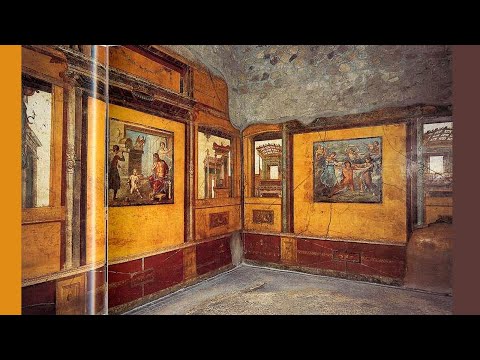
La pintura y el mosaico romanos
Roman Painting: Origins and Styles
Historical Context and Development
- Roman painting drew inspiration from Etruscan funerary frescoes and Greek art, flourishing in both public and private spaces.
- Most preserved works are thanks to excavations in Pompeii, which were buried during the eruption of Vesuvius in 79 AD. Some easel paintings have also survived, particularly from Egypt's Fayum region.
Techniques and Materials
- Roman painting is characterized by vibrant colors, realism, and naturalism; techniques like chiaroscuro suggest volume while intuitive perspective creates depth.
- The four Pompeian styles of painting are identified through archaeological findings:
- Incrustation Style (2nd century BC): Imitated rich Hellenistic wall coverings with colored marbles.
Architectural Representation
- The Architectural Style emerged around the mid-1st century BC, featuring fictitious architectures that expanded perceived space through theatrical simulations of windows and columns.
- By the late 1st century BC to early 1st century AD, the Ornamental Style became prevalent, showcasing stylized decorative motifs rather than realistic representations.
Illusionistic Techniques
- From Nero's reign until Vesuvius' eruption, the Illusionistic or Scenic Style combined elements from previous styles to create fantastical architectural backdrops populated with mythological characters against elaborate settings.
Mosaics as Art Forms
- Alongside frescoes, easel painting developed on wood using tempera or encaustic methods; notable examples include funerary portraits from Fayum blending Roman and Egyptian traditions.
- Floors were adorned with intricate mosaics derived from Egyptian, Mesopotamian, and Greek influences. The technique involved arranging small pieces called tesserae into geometric or figurative designs.
Types of Mosaics
- Various mosaic types existed:
- Opus Signinum: Simple mosaics made with pebbles forming geometric patterns.
- Opus Sectile: Involved cutting marble pieces into shapes for figurative designs.
- Opus Tesselatum: Used regular cubic tesserae for detailed pictorial compositions.
Turn any video into a summary like this
YouTube links, meetings, lectures. With transcripts, search, and chat.