A Deeper Look at Public Goods
What Are Public Goods and Their Market Challenges?
Understanding Key Terms: Nonexcludable and Nonrival
- The video introduces public goods, defining two critical terms: nonexcludable (people who don't pay cannot be easily prevented from using the good) and nonrival (one person's use does not reduce another's ability to use it).
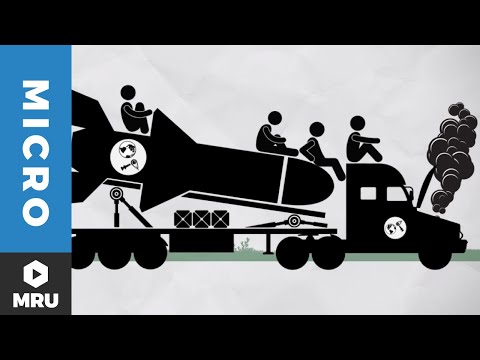
- Example of excludability: Jeans are excludable as non-payers can be prevented from using them, while asteroid deflection is nonexcludable since everyone benefits if an asteroid is diverted.
- Rivalry explained: Jeans are rival because one person's use prevents another from using the same pair, whereas asteroid deflection is nonrival; multiple people can benefit simultaneously.
Categories of Goods
- The combination of excludability and rivalry divides goods into four types. The focus here is on private goods (excludable and rival), such as jeans or hamburgers.
- Markets effectively provide private goods due to the incentive for consumers to pay, which in turn motivates producers to supply these goods.
Public Goods Explained
- Public goods are defined as both nonexcludable and nonrival. Examples include national defense and mosquito control, where benefits extend beyond those who pay.
- National defense serves as a case study; it's difficult to exclude individuals from its benefits, leading to free-rider problems where people benefit without contributing financially.
Challenges in Producing Public Goods
- The challenge with public goods lies in their nature; if everyone free rides, essential services like national defense may not be produced at all.
- Nonexcludability complicates charging for public goods, while nonrivalry suggests that excluding anyone would be inefficient since serving additional consumers incurs no cost.
Government Provision vs. Market Solutions
- To produce public goods effectively, taxation and government provision become necessary alternatives when markets struggle with these types of goods.
- A significant issue arises with forced riders—those compelled through taxes who may not benefit proportionately from what they fund—creating a dilemma similar to free riding in market systems.
Conclusion on Public Goods Dynamics
- Both free riders and forced riders present challenges that complicate the efficient production of public goods; there’s no automatic process like the invisible hand found in private markets to resolve these issues smoothly.
- Political processes often lack clarity regarding incentives for discovering new public goods or improving production methods compared to entrepreneurial efforts in markets for private goods.
Clarifying Terminology
- A crucial distinction is made that a public good isn't defined by being produced by the government but rather by its characteristics of being nonexcludable and nonrival.
Turn any video into a summary like this
YouTube links, meetings, lectures. With transcripts, search, and chat.