The Only FOOTPRINT Chart Guide you'll Ever Need - Accelerated Orderflow Course
How to Enhance Your Trading with Order Flow
Understanding the Importance of Information in Trading
- The video emphasizes that traders often operate with incomplete information, which can hinder their success. Accessing deeper layers of data is crucial for improving trading strategies.
- Successful market participants utilize advanced technology and information beyond basic price action, highlighting the need for traders to upgrade their tools and knowledge.
- The speaker introduces order flow as a vital tool for day traders and scalpers, suggesting that subscribing to a data feed can provide insights into actual market movements.
Introduction to Market Mechanics
- The discussion begins with the distinction between aggressive and passive buyers/sellers, which are fundamental concepts in understanding market dynamics.
- An example of an order book illustrates how passive liquidity operates like a catalog of available orders waiting to be executed, akin to an auction setting.
- Aggressive buyers actively take initiative by accepting worse prices to ensure they get filled, contrasting with passive sellers who wait for buyers.
Exploring Footprint Charts
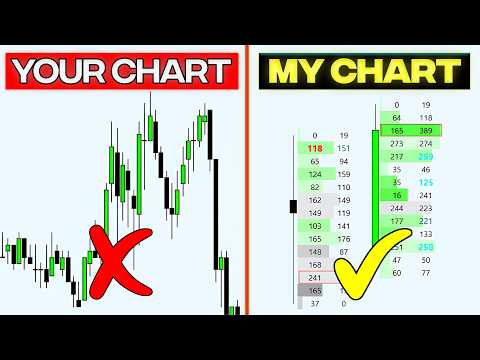
- A footprint chart is introduced as a powerful trading tool that not only shows candle formations but also reveals the underlying reasons behind price movements through executed contracts.
- The speaker provides an example using an order flow candle alongside an order book, demonstrating how different levels of contracts interact within the market.
Analyzing Liquidity Dynamics
- Every price level contains both buyer and seller liquidity; understanding this balance is essential for effective trading decisions.
- Each footprint candle features a yellow box indicating where most contracts were executed, serving as a signal for potential market shifts or trends.
Identifying Imbalances in Order Flow
- Imbalances are highlighted when one side shows significantly more aggression than the other; these are calculated diagonally based on best ask and bid prices during auctions.
Understanding Auction Dynamics and Order Flow
Auction Imbalances and Their Implications
- The discussion begins with the concept of auction imbalances, highlighting that numbers can range from 200% to 400%, indicating potential optimization. Typically, auctions show zeros at both ends, but exceptions occur when aggressive sellers push prices lower.
- An "unfinished auction" is identified when there are non-zero values on both sides, suggesting a likelihood that these levels will be revisited in future trading.
- The term "Delta" refers to the difference between contracts traded at different price levels. This analysis incorporates aggregate volume and absorption, which indicates strong buying pressure alongside passive selling.
Visualizing Volume and Delta
- Footprint charts can be customized to display total volume or Delta volume for better clarity. The speaker prefers visualizations that combine total volume with a background profile based on Delta.
- A 5-minute chart version is utilized to reduce noise and enhance visibility of trends. It shows price action at all-time highs where absorption phases often precede initiative phases.
Response and Initiative Patterns
- The RNI (Response and Initiative) pattern is introduced as a strategy for identifying sell zones after observing aggressive buying followed by exhaustion among buyers.
- Observations reveal significant seller aggression at high levels, indicating market dynamics involving large participants like hedge funds rather than retail traders.
Absorption Phases in Trading
- The end of an absorption phase leads into a response phase characterized by increased selling pressure following buyer attempts to maintain upward momentum.
- Distinctions are made between ICT Trader perspectives (focusing on fair value gaps) versus order flow trader views (emphasizing actual order flow imbalances).
Identifying Key Levels for Trading Decisions
- Specific areas of interest are marked as order blocks where significant buying or selling occurred. These zones indicate potential reversal points based on previous market behavior.
- As the session progresses, further imbalances signal high-probability sell signals leading to downward movement in price action throughout the trading day.
Liquidity and Market Interest Dynamics
- Observations about liquidity highlight diminishing interest as prices attempt to drop further; this trend continues across multiple attempts to penetrate lower levels.
Understanding Fair Value Gaps and Imbalances in Trading
Identifying Fair Value Gaps
- The discussion begins with the concept of trading back into an area where imbalances exist, indicating unfinished auctions that have been pierced. This suggests a new phase of fair value is emerging.
- Confirmation for entry is emphasized by entering one tick below the first imbalance cluster, highlighting how every imbalance or fair value gap has been retested consistently.
- A significant fair value gap is identified where many orders were executed, showcasing absorption from both passive buyers and aggressive sellers attempting to push prices up but failing.
Analyzing Market Behavior
- The speaker notes that after tapping into specific levels, there are signs of absorption from buyers and new imbalances forming, indicating market participants defending their positions.
- As price attempts to rise again, it encounters exhaustion in buying pressure leading to further downward movement; this pattern repeats as large orders defend their positions.
Volume Dynamics in Trading Sessions
- The final phase of trading sessions sees the most volume traded not at the beginning but during the last 10 minutes as day traders exit their positions, often resulting in bearish trends.
- This section illustrates how understanding real order flow can provide insights into market dynamics beyond mere price action analysis.
Insights for Retail Traders
- Retail traders can gain valuable insights by observing order flows rather than relying solely on price action; recognizing choppy price movements may indicate underlying volume activity.