UD2 Componentes fundamentales de los sistemas microinformáticos 2
Chipset Overview and Functionality
Introduction to Chipsets
- The section begins with an introduction to chipsets, highlighting their role as fundamental components on the motherboard.
- A chipset typically consists of a single chip, although older motherboards may have utilized two chips for similar functions.
Purpose of the Chipset
- The primary function of the chipset is to manage communication between the CPU and various components that are not solely memory or graphics cards.
- It facilitates direct communication between the CPU and multiple devices, including hard drives and USB peripherals.
Device Connectivity
- The chipset allows CPUs to connect with various expansion cards (e.g., wireless cards), enhancing functionality in computers lacking certain features.
- Interfaces like PCI Express are controlled by the chipset, enabling connections for additional hardware.
Manufacturer Insights
- Major manufacturers of chipsets include Intel, AMD, NVIDIA, and others; they produce both processors and corresponding chipsets.
- Intel dominates the market for processors while also being a significant player in chipset manufacturing.
Chipset Design Evolution
Visual Representation of Chipsets
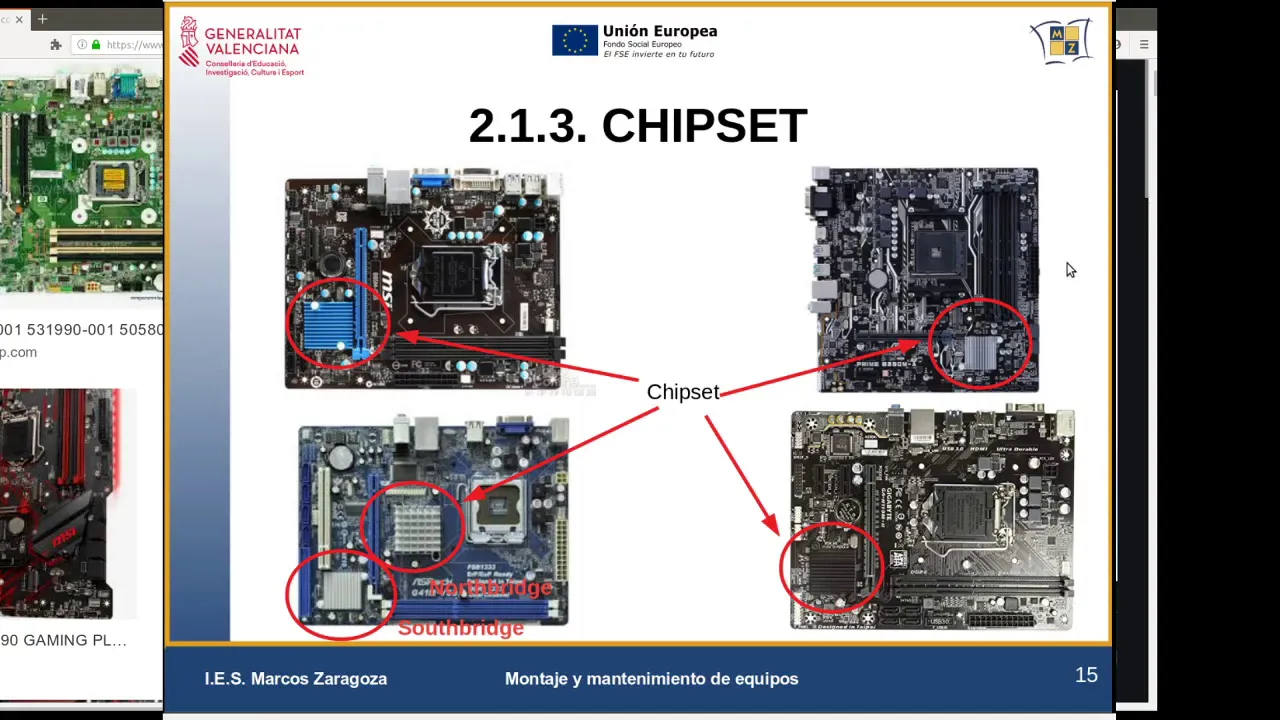
- Searching online reveals images showing how chipsets appear on motherboards alongside CPUs.
- Typically, chipsets do not require fans but often have heat sinks for cooling purposes.
Historical Context
- Older designs featured multiple chips for a single chipset; modern boards usually utilize one main chip.
- The evolution from dual-chip designs to single-chip solutions has been notable since around 2010.
Technical Architecture: Northbridge and Southbridge
Dual-Chip Configuration
- Historically, many motherboards used two chips known as Northbridge (for memory control and graphics connection) and Southbridge (for I/O operations).
Definition Clarification
- "Chipset" refers to a set of chips working together; initially included multiple chips but has evolved over time.
Understanding the Evolution of Chipsets: Northbridge and Southbridge
The Role of Chipsets in Computer Architecture
- The chipset acts as a bridge between the processor, graphics, and memory. It facilitates communication for enhanced functionality through additional chips like the soft bridge.
- Key components include fixed ports for hard drives, USB connections, and clock generation for synchronization. Power management is crucial for energy savings, managed by the BIOS in conjunction with the CPU via the Southbridge chip.
- The input/output unit controls various peripheral interfaces such as PCI Express, which are essential for managing data flow within the system.
Transition from Northbridge to Integrated Solutions
- Over approximately ten years, the Northbridge's role has diminished significantly; it no longer communicates directly with memory or graphics due to advancements in CPU design.
- Modern CPUs integrate memory controllers and graphics capabilities directly into their architecture, allowing direct access to memory without needing a separate Northbridge component.
- This integration enables CPUs to handle more functionalities internally by incorporating additional transistors that enhance performance and reduce physical space requirements.
Current Architecture: Direct Access and Efficiency
- With integrated graphics and memory control within CPUs, systems can achieve faster processing speeds since they eliminate delays caused by external chipsets.
- Visual representations illustrate how modern CPUs connect directly to PCI Express slots while managing communications with other devices through an integrated chipset.
Managing Device Communication Efficiently
- The current chipset structure allows CPUs to manage multiple devices efficiently without overloading their processing capabilities. This separation ensures optimal performance across tasks.
- By focusing on direct access to memory and graphics while delegating other device management tasks to chipsets, overall system efficiency is improved.
Future Considerations in Chipset Design
- Modern CPUs maintain direct communication with dedicated graphic controllers while still being able to interface with expansion slots like PCI Express for specialized functions.
- Dedicated graphics cards from manufacturers like NVIDIA or AMD can be utilized alongside integrated solutions, providing flexibility based on user needs.
Conclusion: The Shift Towards Integration
- As technology evolves, reliance on traditional Northbridge designs decreases. Newer architectures favor integrated solutions that streamline processes and improve performance metrics across computing platforms.
Understanding CPU and GPU Integration in Modern Computing
Overview of Component Integration
- The discussion begins with the concept of a concentrator that manages external components for communication, specifically referencing the Platform Controller Hub (PCH).
- It highlights how modern CPUs often redirect graphical tasks to dedicated GPUs instead of utilizing their integrated graphics capabilities fully.
Graphics Processing Units (GPUs)
- The integration of GPUs can occur either through dedicated slots like PCI Express or as integrated solutions on laptops.
- Desktops typically utilize PCI Express slots for graphics cards, while laptops may have chips soldered directly onto the motherboard.
Motherboard and Chipset Importance
- A specific example is given regarding an MSI motherboard featuring an Intel HD 310 chipset, emphasizing that the motherboard's functionality heavily relies on its chipset.
- When purchasing a motherboard, it's crucial to consider the chipset's characteristics alongside expansion slots and memory interfaces.
Chipset Specifications
- Detailed specifications are provided for Intel chipsets, including bus speed (5 GB/s), manufacturing technology (14 nm), power consumption (6 watts), and pricing ($26).
- The number of PCI Express lanes managed by the chipset is also discussed, indicating it handles six lanes which could be divided into multiple connections.
AMD Chipset Comparison
- A comparison is made with AMD’s A320 chipset used in Ryzen platforms, noting its basic design suitable for most home users.
- The AMD chipset features three PCI Express connections and supports essential functionalities without advanced overclocking capabilities.
Summary of Key Takeaways
Turn any video into a summary like this
YouTube links, meetings, lectures. With transcripts, search, and chat.