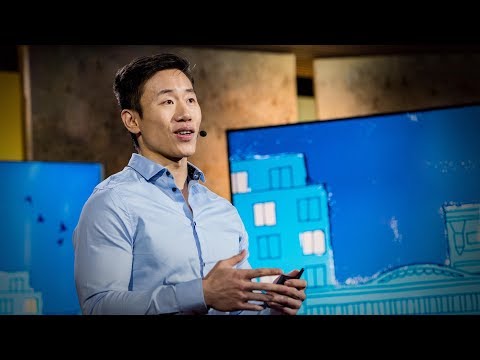
Looking for a job? Highlight your ability, not your experience | Jason Shen
Envy of Working in a Job Related to College Major
The speaker expresses envy towards people who work in jobs that are directly related to their college major. However, this is becoming less common, as only a quarter of college graduates actually work in fields that relate to their degree.
Envious of People with Relevant College Majors
- Many people who studied journalism or engineering, for example, end up working in those fields.
- Only a quarter of college graduates work in a field related to their degree.
Personal Experience with Biology Degrees
- The speaker graduated with two degrees in biology but did not pursue a career as a doctor or scientist.
- Studying DNA replication and photosynthesis did not prepare the speaker for a career in technology.
Self-Taught Skills for Technology Career
- The speaker had to teach themselves various skills such as sales, marketing, strategy, and programming.
- No prior experience as a Product Manager before applying to Etsy.
Persistence Pays Off
- Despite being turned down by Google and other firms, the speaker applied to Etsy by thoroughly researching the company and presenting ideas for new features.
- Some of the ideas presented were already being worked on by the team.
- Ultimately, the speaker got the job.
Overcoming Initial Rejection
- Many successful individuals have been initially ignored or overlooked but went on to prove their critics wrong.
- Example: Brian Acton was rejected by Twitter and Facebook before co-founding WhatsApp, which later sold for $19 billion.
Failing Hiring Systems and Potential Missed Opportunities
The hiring systems built in the 20th century are failing us by causing us to miss out on individuals with incredible potential. Advances in robotics and machine learning are transforming work dynamics, requiring us to adapt and do jobs we've never done before.
Outdated Hiring Systems
- The hiring systems built in the 20th century are not effective in identifying individuals with great potential.
- These systems are causing us to miss out on talented individuals.
Impact of Robotics and Machine Learning
- Robotics and machine learning are changing the way we work.
- Routine tasks are being automated, while human labor is being augmented and amplified in other areas.
Adapting to New Job Requirements
- Due to these changes, it is expected that we will have to do jobs we've never done before throughout our careers.
Tools and Strategies for Identifying High Performers
The speaker has consulted with leaders across various sectors, conducted research, and experiments to find tools and strategies for identifying high performers. Three ideas are presented: expanding the search, hiring for performance, and getting the bigger picture.
Expanding the Search
- Looking for talent only in traditional places such as gifted child programs, Ivy League schools, or prestigious organizations yields predictable results.
- Example: Baseball was transformed when the Oakland Athletics started recruiting players based on their ability to help the team win games rather than traditional metrics like runs batted in.
Hiring for Performance
- Candidates should be given opportunities to demonstrate their skills before being hired.
- Work samples are one of the best predictors of success on the job.
- Examples: Giving data analysts a spreadsheet of historical data to analyze or having marketing managers plan a launch campaign for a new product.
Getting the Bigger Picture
- Judging someone based on limited information or biases leads to flawed assessments.
- A holistic view of an individual is necessary for accurate judgment.
- Examples: Recruiters labeling candidates as job-hoppers based on short stints on resumes or professors ignoring messages from students based on their names.
This summary covers key points from the transcript using timestamps provided.
Let's Build a Better World
In this section, the speaker emphasizes the need to move away from safe and familiar choices and open doors for amazing opportunities. They discuss the importance of employers embracing new hiring practices and candidates learning to tell their stories effectively. The ultimate goal is to create a world where people are recognized for their true potential and given the opportunity to fulfill it.
Embracing Change
- Let go of safe, familiar choices and be open to amazing possibilities.
- Employers should abandon outdated hiring practices and adopt new methods of identifying talent.
- Candidates can contribute by learning how to present their stories in powerful ways.
Unlocking Potential
- Imagine a world where individuals are recognized for their capabilities.
- Everyone should have the opportunity to realize their full potential.
Building a Better World
- The speaker encourages everyone to actively work towards creating a better world.
Turn any video into a summary like this
YouTube links, meetings, lectures. With transcripts, search, and chat.