2.2 La vida al filo de lo imposible: Extremófilos
New Section
In this section, the speaker discusses extremophilic bacteria and their adaptations to extreme environments.
Halophilic Bacteria
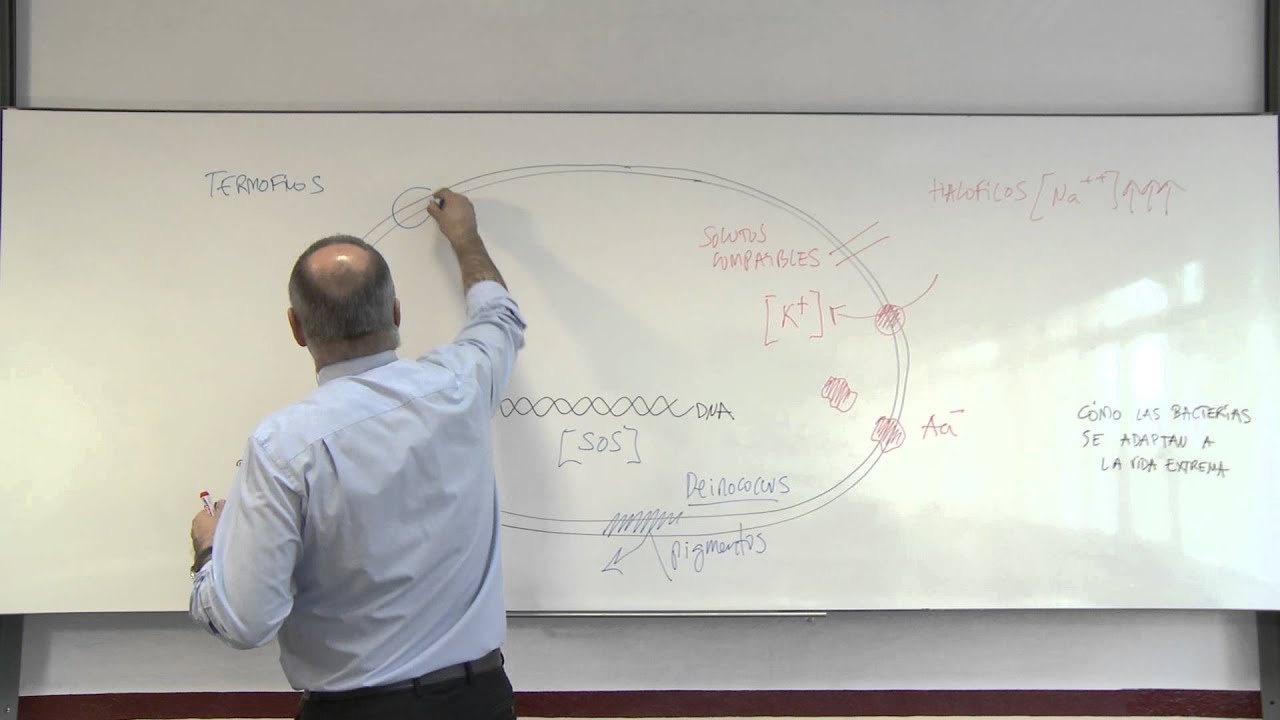
- Halophilic bacteria can withstand high concentrations of salt or sodium.
- These bacteria accumulate solutes compatible with high external salinity to balance osmotic pressure.
- Some halophilic bacteria pump potassium ions into their cells to counterbalance sodium concentrations.
- Proteins in these bacteria are rich in negatively charged amino acids like aspartic and glutamic acid to maintain charge balance.
New Section
This part focuses on Deinococcus radiodurans, a radiation-resistant bacterium, and its repair mechanisms for DNA damage caused by radiation.
Deinococcus Radiodurans
- Deinococcus radiodurans possesses pigments in its cell wall that enhance resistance to radiation.
- The bacterium has a system of enzymes called Dsup that repairs DNA damage from radiation exposure.
New Section
The discussion shifts towards thermophilic microorganisms and their adaptations to high temperatures.
Thermophilic Bacteria
- Thermophiles can survive at high temperatures due to changes in membrane phospholipids, forming stable lipid monolayers.
- They produce thermo-stable proteins in the cytoplasm for heat resistance.
- Heat shock proteins stabilize cytoplasmic proteins and nucleic acids under high temperatures.