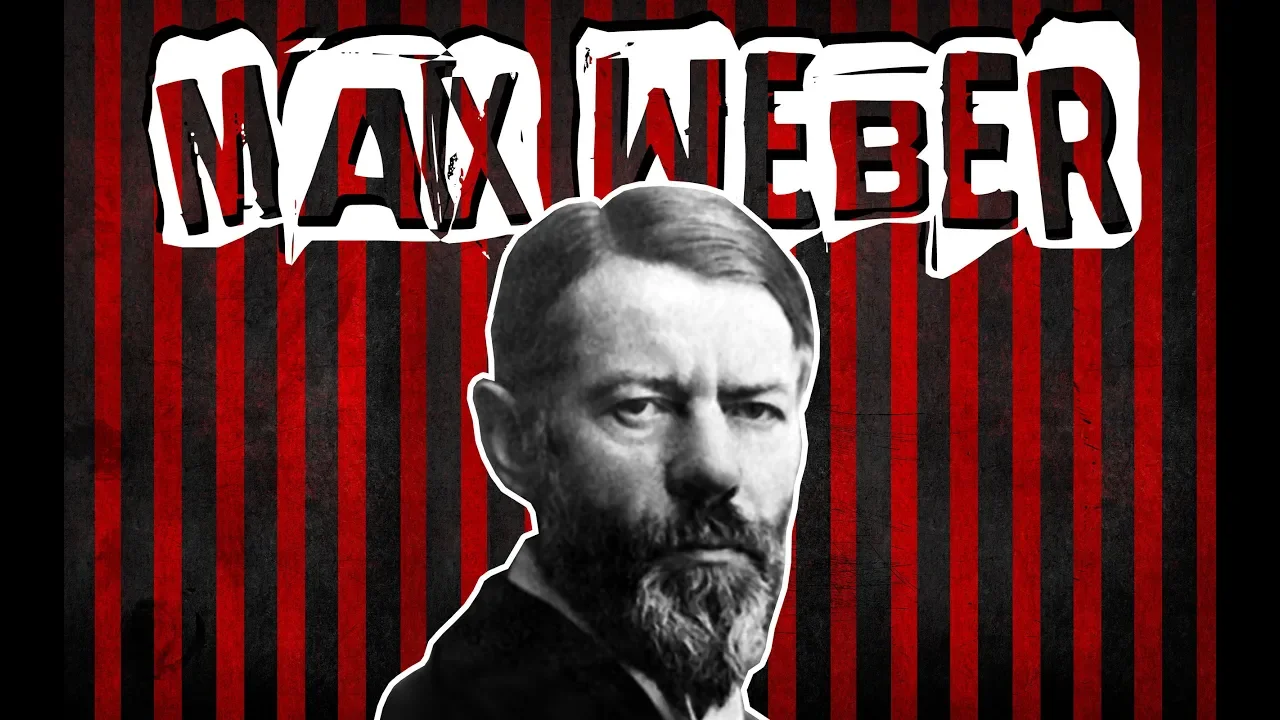
MAX WEBER PARA O ENEM
New Section
In this section, the speaker introduces the topic of sociology and discusses the three major sociologists: Karl Marx, Emile Durkheim, and Max Weber.
Introduction to Max Weber
- Max Weber is discussed as one of the three major sociologists of the 19th century.
- His main work, "The Protestant Ethic and the Spirit of Capitalism," is highlighted as a significant contribution.
- A brief biography of Max Weber is provided, emphasizing his academic background and his role as a philosopher and sociologist.
- Weber's innovative scientific method for studying society is mentioned in comparison to other sociologists like Karl Marx.
- The context of Germany in the 19th century, undergoing industrialization and societal transformations, is crucial for understanding Weber's work.
New Section
This section delves deeper into Max Weber's life beyond academia, focusing on his involvement during World War I and his role in shaping post-war Germany.
Involvement During World War I
- Max Weber's role as a director in a German military hospital during World War I is highlighted.
- The significance of the Treaty of Versailles in 1919, where Germany was deemed responsible for the war, is discussed.
- Weber's participation in advising German politicians during negotiations post-WWI showcases his diplomatic engagement.
New Section
The transition of Germany from an empire to a republic post-WWI and Max Weber's contributions to shaping the Weimar Republic are explored.
Transition to Weimar Republic
- The shift from an empire to a democratic republic known as the Weimar Republic in 1919 marks a pivotal moment in German history.
- Max Weber played a key role in drafting the constitution for the Weimar Republic, contributing to its establishment as a democratic entity.
New Section
In this section, the speaker discusses the concept of impartiality in studying society and sociology, contrasting two perspectives on the nature of society.
Impartiality in Studying Society
- The speaker explains that to study society scientifically, one needs to be impartial and treat social sciences objectively.
- Distinguishing between two viewpoints:
- Cae believes in treating society as a natural entity.
- Emphasizes that societal actions are not natural but influenced by human will.
- VBP argues that humans construct society through their actions and intentions.
- Humans shape society with their desires and intentions.
New Section
This part delves into different types of social actions, categorizing them as either irrational or rational based on motivations.
Types of Social Actions
- The speaker introduces the concept of social actions, highlighting four forms: two irrational and two rational.
- Irrational social actions:
- Affective social actions driven by emotions like pride or love.
- These actions are often impulsive and emotionally charged.
- Traditional social actions rooted in habits and cultural norms.
- People engage in these actions without much conscious thought due to ingrained customs.
- Rational social actions:
- Motivated by specific goals or ends, involving deliberate reasoning for decision-making.
- Individuals consciously choose these actions based on desired outcomes.
New Section
In this section, the speaker discusses different types of social actions driven by various motives such as dialogue, new content, and seeking ends through rational or moral values.
Types of Social Actions
- Social actions involve dialogues and seeking new content.
- Actions can be driven by rational goals like paying bills before considering leisure activities.
- Social actions can also be motivated by ethical or political considerations, especially during election periods.
- Some social actions carry a strong moral value rather than just aiming for specific outcomes.
- It is essential to distinguish between rational and emotional aspects in social actions.
New Section
This part delves into Max Weber's analysis of society through social actions, focusing on his work "The Protestant Ethic and the Spirit of Capitalism."
Max Weber's Analysis
- Weber evaluates society based on social actions in "The Protestant Ethic and the Spirit of Capitalism."
- He compares capitalist societies from the 16th century onwards with a focus on Calvinism's influence.
- Weber examines the rationality and organization within capitalist societies influenced by Protestant values.
- The emergence of capitalism is attributed to complex organizational structures rooted in Calvinistic principles.
- Capitalists are portrayed as highly organized and rational individuals within a complex societal framework.
New Section
This segment explores how Calvinism shaped the development of capitalism according to Max Weber's analysis.
Influence of Calvinism on Capitalism
- The origin of capitalism is linked to Calvinism, particularly emphasizing concepts like savings and discipline.
- Calvinist beliefs promote accumulation through hard work as a means to demonstrate strength and dedication.
- Accumulation and organization are key values in Calvinism that contribute to the formation of capitalist societies.
- Values such as savings, profit-seeking behavior, organization, and discipline form the basis of capitalist systems influenced by Calvinistic ideals.
New Section
In this section, the speaker discusses the formation of capitalism in relation to Eastern religions and Calvinism.
Formation of Capitalism
- Eastern religions view gods as present in daily life, contrasting with Calvinism's belief that God exists on a higher spiritual level.
New Section
The discussion transitions to comparing Weber's method with Durkheim's approach.
Comparison of Methodologies
- Weber emphasizes the need to work towards understanding God, unlike Durkheim who focuses on societal integration.
New Section
Closing remarks and engagement encouragement from the speaker.
Conclusion and Engagement