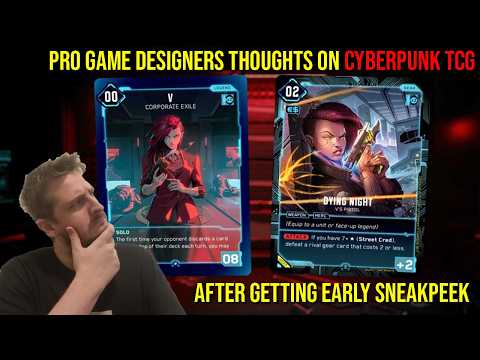
I got to play the Cyberpunk TCG early!
Cyberpunk TCG Overview and Gameplay Insights
Introduction to Cyberpunk TCG
- Keith introduces the video, expressing excitement about the Cyberpunk Trading Card Game (TCG) after its successful Kickstarter campaign of $21 million.
- He mentions a previous video discussing modern TCG design trends, noting a perceived blandness in many games.
Gameplay Experience
- Keith shares his experience playing the Cyberpunk TCG with a friend who has an early access alpha kit at Exile Gaming Club.
- He recorded gameplay footage and plans to provide an overview of game mechanics while also showcasing demo decks featuring different factions.
Deck Building Mechanics
- Players start with three leaders that determine their deck's color identity, similar to Commander in Magic: The Gathering.
- Each leader provides RAM (Resource Allocation Mechanism), which limits card play based on color; for example, two yellow and one red leader grants four RAM for yellow cards.
Strategic Depth in Color Choices
- The RAM system creates strategic decisions regarding deck building; players can choose between powerful mono-colored strategies or more diverse but weaker multi-colored approaches.
- This mechanic differs from other games like Magic: The Gathering Commander by restricting how broadly players can spread their colors.
Leaders and Their Abilities
- Keith discusses the unique abilities of leaders within demo decks, including keywords like "go solo," which allows leaders to act as units in combat.
- He highlights specific abilities such as drawing cards based on gig dice numbers and providing power boosts during attacks.
Currency System and Resource Management
- Players generate currency called "eddies" through their leaders, which are used to pay costs for playing cards.
- The first player starts with two exhausted eddies, allowing them limited resources compared to the second player who has more flexibility.
Game Mechanics Overview
Player Advantage and Resource Management
- The second player starts with access to four resources, avoiding the disadvantage of beginning with two exhausted resources. This design choice aims to balance the first-player advantage.
- Players create one resource per turn, allowing for a greater initial number compared to games like Magic: The Gathering, while also providing flexibility in using resources for effects.
Central Game Mechanic: Gig Dice
- The game features six gig dice ranging from D4 to D20, which are rolled into a player's gig pile—similar to collecting points in Runebound.
- Winning involves starting a turn with six gig dice and successfully attacking an opponent unblocked, allowing players to steal a gig from their opponent.
Conflict Dynamics and Narrative Concerns
- A critique is raised regarding the game's focus on conflict feeling depersonalized within its cutthroat universe dominated by corporations versus rebels.
- An alternative narrative approach could have been more fitting; for instance, focusing on "street cred" rather than just job acquisition would align better with the thematic elements of the universe.
Strategic Depth in Dice Interaction
- The values on collected dice significantly impact gameplay; certain cards can enhance die values or provide card draws based on thresholds achieved during play.
- Players must strategically choose which dice to take from opponents based on their current value and potential benefits they offer when played.
Combat Mechanics and Tactical Considerations
- Combat mechanics resemble those in Lorcana; players can only attack exhausted units or directly target players if no blockers are available.
- The presence of blocker units is crucial as not all units possess this ability, affecting overall strategy during combat interactions.
Anticipated Gameplay Experience
- A concern arises about potential anticlimax moments where players may feel forced into defensive positions without options for proactive plays.
- Unlike other games that allow setting up winning conditions during opponents' turns, Cyberpunk's structure may lead to situations where one player feels helpless against impending loss.
Game Mechanics and Player Experience in TCGs
Similarities with Other Games
- The game mechanics are designed to create a predictable endgame scenario, where players can anticipate their potential loss or win, contrasting with games like Magic the Gathering where outcomes can be less clear.
Player Mindset and Engagement
- Players may experience frustration if they feel they are losing throughout the game, which could hinder their engagement and understanding of the game's dynamics.
Learning Curve and Mistakes
- The speaker reflects on personal gameplay experiences, noting that mistakes can significantly alter game outcomes. This highlights the importance of learning from errors during gameplay.
Depth of Gameplay
- There is an inherent depth to the game mechanics that encourages exploration and strategic thinking, similar to deck-building experiences in Magic the Gathering.
Deck Building Experience
- The process of building decks is emphasized as a significant part of enjoyment in trading card games (TCGs), suggesting that this new game should also provide a rewarding deck-building experience.
Comparative Analysis with Other TCGs
Energy Mechanisms
- The game shares energy generation mechanics with other TCGs like Dragon Ball Super and One Piece, allowing cards to serve dual purposes as both energy sources and effects.
Game Dynamics
- Unique aspects such as gear cards that interact dynamically within gameplay are discussed, showcasing how different elements contribute to strategy.
Scoring Systems
- Core scoring mechanisms resemble those found in existing games like Riftbound, indicating a blend of familiar structures while still aiming for innovation within the genre.
Game Mechanics and Innovations in Cyberpunk TCG
Critique of Commander Mechanics
- The speaker critiques the Commander format, noting that some Commanders are either too powerful to resolve or too costly to play, leading to frustration.
- In contrast, Cyberpunk allows players to engage with their leaders more effectively, making it likely for all three chosen leaders to be utilized during gameplay.
Spotlighting Characters
- Players can select three leaders and favorite characters, ensuring they actively participate rather than being hidden within a larger deck.
- This mechanic guarantees that players will see their favorite characters in action, enhancing engagement compared to traditional formats where key cards may not appear.
Game Structure and Turn Limitations
- The game incorporates dice mechanics that influence gameplay; specific cards interact with the values rolled on the dice.
- A limited number of turns creates urgency similar to games like Marvel Snap, where scoring points is crucial before time runs out.
Time Management and Sportsmanship
- The speaker expresses dissatisfaction with the tournament structure of Pokémon TCG due to slow play incentivizing poor sportsmanship.
- Cyberpunk's design promotes a natural climax towards the end of the game, which helps maintain player engagement without feeling rushed.
Art and Design Elements
- All cards feature impressive artwork credited both to CD Projekt Red and external illustrators, contributing positively to the game's aesthetic appeal.
- The speaker looks forward to the game's release while acknowledging similarities with other trading card games (TCGs), suggesting these similarities may ease new player onboarding.