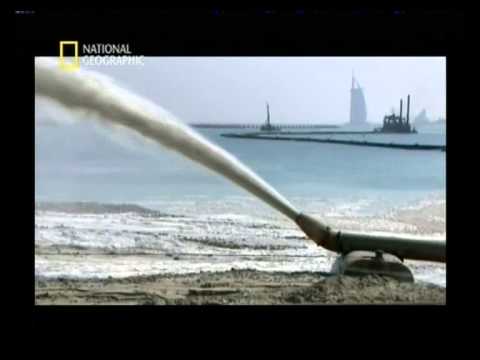
La isla palmera.. Dubai
New Section
The transcript discusses the ambitious engineering project of constructing an artificial island in Dubai, focusing on the challenges faced by engineers and the vision behind this endeavor.
Construction Challenges
- Engineers face daunting tasks due to the unique nature of the project, using natural materials like sand and rock instead of concrete and steel.
- Erosion from water poses a significant threat to the island's stability, requiring innovative solutions to protect it from natural forces.
- Dubai's shift towards tourism as a primary economic driver necessitates grand projects like the artificial island to attract visitors and sustain its economy.
- The design of a palm-shaped island presents unprecedented construction challenges due to its size and shape, pushing engineering boundaries.
Environmental Integration
- The emphasis on using only natural materials for construction aligns with the prince's vision of blending luxury developments with environmental sustainability.
- The island's reliance on sand and rock for protection underscores a commitment to harmonizing human-made structures with their marine surroundings.
Economic Transformation
This segment delves into Dubai's economic evolution from an oil-dependent state to a luxury tourism destination under Prince Mohamed bin Rashid Al Maktum's visionary leadership.
Economic Diversification
- With oil reserves depleting, Dubai shifts focus towards becoming a top luxury tourist destination globally, driving economic diversification efforts.
- Investments in opulent infrastructure like hotels, golf courses, and high-rise buildings aim to position Dubai as a premier tourist hotspot.
Tourism Expansion
- Despite limited coastline space, plans for massive tourism growth prompt innovative solutions like building an expansive palm-shaped island for additional beachfront.
Construction Challenges and Progress
The construction team faces challenges as they work on building an 11.5-kilometer breakwater in Dubai, with the backdrop of the September 11 attacks impacting tourism and travel.
Construction Halted by Global Events
- In August 2001, the construction team sets out to sea to build the impressive 11.5-kilometer wall of the breakwater. However, their efforts are disrupted by the September 11, 2001, terrorist attacks on the World Trade Center in New York.
- Despite starting work on Palm Island, the aftermath of the September 11 attacks leads to a significant decline in foreign travel from the USA, particularly to destinations in the Middle East like Dubai.
Impact on Dubai's Ambitious Plans
- The ambitious plans for Dubai face potential disaster due to decreased tourism post-9/11. Construction has begun on Palm Island and the massive breakwater project that aims to transform Dubai into a premier vacation destination.
- Following 9/11, fear grips Dubai as Western engineers contemplate leaving due to safety concerns. The city experiences a downturn with empty beaches and deserted restaurants as tourists avoid visiting.
Challenges Amidst Political Climate
Despite political uncertainties and dwindling oil reserves, construction continues on Dubai's groundbreaking artificial structures amidst global turmoil.
Resilience Amidst Adversity
- Despite political tensions and diminishing oil reserves, construction progresses as planned. Millions have been invested in hiring top rescue engineers globally who have experience working on significant projects worldwide.
- By November 2001, just two months after 9/11, intense efforts are underway to construct this monumental structure requiring a vast array of equipment including barges, tugboats, dredgers, and excavators.
Building Foundation for Success
- The construction team embarks on creating a solid foundation for the breakwater by first building up the seabed with layers of sand up to 74 meters thick during calm seas.
- Enormous rocks weighing approximately six tons each are crucial components that protect Palm Island from sea forces. These rocks are meticulously sourced from quarries across all Emirates Arab United countries.
Precision Engineering and Maintenance
Detailed engineering processes ensure stability and longevity of Dubai's artificial structures through meticulous rock placement and ongoing maintenance checks.
Rock Placement Strategy
- Large rocks weighing around six tons each form an essential protective layer for Palm Island against sea erosion. These rocks must be precisely placed alongside one another to withstand oceanic forces effectively.
- Excavation teams operate round-the-clock across sixteen quarries within Emirates Arab United countries to extract enough rock—equivalent to constructing two Egyptian pyramids—for the extensive breakwater project.
Rigorous Maintenance Procedures
- A continuous supply chain delivers approximately 40,000 tons of rock daily for placement along the breakwater—a critical task given these rocks' role in fortifying Palm Island against marine elements.
- Each rock's characteristics such as density, size, strength, and permeability are meticulously assessed before placement since these stones must endure for centuries without relying on cement or steel reinforcement.
Ensuring Structural Integrity
Stringent quality control measures involving underwater inspections guarantee structural stability amid challenging marine conditions for Dubai's ambitious projects.
Quality Assurance Measures
- Engineers conduct regular inspections using divers to verify rock stability beneath water surfaces every twenty-seven meters along the breakwater—an essential step in ensuring its integrity against powerful waves.
- Detailed studies assess potential weaknesses or displacements among six-ton rocks placed underwater. Divers meticulously record data while stationed below water surfaces while ground personnel monitor readings from land locations.
Milestones Achieved Amidst Challenges
- By January 2002—six months into construction—a substantial section of the breakwater extends four and a half kilometers into open waters. This achievement marks a pivotal moment where initial visions materialize into tangible progress despite impending winter challenges.
- As winter approaches with fierce storms threatening progress within a tight two-year timeline set for completion post-disaster events like severe winds reaching speeds up to fifty-six kilometers per hour pose additional hurdles during construction activities at sea.
The Construction of Palm Jumeirah
The transcript discusses the challenges faced during the construction of Palm Jumeirah in Dubai, focusing on the engineering feats and meticulous planning required to create this artificial island.
Challenges Faced During Storms
- Engineers faced challenges during storms in March 2002, highlighting the need for adequate shelter and protection.
- Despite relentless storms, engineers had to wait for the completion of certain sections before proceeding with further construction.
Construction Timeline Pressures
- Strict timelines necessitated simultaneous construction of the island and breakwater to meet the 2006 deadline.
- Construction teams worked under pressure due to delays, emphasizing the critical nature of each moment in meeting project milestones.
Sand Sourcing Difficulties
- Acquiring 94 million cubic meters of suitable sand posed a significant challenge for creating Palm Jumeirah.
- Desert sand proved unsuitable, leading engineers to source coarse marine sand from six nautical miles offshore.
Utilizing Advanced Technology for Precision
The transcript delves into how advanced technology like GPS was crucial in ensuring precision and accuracy during the construction process of Palm Jumeirah.
Satellite Monitoring for Progress Tracking
- Dubai utilized a private satellite orbiting Earth to monitor progress and ensure alignment with project goals.
- Satellite imagery provided real-time updates on construction advancements, aiding in quality control and project oversight.
Precision Construction Challenges
- The unique shape of Palm Jumeirah presented challenges due to its curved design, requiring precise construction methods.
- Cutting-edge GPS technology enabled accurate placement of sand by a team using mobile receivers along the island's perimeter.
Technological Advancements Driving Success
- GPS technology played a pivotal role in shaping Palm Jumeirah's form accurately amidst challenging environmental conditions.
The Engineering Marvel of Palm Island
The transcript discusses the challenges faced by engineers in constructing Palm Island in Dubai, focusing on the delicate balance required to build a stable structure on sand and the innovative solutions implemented to overcome these obstacles.
Challenges of Building on Sand
- Engineers face the challenge of building safely on unstable sand that is susceptible to water movement.
- The island must support a city with 120,000 people, necessitating solid foundations akin to rock.
Construction Process and Innovations
- Dubai undertakes an ambitious engineering project to create a 5.5-kilometer island shaped like a palm using natural materials.
- Building an artificial structure in the sea with rocks poses constant challenges due to erosion by the sea.
Ensuring Stability: Compacting Sand for Construction
This segment delves into the critical process of compacting sand for construction on Palm Island, highlighting the importance of creating a strong foundation on loose sand.
Compaction Techniques
- Engineers must find ways to compact loose dredged sand for a sturdy base before commencing construction.
- Natural compaction processes are time-consuming; engineers need immediate solutions due to time constraints.
Securing Against Earthquakes: Importance of Strong Foundations
The discussion emphasizes the necessity of robust foundations on Palm Island in Dubai, particularly in light of potential seismic risks and past earthquakes in the region.
Seismic Considerations
- A devastating earthquake hits Dubai, underscoring the vulnerability of buildings without strong foundations.
The Challenges of Building Palm Jumeirah
The transcript discusses the challenges faced during the construction of Palm Jumeirah, focusing on phenomena like liquefaction and the need for compacting sand layers.
Liquefaction Phenomenon
- Liquefaction occurs during earthquakes when sand particles move due to shaking, causing the ground to liquefy and potentially sink.
Sand Compaction Process
- To create a stable foundation, a 12-meter deep layer of sand needs compacting.
- Compacting with a roller is impractical, leading to a process called vibro-compaction.
- Machines make over 200,000 holes in the sand surface to firm up the land.
- Water pressure and air help drive probes deep into the sand for compaction.
- The team spends eight months stabilizing palm leaves with this method.
Infrastructure Development
- By March 2004, after two and a half years of work, Palm Jumeirah is ready for infrastructure development.
- Thousands of workers and tons of materials arrive on-site for building roads, utilities, and structures within two years.
- Scott Atchison highlights the logistical nightmare of constructing apartments in such a short timeframe.
Logistical Challenges in Constructing Palm Jumeirah
This section delves into the immense logistical hurdles faced while building Palm Jumeirah, including managing thousands of workers and coordinating material supplies.
Construction Logistics
- Over 2,000 workers are involved in constructing buildings under extreme conditions like high temperatures reaching 48 degrees Celsius.
Material Supply Management
- Coordination is crucial as materials from worldwide sources must arrive promptly to keep construction on schedule.
- If needed materials are delayed, immediate action is taken to ensure continuity without waiting passively.
Adapting Plans Amidst Changing Requirements
Adapting plans becomes essential as project requirements evolve due to increased demand and changing circumstances.
Project Evolution
- Originally designed for accommodating 60,000 people, New Mera's capacity doubled due to public interest by 2004.
Housing Demand
- Houses sold rapidly post-public announcement; Beckham and English football team members were among buyers.
- Pressure mounts as delivery deadlines approach with many houses still at ground level.
Environmental Challenges Post Construction
After completion comes environmental challenges like erosion that threaten Palm Jumeirah's stability.
Erosion Threat
- Engineers face ongoing erosion issues post-construction due to artificial beaches not naturally replenishing sand like real ones do.
Desafíos de la Construcción en Dubai
En esta sección, se discuten los desafíos que enfrenta la construcción en Dubai, específicamente relacionados con la erosión de las playas y sus implicaciones.
Impacto de la Estructura en la Playa
- La construcción de superestructuras cerca de la orilla ha alterado el movimiento de las olas y cambiado la forma de la orilla.
- Se observa deposición de arena en algunas áreas y erosión en otras, con proyecciones preocupantes de erosión costera entre 5 y 10 metros al año.
- Los promotores han implementado medidas para recolectar y redistribuir arena con el objetivo de preservar las playas.
Ecología y Desarrollo en Dubai
Esta sección aborda cómo el desarrollo masivo en Dubai impacta el ecosistema marino local y las medidas tomadas para mitigar posibles efectos negativos.
Impacto Ecológico del Proyecto
- Existe preocupación sobre cómo la superestructura afectará a la ecología marina local.
- A pesar de los temores iniciales, se observa que la vida marina no ha sido perjudicada por las actividades de construcción.
- El rompeolas creado ha servido como refugio para peces, atrayendo nuevas especies al área.
Innovación en Construcción Marina
Se explora cómo los ingenieros están innovando en la construcción marina en Dubai, incluyendo planes para crear arrecifes artificiales y estructuras submarinas únicas.
Avances Tecnológicos
- Se planea construir el mayor arrecife artificial del mundo como parte del proyecto.
- Iniciativas como hundir aviones y un autobús inglés de dos pisos buscan crear atracciones submarinas únicas.
Turn any video into a summary like this
YouTube links, meetings, lectures — with transcripts, search, and chat.