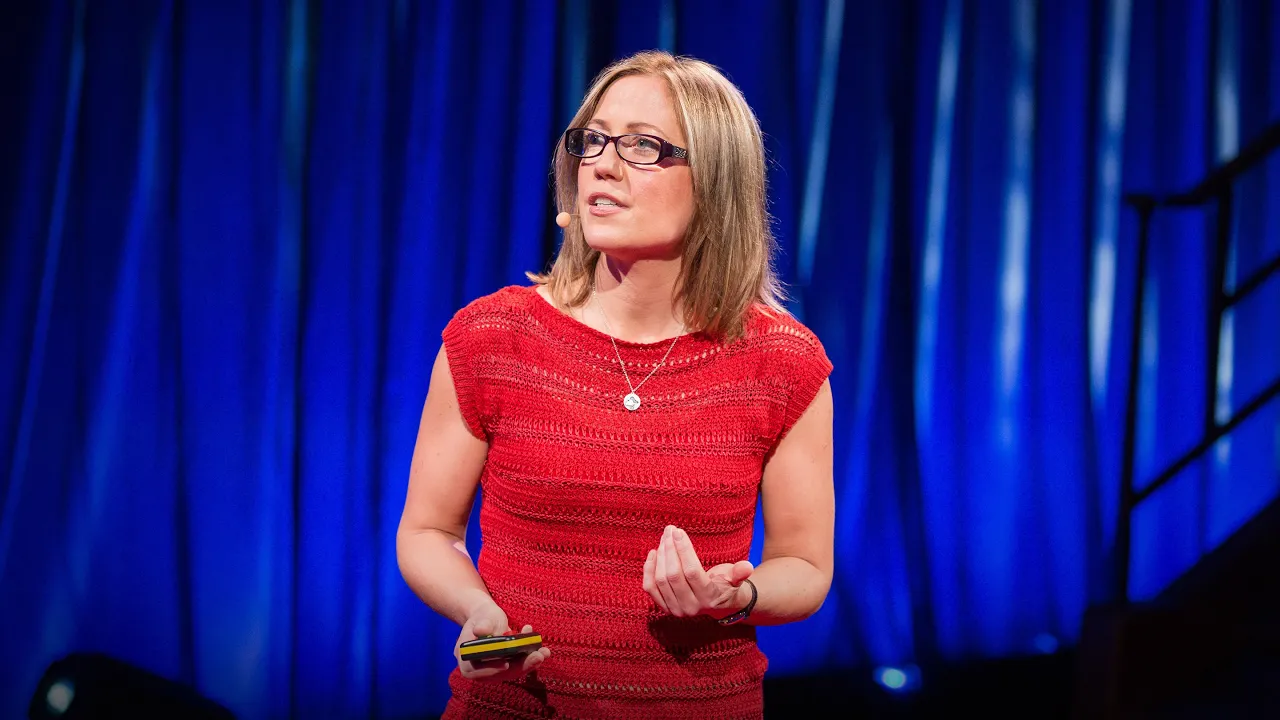
Climate Change Is Happening. Here's How We Adapt | Alice Bows-Larkin | TED Talks
Climate Change Impact and Choices
The speaker discusses how individual actions contribute to climate change and the potential for guilt associated with these contributions. They highlight the choice individuals have in either mitigating greenhouse gas emissions or facing more severe climate impacts in the future.
Individual Contribution to Climate Change
- Individuals have collectively contributed to climate change through their actions, choices, and behaviors, leading to increased greenhouse gas emissions.
- There is a potential for guilt when reflecting on decisions related to travel, energy usage, lifestyle choices, and their impact on the environment.
Influence on Future Climate Change
- Despite past negative impacts on the climate, individuals have an opportunity to influence future climate change by taking significant steps to reduce greenhouse gas emissions.
- Choosing to ignore climate change will result in adapting to more powerful climate impacts in the future, affecting not only individuals but also others globally.
Understanding Dangerous Climate Change
The discussion focuses on defining dangerous climate change in relation to a two-degree centigrade warming above pre-industrial levels and explores how this can vary based on infrastructure and support systems.
Definition of Dangerous Climate Change
- Two degrees centigrade warming above pre-industrial levels is considered dangerous due to its association with severe impacts on humans and the environment.
- The severity of climate change impacts can vary based on factors such as infrastructure quality, insurance coverage, and support networks in different regions.
Historical Emission Trends and Future Projections
This segment delves into historical CO2 emission trends from fossil fuels and industry before discussing global efforts like negotiations and agreements aimed at addressing climate change.
Emission Trends Over Time
- CO2 emissions from fossil fuels and industry have shown exponential growth since before the Industrial Revolution up until recent times.
- Despite international meetings focusing on limiting temperature rise, emissions have continued to rise steadily over the years.
Projected Global Warming Scenarios
- Current emission trends indicate a higher likelihood of reaching a four-degree centigrade global warming scenario rather than staying within a two-degree limit.
Impacts of Four-Degree Global Warming
The speaker highlights the challenges posed by a four-degree global average temperature increase concerning human experiences, infrastructure resilience, extreme weather events, food security implications under this scenario.
Challenges of Four-Degree Warming
- Human experiences will be significantly impacted by extreme temperature increases during heatwaves under a four-degree global average temperature scenario.
Infrastructure Resilience Concerns
Energy Systems and Climate Change
In this section, the speaker discusses the importance of understanding energy systems, food systems, aviation, shipping in relation to climate change. There is a focus on the urgency of addressing these issues to avoid dangerous climate change.
Understanding Cumulative Emissions
- The transition from a four-degree pathway to a two-degree pathway is crucial due to cumulative emissions and carbon budget.
- Greenhouse gases are cumulative, emphasizing the significance of the area under emission curves over time.
Implications for Emission Reduction Strategies
- Delayed emission reductions lead to steeper trajectories requiring more significant year-on-year reductions.
- Emphasizes the need for energy efficiency and conservation alongside supply-side decarbonization efforts.
Challenges in Energy Policy and Equity
This part delves into challenges related to energy policy, emphasizing the need for reducing energy demand in high-emission regions and addressing equity concerns.
Energy Policy Considerations
- Focus on reducing energy demand due to limitations in rapidly deploying decarbonization infrastructure.
Equity Concerns and Emission Reduction Targets
- Disparities in emissions necessitate emission reductions in high-emission countries like North America and Europe.
- High emission reduction targets (e.g., 10% per year) are essential for avoiding a two-degree target but pose economic growth challenges.
Urgency for Immediate Action
The urgency of immediate action towards emission reduction is highlighted, stressing the need for substantial changes rather than incremental adjustments.
Call for Significant Changes
- Urges whole-system change and lifestyle modifications to shift away from high-carbon scenarios.
Economic Growth vs. Emission Reduction Dilemma
- Proposes temporary austerity measures in wealthy nations as an exchange for economic growth to combat climate change effectively.
Global Emission Reduction Efforts
Discussion on global emission reduction efforts reveals that current strategies may not be sufficient to achieve necessary targets within the required timeframe.
Insufficiency of Current Strategies
Turn any video into a summary like this
YouTube links, meetings, lectures. With transcripts, search, and chat.