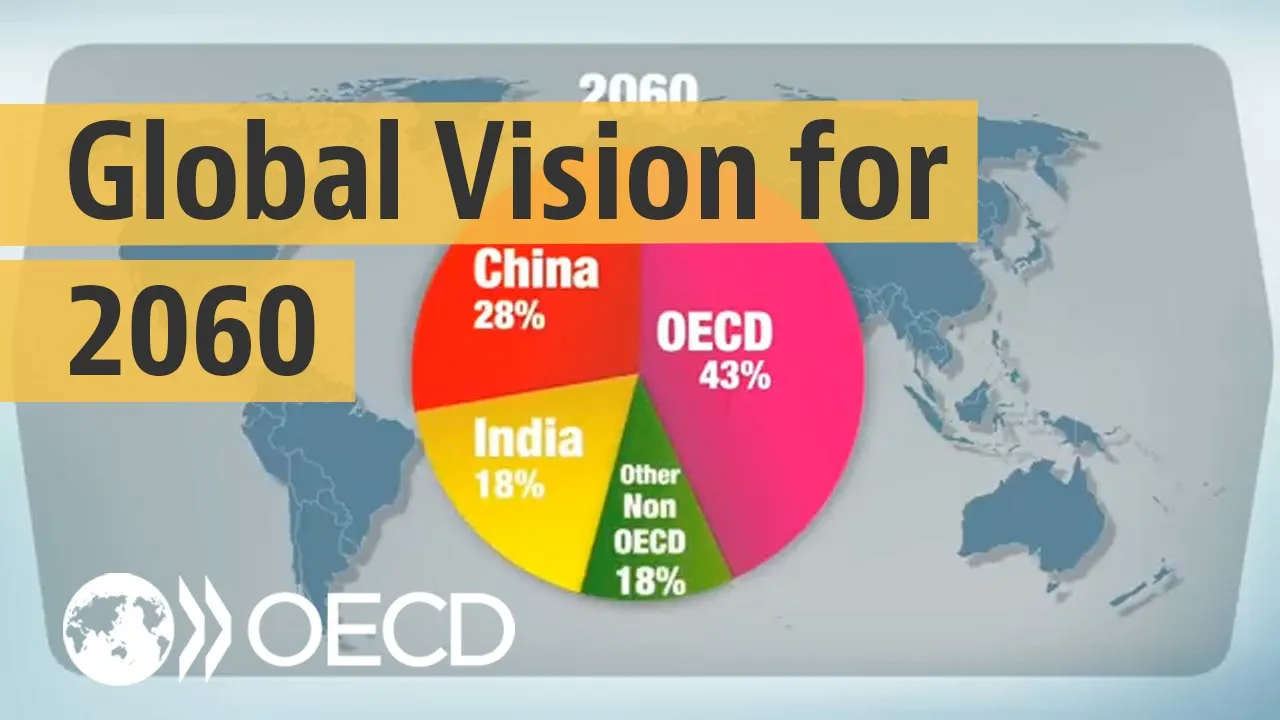
Looking to 2060: A global vision of future economic growth
Global Economic Growth Projections
This section discusses the expected growth of the global economy over the next half-century, with a focus on emerging economies and their impact on developed countries.
Emerging Economies to Drive Growth
- Emerging economies such as China and India are expected to experience much stronger and faster economic growth than developed countries like the United States and those in the OECD.
- This growth will be driven by a better-educated and more productive workforce, as well as population growth in India.
- The euro area and Japan face challenges due to aging populations, which will drag down their share of global GDP.
Shift in Economic Power
- China is expected to surpass the United States as the world's largest economy, producing 28% of global GDP by 2030.
- The United States' share of global GDP will shrink from 23% today to just 17% by 2060.
- Japan's share of global GDP will also decline significantly due to its aging population.
Convergence of Incomes
- Incomes and living standards in emerging economies are expected to converge with those in developed countries like the OECD over time.
- Richer OECD countries like France, Italy, Spain, Ireland, and Greece may see their per capita income fall compared to that of the United States.
Boosting Long-Term Growth
This section discusses how improving public finances and implementing bold structural reforms can boost long-term growth and living standards in advanced and emerging economies alike.
Improving Public Finances
- Improving public finances can help boost long-term growth and living standards in both advanced and emerging economies.
Implementing Structural Reforms
- Bold structural reforms can also help drive long-term growth and improve living standards in both advanced and emerging economies.
Turn any video into a summary like this
YouTube links, meetings, lectures. With transcripts, search, and chat.