Hans Rosling: Global population growth, box by box
The World Population in 1960
The speaker recalls a time when the world population was three billion people in 1960.
World Population Distribution in 1960
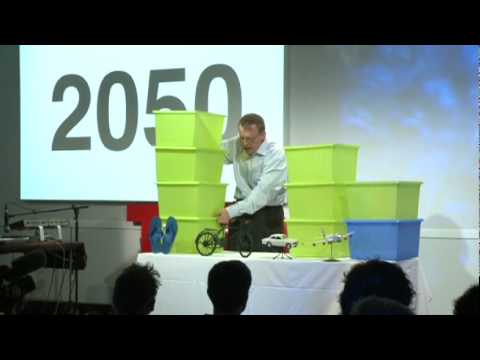
- In 1960, the industrialized world had one billion people, while the developing world had two billion people. There was a significant gap between these two regions.
- The industrialized world had healthy, educated, and wealthy individuals with small families. Their aspiration was to own a car, like a Volvo. On the other hand, the developing world struggled for basic necessities like food and shoes.
- This gap between the West and the rest of the world has shaped our mindset and language when discussing "the West" and "the Developing World." However, it is essential to update this mindset as the world has changed significantly since then.
Changes in World Population
The speaker discusses how the world population has changed from 1960 to 2010.
Rapid Increase in World Population
- From 1960 to 2010, an astonishing four billion people have been added to the global population. The population has doubled during this period.
- Economic growth in Western countries led to migration towards wealthier regions. As a result, aspirations shifted from owning cars to desiring holidays in remote destinations and air travel became more common. Meanwhile, some developing countries transitioned into emerging economies and started buying cars themselves. For example, Geely (a Chinese company) acquiring Volvo highlighted this shift. ,
Emerging Economies
- Currently, there is no longer a significant gap between the industrialized and developing world. The emerging economies, with relatively good health, education, and fertility rates similar to the West, are now aspiring to own bicycles and motorbikes. ,
- While there is no longer a gap between regions, the disparity between the poorest and richest individuals has widened. However, people exist at various levels of economic development, from walking to flying. Most individuals fall somewhere in the middle. ,
Future Projections
The speaker discusses future projections for world population growth.
Catching Up with Economic Growth
- China is expected to catch up economically, similar to Japan's previous trajectory. Projections indicate that their population will grow by one to three percent while experiencing significant economic growth. ,
- Middle-income countries will also progress economically if investments are made in green technology to mitigate climate change and maintain affordable energy prices. This progress may lead them towards owning electric cars in the future. ,
Population Growth among Poorest Countries
- Among the poorest countries, population growth continues due to factors such as lack of access to family planning and limited education opportunities. In the coming decades, their population is projected to increase from two billion to three billion and eventually reach four billion unless poverty alleviation efforts succeed in improving living conditions and providing access to education and basic necessities like bicycles and cell phones. Only then can population growth potentially be halted by 2050. ,
The transcript provided does not include specific timestamps for every bullet point. The timestamps used are the closest available to associate with each section of the transcript.
New Section
The speaker discusses population growth and child survival rates across different regions of the world in 1960 and how they have changed over time.
World Population in 1960
- The speaker presents a visual representation of the world map, with different colors representing different regions.
- The yellow color represents the Americas, dark blue represents Africa, brown represents Europe, green represents the Middle East, light blue represents South Asia (India), and China is highlighted separately.
- The size of each region on the map indicates its population.
- The speaker explains that in 1960, there were significant differences in child survival rates and family sizes among countries.
Changes Over Time
- Child survival rates have increased over time due to improvements in hygiene, education, vaccination, healthcare access, and family planning.
- As child survival rates reach 90%, families tend to decrease in size.
- Many Arab countries in the Middle East have experienced a decline in family size as child survival rates improve.
- Bangladesh has caught up with India in terms of child survival and smaller family sizes.
- The emerging world has seen improvements in child survival rates and smaller family sizes similar to those observed in Western countries.
Challenges Remain
- Despite progress, there is still a significant disparity between the wealthiest countries with high child survival rates and small families and the poorest billion people who have lower child survival rates (70% to 80%) and larger families.
- If six children are born into these populations, only four are likely to survive to the next generation. This leads to population doubling within one generation.
Achieving Sustainable Population Growth
- To achieve sustainable population growth worldwide, it is crucial to continue improving child survival rates to at least 90%.
- Investments by organizations like Gates Foundation, UNICEF, aid organizations, and national governments can help reach this goal.
- The speaker emphasizes that child survival is essential for stopping population growth and achieving a sustainable world population size.
Possibilities for the Future
- The speaker describes themselves as a "possibilist" who takes an analytical approach to the world without being overly optimistic or pessimistic.
- They believe that with green technology, investments to alleviate poverty, and global governance, it is possible to create a more just world.
- The role of the old West in leading the world will change, and it will become the foundation of the modern world.
New Section
The speaker reflects on their perspective as a "possibilist" and discusses the potential for creating a more just world through green technology, poverty alleviation, and global governance.
A New Perspective
- The speaker identifies themselves as a "possibilist," someone who approaches the world analytically without being overly optimistic or pessimistic.
Creating a Just World
- By embracing green technology and making investments to alleviate poverty, it is possible to create a more just world.
- Global governance plays a crucial role in addressing global challenges and ensuring fairness in decision-making processes.
Changing Role of the Old West
- In the past, Western countries were leaders in shaping the world. However, this dominance will change.
- The old West will transition from being at the forefront to becoming the foundation of the modern world.
Study Notes
- Population growth and child survival rates have changed significantly over time.
- Improvements in child survival rates are linked to factors such as hygiene, education, vaccination, healthcare access, and family planning.
- There is still a significant disparity between countries with high child survival rates and small families compared to those with lower child survival rates and larger families.
- Achieving sustainable population growth requires continued efforts to improve child survival rates worldwide.
- Green technology, poverty alleviation measures, and global governance are potential pathways to creating a more just world.
- The role of Western countries in shaping the world is evolving from leadership to becoming the foundation of the modern world.
Turn any video into a summary like this
YouTube links, meetings, lectures. With transcripts, search, and chat.