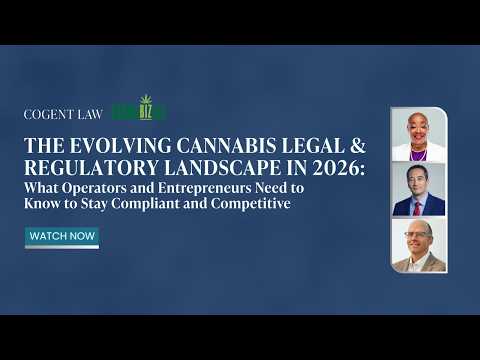
The Evolving Cannabis Legal & Regulatory Landscape in 2026
Introduction to the Evolving Cannabis Legal Landscape
Overview of the Webinar
- Chris Van Djk introduces himself as a partner at Coent Law Group and welcomes attendees to discuss the evolving cannabis legal and regulatory landscape for 2026.
- He acknowledges that participants are likely aware of recent developments in the cannabis industry, setting the stage for deeper discussions.
Guest Introductions
- Chris welcomes Anmarie Sorrell, expressing excitement about her participation and noting her extensive background.
- Anmarie introduces herself as President and CEO of Mosaic Group, highlighting her agency's 20-year history in advertising, marketing, and public relations across various regions.
- She also mentions founding Cannabisiac, an organization focused on education and resources for cannabis entrepreneurs over six years.
Expert Insights from Suhiko
Background in Cannabis Law
- Suhiko shares his unique background as a former tax attorney who transitioned into cannabis law with operational experience in cultivation facilities.
- He emphasizes his focus on helping businesses navigate legal complexities within the cannabis supply chain, particularly in New York.
Legal Practice Focus
- His practice involves providing fractional general counsel services to multi-state operators, covering startup processes, compliance issues, and tax planning related to cannabis operations.
Chris Van Djk's Role in Cannabis Banking
Experience in Financial Institutions
- Chris describes his role advising banks and credit unions entering the cannabis banking space after spending nearly a decade at a financial institution that pioneered such programs.
Services Offered
- He outlines four main areas of assistance: helping institutions enter or expand within the cannabis sector, addressing regulatory challenges faced by clients, improving efficiency in existing programs while ensuring compliance.
Executive Order and Rescheduling Discussion
Introduction to the Executive Order
- The discussion begins with a reference to an executive order announced on December 18, which prompted the presentation.
- Ann Marie is invited to explain the implications of this executive order regarding cannabis rescheduling.
Implications of Rescheduling
- There is excitement about potential rescheduling, with some advocating for full legalization. Rescheduling could significantly impact various operators in the cannabis industry.
- Key benefits of moving from Schedule I to Schedule III include opportunities for tax changes, enhanced research and development, and improved banking options.
Legal Landscape and Uncertainties
- Sahiko emphasizes the distinction between rescheduling and descheduling, noting that many prefer descheduling over mere rescheduling.
- The current status involves pending administrative hearings; uncertainty remains prevalent in the cannabis sector due to ongoing legal processes.
Federal Legality and Controlled Substances Act
- Until finalization of the hearing process, cannabis remains federally illegal. Operators outside federal frameworks continue to operate illegally.
- The discussion highlights how Section 280E of the Internal Revenue Code limits business deductions for those trafficking in Schedule I or II substances.
Potential Changes Under New Regulations
- If cannabis is reclassified as Schedule III, it may no longer violate 280E provisions; however, new legislation could still impose restrictions on deductions for marijuana businesses.
- Medical operators can benefit from falling under DEA or FDA regulations if they choose compliance; otherwise, they remain in a federally illegal space.
Nuances in Business Operations
- The classification does not strictly divide adult use from medical use; both categories may pursue DEA licensing based on state requirements like GMP certification.
Discussion on Cannabis Rescheduling and Its Implications
Decision-Making Framework for Operators
- Operators in the cannabis industry face critical decisions regarding their operational framework, potentially choosing between being inside or outside regulatory guidelines.
- There is a possibility of straddling both frameworks, but clarity on this remains uncertain.
Impact of Executive Orders on Research
- The executive order may have significant implications under 280E tax regulations, affecting research capabilities in the cannabis sector.
- Rescheduling cannabis could enhance opportunities for clinical and pharmaceutical research, allowing deeper exploration into its medical applications.
- Increased research could lead to better strain development and therapeutic options for patients, although it might impact existing brands negatively.
Current State of Cannabis Research
- Currently, there are no clinical studies being conducted within the cannabis industry; rescheduling would facilitate more extensive research similar to that of other pharmaceuticals.
- Comprehensive studies are essential to understand how cannabis affects various demographics and conditions.
Banking Perspectives Post-Rescheduling
- Even with potential rescheduling, existing compliance requirements from the 2014 FinCEN guidance will remain unchanged for banks dealing with cannabis businesses.
- Banks face significant hurdles due to enhanced onboarding processes and ongoing due diligence required by federal regulations.
Regulatory Landscape Uncertainty
- The state regulatory framework may not change significantly post-rescheduling; however, operators must still comply with federal laws if they do not obtain DEA registration.
- Political attitudes towards state legal operations can shift unpredictably, impacting enforcement at both state and federal levels.
Current Status of Cannabis Legislation in Florida
Challenges with Adult Use Legalization
- Florida is facing challenges in legalizing adult-use cannabis, with many petitions being thrown out. Initial petition numbers were met, but close to 100,000 signatures were invalidated.
- A deadline for gathering additional signatures is approaching, which is necessary to place the issue on the November ballot. The required number of valid signatures exceeds 75,000.
- The deadline for qualifying these petitions is in February. If successful, voters will have the opportunity to decide on adult-use legalization again.
Legislative Requirements and Past Efforts
- Previous attempts at legalization passed by a majority (56-57%) but failed due to Florida's requirement of a 60% approval rate for laws to take effect.
- There are ongoing discussions about several hemp bills currently under consideration in the Florida legislature as they are in session until next month.
Future Considerations and Market Entry
- Despite potential progress towards legalization, significant work remains regarding market entry and equity issues such as home grow options that other states have implemented.
Interstate Commerce and Federal Legality
Current State of Interstate Commerce
- The cannabis industry remains federally illegal, which complicates interstate commerce. Without a federal legal framework, no changes can occur regarding interstate transactions.
Implications of Federal Framework Changes
- If cannabis becomes classified under Schedule 3 federally, it could open up opportunities for interstate commerce while still adhering to state regulations.
Advertising Challenges
- Navigating advertising within the cannabis industry presents challenges due to inconsistent frameworks between state and federal laws.
Hemp Industry Developments
Recent Legislative Changes Impacting Hemp
- A provision added by Mitch McConnell during an appropriations bill has recriminalized aspects of the infused hemp market with a one-year grace period for compliance.
Uncertainty in the Cannabis Sector
- The uncertainty surrounding legislative changes significantly impacts both the cannabis and hemp industries, complicating future developments and business operations.
Hemp Industry Insights and Regulatory Challenges
Banking Perspectives on Hemp
- The speaker discusses the banking industry's approach to hemp versus cannabis, noting that many banks prefer to bank hemp due to its federally legal status.
- While hemp accounts are considered higher risk, they come with fewer regulatory filing requirements compared to cannabis accounts.
Executive Order Implications
- The executive order mentioned by Trump aims to update the terminology related to hemp provisions in the appropriation act, indicating potential changes for the industry.
- There is concern about inconsistent legal frameworks and overly restrictive definitions that could complicate future developments in the hemp sector.
Uncertainty in Legislation
- The discussion highlights how recent legislative changes have thrown the previously stable hemp market into uncertainty, particularly affecting growth and development opportunities.
- The speaker emphasizes the diverse products derived from hemp cultivation and expresses interest in observing how these legislative changes will unfold.
Broader Industry Impact
- Legislative decisions not only affect banks but also have a ripple effect on patients, supply chains, and the entire ecosystem surrounding hemp products.
- Acknowledgment of past wrongdoings within the industry raises concerns about broader repercussions from new regulations impacting all stakeholders.
Predictions on Cannabis Rescheduling
- One speaker expresses fatigue over predicting Washington's actions regarding cannabis legislation but acknowledges ongoing discussions around rescheduling cannabis to Schedule 3.
- Questions arise about rulemaking processes following an executive order and whether there is enough political momentum for rescheduling cannabis.
Political Climate Considerations
- The conversation shifts towards how upcoming midterm elections may influence legislative pressure on departments like the DEA to expedite processes related to cannabis regulation.
Political Dynamics and Cannabis Rescheduling
Current Political Climate and Future Predictions
- The current administration is under pressure to advance cannabis rescheduling, aiming for tangible progress beyond just an executive order.
- If no significant changes occur before the midterms, movement may be delayed until 2027, coinciding with the presidential election cycle.
- The political landscape suggests that if there are no shifts by midterm elections, more substantial changes could emerge as we approach the 2028 presidential elections.
Influence of Leadership on Cannabis Policy
- There is optimism regarding cannabis rescheduling due to President Trump's influence within his administration; he has expressed a desire for cannabis to be rescheduled.
- The dynamics in Washington indicate that Trump's opinions significantly sway federal agencies' actions regarding cannabis policy.
Anticipated Regulatory Changes
- A renowned cannabis attorney hinted at potential proposed rulemaking on cannabis appearing in the Federal Register soon, indicating forthcoming regulatory developments.
- Litigation surrounding the rulemaking process is expected, which could delay effective regulations until at least 2027 due to legal challenges.
Career Opportunities in a Rescheduled Cannabis Market
Emerging Business Opportunities
- Rescheduling could open numerous business opportunities across various sectors such as technology, HVAC, security, and legal services related to cannabis regulation.
- Career paths range from entry-level positions like bud tenders to managerial roles in retail operations and compliance within the growing industry.
Specialized Fields and Compliance Challenges
- The highly regulated nature of the cannabis industry creates specialized fields in underwriting and compliance that require specific expertise compared to traditional agriculture lending practices.
- As demand for compliance grows, career opportunities have expanded significantly within financial institutions dealing with cannabis banking programs over recent years.
Understanding the Cannabis Industry: Operational Insights
The Distinction Between Cannabis and Hemp
- The speaker discusses the operational aspects of cannabis, highlighting that THC cannabis and hemp are botanically identical, with legal definitions being the primary distinction.
- Emphasizes the challenges of fitting biological concepts into legal frameworks, which often leads to complications in regulation.
Knowledge Transfer in Cultivation and Processing
- Stresses that fundamental knowledge in cultivating and processing cannabis is applicable across both hemp and THC cannabis sectors.
- Points out that skills developed in one area can be beneficial as the industry evolves, suggesting a seamless transition between different segments of the market.
Structuring Startups in Cannabis
- Discusses essential startup considerations such as structuring, tax planning, and navigating 280E issues prevalent in the cannabis industry.
- Highlights the importance of establishing contracts for profit splits, royalties, and tolling fees to facilitate smoother operations within startups.
Educational Initiatives by Canabiziac
- Marie introduces Canabiziac's monthly webinars covering various topics like tarpen technology and financing options for businesses.
- Mentions a business incubator program designed to guide entrepreneurs through business planning over an 8 to 16-week period.
Specialized Programs Offered
- Describes a medical cannabis program aimed at healthcare professionals seeking deeper knowledge about cannabis from a scientific perspective.
- Introduces "Cannabis 101," targeting individuals new to the plant who wish to learn its history, science, and implications.
Networking Opportunities and Events
- Explains membership benefits including access to courses, speaking opportunities, networking events, and business exchanges within the community.
- Announces an upcoming roadshow across six cities in three countries starting May; emphasizes participation opportunities for attendees.
Advertising Challenges in Cannabis Media
- A question arises regarding how regulatory changes affect advertising; it highlights complexities due to varying state laws governing media content related to cannabis.
- The discussion notes significant restrictions on advertising practices influenced by both platform policies and state regulations.
Cannabis Advertising and Regulatory Challenges
Complications of Interstate Advertising
- Cannabis companies can advertise in their own state but face limitations when advertising across state lines, particularly near borders. This creates a complex landscape for cannabis marketing.
DEA and FDA Regulations
- If cannabis businesses operate under the DEA's Schedule 3 framework, many regulatory issues may be resolved, especially concerning interstate commerce and state regulations.
Advertising Guidelines Under DEA/FDA
- Businesses that comply with the DEA/FDA will face detailed regulations on advertising similar to those in the pharmaceutical industry. State guidelines will also dictate how cannabis can be marketed.
- New advertising rulings are unlikely until the DEA/FDA provides clear guidelines. Current advertisements should adhere strictly to state regulations to avoid legal complications.
Insurance Industry Involvement
- The insurance sector is slowly adapting to include cannabis-related policies, with few companies currently offering coverage due to regulatory uncertainties.
- Obtaining officer and director liability insurance remains challenging for financial institutions involved in the cannabis space, indicating a cautious approach from insurers.
Entering the Recreational Cannabis Market
- To break into recreational cannabis markets like Virginia, individuals should gather comprehensive information about market conditions and licensing requirements through research tools such as Google or AI platforms.
- Understanding existing medical markets is crucial for assessing potential business opportunities within recreational frameworks. Researching market size and historical data helps gauge total addressable market potential.
- Developing a solid business model requires knowledge of real estate needs, organizational structure, and compliance with licensing frameworks specific to each state's regulations.
Opportunities in Ancillary Services
- Exploring ancillary businesses—those not directly handling cannabis plants—can present lower-cost entry points into the industry without requiring extensive licenses.
- Identifying strong ancillary services allows for flexibility amid changing legal landscapes while ensuring ongoing demand within the industry regardless of regulatory shifts.
Starting a Business in the Cannabis Industry
Exploring Entry Points into the Cannabis Sector
- The speaker suggests that aspiring entrepreneurs should consider businesses with lower capital and administrative requirements, which do not necessitate extensive licensing.
- Emphasis is placed on evaluating personal skill sets; individuals are encouraged to identify their strengths and passions that could be applicable within the cannabis industry.
- Acknowledgment of the high likelihood that many skills can be transferred to this emerging market, reinforcing optimism for potential business owners.
Conclusion of the Webinar Discussion
- The host expresses gratitude towards participants Hiko and Anmarie for their valuable contributions during the discussion, highlighting an engaging dialogue.
- Appreciation is extended to all attendees for their involvement, underscoring the importance of community engagement in discussions surrounding evolving topics like cannabis.
Turn any video into a summary like this
YouTube links, meetings, lectures. With transcripts, search, and chat.