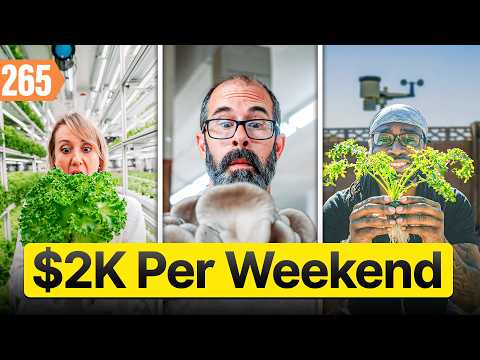
3 Farm Businesses You Can Start at Home ($50 Startup)
What Are the Profitable Farming Models You Can Start at Home?
Introduction to Home-Based Farming Opportunities
- What if you could earn between $120K and $2.5 million annually from a home-based farm business? This video explores three unique farming models: hydroponics, aquaponics, and aeroponics.
- The video features individuals who have successfully implemented these models, showcasing their distinct paths to profitability in farming.
First Business Model: Hydroponic Gardening
- In the first year of operation, one entrepreneur generated approximately $60K-$70K in revenue through a backyard hydroponic garden. This venture began with a simple 5-gallon fish tank found on the roadside.
- The speaker emphasizes that sustainable gardening can be both profitable and accessible for anyone willing to start small.
Second Business Model: Mushroom Farming
- Another entrepreneur reports nearly doubling their revenue year-over-year, reaching just under $200K last year by starting an incredibly profitable mushroom farm from their garage.
- They highlight the importance of local food sources and meeting community demand, particularly in areas with thriving restaurant industries like Walla Walla.
Third Business Model: Urban Vertical Hydroponic Farm
- Shannon introduces Brick Street Farms as an urban vertical hydroponic farm operating on just one-third of an acre but producing yields equivalent to 70 acres of traditional farming methods without pesticides or GMOs.
- The setup includes 20 shipping containers dedicated to growing leafy greens and herbs using innovative hydroponic systems that do not require soil but utilize skoria lava rock instead for nutrient retention.
Understanding Sustainable Gardening Techniques
- Sustainable gardening minimizes environmental impact while being easy to maintain; it encompasses practices like hydroponics (nutrient solutions) and aquaponics (using fish waste). These methods are also inspired by NASA's space technology applications for efficient resource use.
- Entrepreneurs emphasize that anyone can grow their own food sustainably, which contributes positively not only to nutrition but also mental well-being and community engagement.
This structured overview captures key insights from the transcript while providing timestamps for easy reference back to specific parts of the video content.
Brick Street Farms: From Hobby to Hydroponic Success
The Birth of Brick Street Farms
- The founder transitioned from Pennsylvania to Florida, facing challenges in gardening due to the climate. This led to the creation of a hydroponic farm in their garage.
- Initially a hobby, the hydroponic farm produced more food than the founder and their husband could consume, resulting in sharing with neighbors and eventually leading to the establishment of Brick Street Farms.
- After two and a half years of balancing full-time jobs with farming, the founder decided to fully commit to Brick Street Farms.
Operations at Brick Street Farms
- A sawdust machine is used for preparing substrates for mushroom cultivation, likened humorously to a "bed and breakfast" for mushrooms.
- The substrate mixture includes oak sawdust and oat pellets; this process has been streamlined compared to previous manual methods.
- Each container on the farm produces between 1,000 and 1,500 pounds of fresh leafy greens monthly, showcasing significant production capabilities despite appearing small-scale.
Sustainable Gardening Insights
- The operation employs 24 employees across various roles; each container requires one full-time employee for management.
- Starting a sustainable gardening system can be affordable—around $30 in materials—and profitable within eight weeks if growing fast-yielding crops like lettuce.
Comparison with Traditional Gardening
- Traditional gardening typically takes 12 to 16 weeks before harvestable crops are ready compared to just eight weeks for sustainable methods.
- Sustainable gardening allows multiple harvests from one plant; one head of lettuce can yield enough leaves for four salads weekly.
Startup Costs and Feasibility
- Initial startup costs can vary; the founder's first setup cost around $5,000 using recycled materials.
- Simpler setups like "Martha tents" could have sufficed instead of extensive construction efforts made initially.
Indoor Gardening Solutions
- For those without outdoor space (e.g., living in high-rise apartments), specialized systems like the "Brooklyn Bridge system" are available that cater specifically to indoor environments.
Exploring Sustainable Gardening Systems
Overview of the Brooklyn Bridge System
- The Brooklyn Bridge system features seven different garden greens, showcasing a week and a half of pure root growth, highlighting its efficiency in sustainable gardening.
- This hydroponic system allows plants to absorb up to 10 times more nutrients than traditional gardening methods, significantly accelerating plant and root growth.
Hydroponics Explained
- The NFT (Nutrient Film Technique) hydroponic system continuously flows water filled with essential nutrients, vitamins, and minerals for optimal plant health.
- The controlled environment acts like a "spa day" for plants, allowing them to thrive without battling external elements.
Business Growth and Revenue Insights
- Since acquiring the property in 2016, the business has seen a year-over-year revenue increase of about 40%, aiming for $250,000 this year after reaching nearly $200,000 last year.
- Initial revenues were around $60-$70k in the first year from wholesale operations; by year three, they expanded to 16 containers and broke their first million in revenue.
Transitioning to Direct Consumer Sales
- As customers began seeking products directly after tasting them at restaurants, the business pivoted towards direct-to-consumer sales through pop-ups.
- Current revenue projections are approximately $3.2 million this year from diversified sources: distributors (30-40%), wholesale (about 50%), and direct-to-consumer retail (6%).
Startup Costs and Accessibility
- Initial startup costs for gardening can be as low as $50; an anecdote shared highlights starting with a $5 fish tank found on the roadside.
- The discussion emphasizes that even minimal investments can lead to significant ventures in sustainable gardening.
Mycelium Cultivation Process
- A specific species of mycelium is used for inoculating local wheat grain; each grain contains individual organisms that contribute to mushroom production.
- One mycelium culture can produce enough substrate for potentially yielding 120 lbs of mushrooms.
This structured overview captures key insights from the transcript while providing timestamps for easy reference.
Building Relationships in the Mushroom Business
Establishing Connections with Restaurants
- The speaker emphasizes the importance of direct consumer relationships, particularly through farmers' markets.
- They advocate for a bold approach, suggesting that one should directly engage decision-makers like chefs or managers to discuss mushroom usage.
- By analyzing restaurant menus, they identify opportunities where specific mushrooms can enhance existing dishes or introduce new ones.
Community Engagement and Education
- The discussion shifts to Tucson Village Farm, highlighting its role in sustainable gardening systems such as aquaponics and hydroponics.
- The speaker mentions their collaboration with local youth programs to design these systems, framing it as a community service initiative rather than a revenue-generating activity.
- They express the philosophy of providing knowledge ("a seed of knowledge") that can lead to long-term food sustainability for individuals.
Starting a Mushroom Farm: A Step-by-Step Guide
Initial Steps for New Farmers
- To start a mushroom farm, first understand your competition and target customers; this helps identify underserved market segments.
- Next is setting up the growing environment. The incubation phase is crucial; some companies specialize in this aspect to reduce overhead costs.
Customer Communication and Follow-Up
- Continuous communication with customers is vital throughout the farming process. Transparency about challenges fosters trust among chefs who value local produce.
Understanding Aquaponics Systems
Mechanisms of Aquaponics
- In an aquaponic system, fish waste serves as fertilizer for plants, contrasting with traditional methods where nutrients are manually added.
- While fish are not consumed in this setup, it's possible to grow edible fish by adjusting environmental factors like water temperature and flow rate.
Practical Considerations for Home Setup
- The speaker explains how quickly plants can grow in an aquaponic system—just days after planting seeds into dirt-filled containers.
Cost Analysis for Home Hydroponic Systems
Investment Overview
- For those interested in home hydroponic setups aimed at personal consumption (e.g., fresh lettuce), initial costs range from $200 to $1,000 depending on system complexity.
Profit Expectations
- Setting up a living wall at home could cost around $45 in materials. Profit potential varies based on several factors including scale and efficiency.
Living Wall Systems: A Profitable Agricultural Innovation
Overview of the Living Wall System
- The living wall system is priced around $800, with a profit margin that varies based on materials and setup time (approximately 20 minutes).
- Each system can produce up to 64 salads in eight weeks, with each salad selling for $4 to $5. This results in significant revenue potential from multiple harvests per plant.
Monthly Expenses and Overhead
- Monthly overhead includes leasing warehouse space, utilities (primarily electricity), and insurance costs estimated at about $3,500.
- The health benefits of the living wall system are notable; it cleanses air in a 250-foot room five times daily, improving air quality for individuals with breathing issues.
Revenue Generation Potential
- Revenue from one rack of lettuce can range between $2,200 to $5,800 weekly depending on the customer base (retail, wholesale, or distributors).
- A full farm container can generate monthly revenues between $8,000 to $15,000. With 17 containers operational, this leads to substantial overall income.
Profit Margins and Business Insights
- Gross profit margins are reported at approximately 50% to 60%, while net margins settle around 30%.
- Key business advice emphasizes that belief in one's product is crucial for success; without conviction in what you're selling or developing, sustainability is compromised.
Challenges and Strategies in Agriculture
- Many entrepreneurs report high revenue but low profits; understanding unit economics and scalability is essential for profitability.
- The agriculture industry faces challenges requiring financing every season. Smart financial management ensures funds are allocated effectively for maximum returns.
Faith in Agriculture
- Farmers often possess strong faith as they invest in future outcomes that have yet to materialize—this belief is fundamental to their resilience.
Location Selection Process
- The speaker expresses no regrets about choosing their location despite its previous use as a garbage dump; thorough research was conducted regarding land use regulations.
Starting a Mushroom Business: Key Insights
The Importance of Community and Family Involvement
- The speaker emphasizes the significance of community support, stating that involving family and the local community is crucial for business success. They believe true growth happens when you accept help from others.
- They reflect on their personal experience, noting that once they accepted assistance from family and community, their business began to prosper.
- The analogy of a garden is used to illustrate how both plants and people thrive together in a supportive environment.
Transitioning from Home Garage to Larger Operations
- The speaker discusses their transition from growing mushrooms in a garage to leasing a larger space, facilitated by financing from a local lender who supports startups.
- They highlight the importance of demonstrating capability through initial sales without losses while operating out of the garage.
- Within six months, they secured a lease for a new location after proving their business model's viability.
Types of Mushrooms Cultivated
- A variety of mushrooms are introduced, including lion's mane, snow oyster, pearl oyster, and chestnut mushrooms. Each type has unique characteristics appealing to consumers.
- The speaker shares personal favorites like chestnut mushrooms due to their rich umami flavor and versatility in recipes.
Time Commitment for New Entrepreneurs
- For those interested in starting similar ventures, an initial commitment of weekends is necessary to understand the system; thereafter, maintenance can be as little as two hours per week if set up sustainably.
- Harvesting can be quick—comparable to picking salad—indicating that with proper systems in place, time investment can be minimal.
Profit Potential and Community Engagement
- The potential profit discussed suggests that two hours of work could yield around $2,000 weekly if selling directly or through local businesses.
- Emphasizing community connections again, the speaker notes that local grocery stores and restaurants prefer sourcing goods locally over dealing with shipping costs.
Challenges Faced During Startup
- Starting during COVID posed significant challenges; they filed for business just days before shutdown orders were issued.
- Initial failures in mushroom cultivation led them to seek guidance rather than trying to reinvent processes alone. This learning curve was compounded by market disruptions due to pandemic-related restrictions.
Scaling a Business: Lessons Learned
Initial Challenges and Financial Strategies
- The speaker discusses the initial challenges faced when scaling their business, emphasizing external factors that were not initially considered.
- They took on personal debt by using 401ks and refinancing their house to fund growth, highlighting a frugal approach in the early stages.
- Venture capital was pursued as a combination of debt and equity due to the nuances of their industry, which made traditional loans less feasible.
- The importance of mentorship and networking provided by venture capital is noted as a significant benefit beyond just financial support.
- Recommendations include delaying debt acquisition and utilizing USDA resources for favorable loan terms tailored to agricultural businesses.
Starting Over with Limited Resources
- When asked how they would restart with only $100, the speaker outlines a strategic plan involving saving most funds while investing in low-cost items like goldfish for an aquaponics farm.
- They emphasize sustainability in gardening, stating there is no waste when recycling materials through aquaponics.
Pricing Strategies for Mushrooms
- Discussion on mushroom pricing reveals that lion's mane mushrooms are more expensive due to longer growth times compared to faster-growing oyster mushrooms.
- The concept of "paying rent" is introduced, where different mushroom types have varying costs based on their growth duration and market turnover rates.
Market Competition and Customer Base
- The speaker advises checking competition before starting a mushroom business to identify gaps in production or demand within the market.
- They share experiences servicing diverse clients from local delis to high-end restaurants like Ritz Carlton, illustrating the breadth of their customer base.
Personal Inspiration Behind the Business
- Reflecting on personal background, the speaker credits their mother for instilling a love for gardening during childhood despite limited resources.
- Memories of gardening with family highlight how these experiences shaped their current passion and commitment to sustainable practices.
Together We Grow: The Journey of Mushroom Farming
Planting the Seed of Community
- A significant moment occurs when a smile and a statement about growth symbolize the beginning of a family and community journey, emphasizing the motto "together we grow."
- Excitement builds as they discuss trying dishes made with mushrooms, highlighting the connection between food and community.
Culinary Delights
- The dish being prepared is wild mushroom bruschetta featuring oyster mushrooms, shiitake, caramelized onions, and local bread from Wheatland Bakery.
- The focus shifts to setting up a mushroom farm, particularly on essential equipment for fruiting mushrooms.
Essential Equipment for Mushroom Farming
- Key components include a fruiting room or tent, an area for packaging and harvesting, and storage to keep mushrooms cool.
- Emphasis on starting with fruiting rather than attempting full production from the outset; this approach requires less setup and technical expertise.
Overcoming Obstacles in Sales
- An unexpected challenge in selling mushrooms involves educating customers about the growing process to dispel misconceptions about quality.
Communication with Customers
- Phase three focuses on maintaining communication with customers regarding mushroom growth timelines and order adjustments based on actual yields.
Financial Insights into Farming Operations
- Monthly energy costs are primarily driven by grow lights and HVAC systems; each container's bill can reach around $1,000.
- Labor is identified as the most significant expense due to extensive farming operations over limited acreage.
Qualities of Successful Farming Entrepreneurs
- Three essential qualities highlighted are patience (to manage crises), stamina (for physical demands), and persistence (to see projects through).
This structured overview captures key insights from the transcript while providing timestamps for easy reference.
Delicious Crops and Sustainable Business Models
Unique Crop Insights
- The speaker highlights the appeal of sour green apple and lime, noting its versatility in salads and seafood dishes.
- Red Serell is identified as a premium crop, with prices ranging from $8 for 2 oz to $32 for larger quantities.
- The business model discussed emerged during the pandemic, emphasizing that hunger remains a constant need regardless of economic conditions.
Recession-Proof Business Strategies
- The speaker believes their business model is recession-proof due to its focus on sustainable gardening that accommodates all ages and physical abilities.
- To connect with restaurants, it's advised to research menus and look for local product endorsements; grocery store engagement should involve direct communication with produce managers.
Challenges in Transitioning Farming Practices
- Many farmers hesitate to adopt new models due to significant investments in existing land, equipment, and processes.
- There’s a trend towards hybrid farming models where traditional farmers are incorporating greenhouses and hydroponics.
Operational Challenges in Mushroom Farming
- Common challenges include machinery breakdowns and contamination issues; sometimes entire batches must be discarded.
- A tracking system using QR codes allows for detailed monitoring of mushroom origins from liquid culture through production stages.
Entrepreneurship Lessons Learned
- The speaker reflects on the myth that substantial initial funding is necessary for entrepreneurial success; they achieved progress without any financial backing initially.
- They emphasize the importance of belief in one’s ideas over monetary investment, stating that ideas come to fruition when nurtured properly.
Diversification Opportunities
- Initially focused on adding vegetables like tomatoes and herbs, the speaker has since diversified into dehydrated mushrooms, freeze-dried products, nutritional supplements, and soil amendments.
Reflecting on Growth and Lessons Learned
Value Addition and Diversification
- The speaker emphasizes the importance of focusing on value-added products for diversification rather than expanding into entirely different product lines, such as tomatoes. This reflection suggests a strategic approach to business growth.
Journey from Humble Beginnings
- The speaker reflects nostalgically on their journey, starting in a garage in 2015 and projecting $3.5 million in revenue by the end of 2024. This highlights significant growth and achievement over time.
- They express pride in their initial constraints and resource management, indicating that these early challenges contributed positively to their current success.
Operational Insights
- The speaker shares lessons learned from operating a unique facility for about 14 months, expressing optimism about replicating this model more efficiently in the future.
- There is excitement about building additional facilities post-pandemic, suggesting confidence in scaling operations effectively while maintaining cost efficiency.