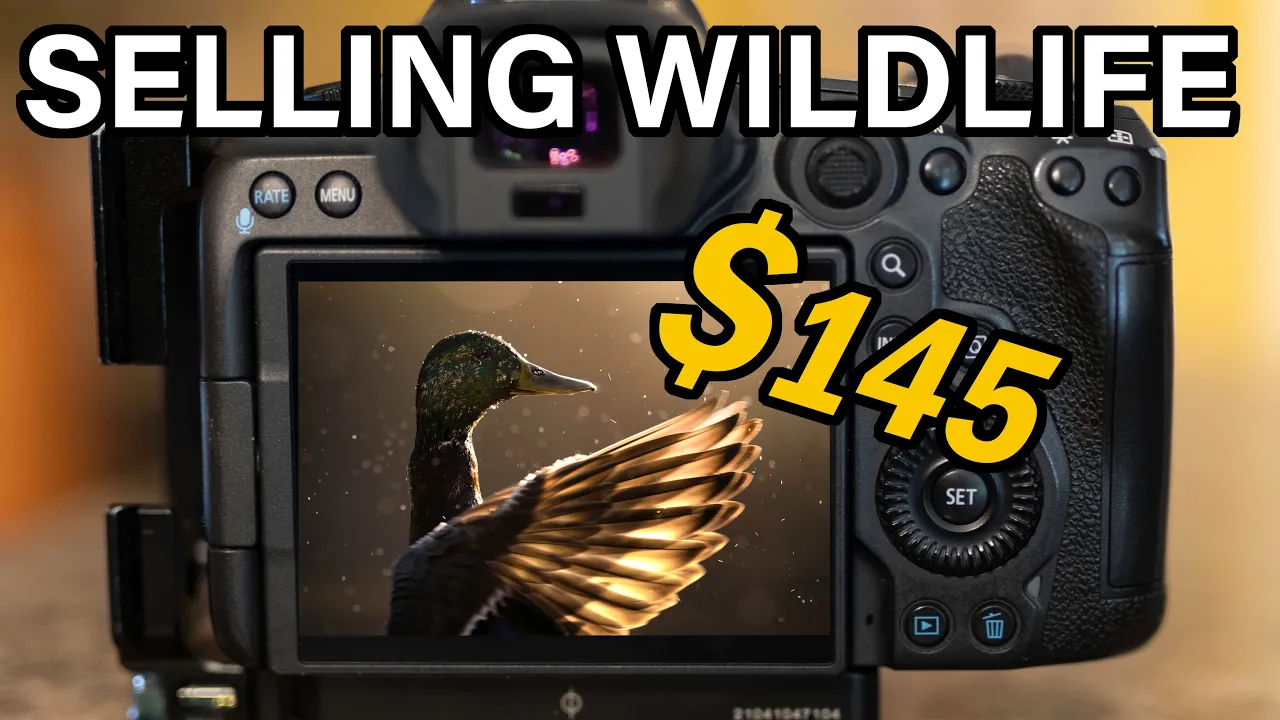
MONETIZE YOUR WILDLIFE AND NATURE PHOTOGRAPHY: and, how to take photos that will sell!
Introduction and Overview
In this video, the speaker, Simal, a professional wildlife photographer in Eastern Canada, discusses how to monetize wildlife photography. He shares tips on developing your craft, building your reputation, and translating your presence into recognition.
Developing Your Craft
- Building a strong foundation as a wildlife photographer is crucial for success.
- Develop good field craft and knowledge of your gear.
- Build up an inventory of quality equipment and become familiar with it.
- Over time, you will gain knowledge about different game species, their habitats, and the best times to photograph them.
- Continuously improve your skills by learning from each experience.
Building Your Reputation
- Start showcasing your photos on social media platforms like Facebook, Instagram, Vero, or TikTok.
- Share your work with friends and use their influence to expand your reach.
- Consider building a website to establish an online presence. Choose a website provider that can support future online sales if you plan to sell prints later on.
Translating Your Presence into Recognition
- Engage with your audience beyond social media by reaching out to local media outlets for potential TV appearances or interviews.
- Seek opportunities to present at local photo clubs or events.
- Aim for recognition in newspapers or magazines within your region.
Conclusion
Monetizing wildlife photography requires developing skills, building a reputation through social media and websites, and translating that presence into recognition through various media channels. By following these steps, photographers can increase their chances of making money from their wildlife photography.
The transcript provided does not contain any further content after the conclusion timestamp.
Developing a Recognizable Style
The importance of developing a recognizable style in wildlife photography and how it contributes to building a portfolio.
Developing a Recognized Style
- Having a recognized style in your photos is beneficial as people can identify your work even before seeing your name.
- Developing a consistent style across your portfolio helps establish your unique identity as a photographer.
- Being recognized for your work as a whole, rather than just one photo, indicates progress and growth in your career.
Developing Your Suite of Products
Exploring the concept of developing a suite of products as a wildlife photographer to diversify revenue streams.
Suite of Products
- Wildlife photographers should think of their revenue sources as different areas on a pie chart, each contributing varying amounts.
- It is advisable to start small when selling products and gradually introduce new product styles to learn the business effectively.
- Learning aspects such as delivery, quality control, shipping rates, invoicing, and payment methods have learning curves that are easier to manage on a smaller scale.
Starting with Small-Scale Products
Suggestions for starting with small-scale products like calendars and prints to gain experience and promote through personal networks.
Small-Scale Product Ideas
- Calendars can be an easy product to start with. Online tools are available for creating calendars that can be sold to friends, family, and promoted through social media networks without requiring advertising.
- Prints can also be sold by printing at home or using commercial print shops. As reputation grows, other products like custom jobs become viable options.
Expanding Product Offerings
Exploring additional ways wildlife photographers can monetize their work, such as custom jobs, speaking engagements, product sponsorships, and stock agencies.
Expanding Product Offerings
- Custom jobs and services like photography or videography on a custom basis can be offered as expertise grows.
- Wildlife photographers who enjoy engaging with people can explore opportunities like speaking engagements and product sponsorships where they sell themselves as a product.
- Stock agencies provide a platform to resell photos for a small commission. However, it may not be a significant revenue generator for most photographers.
- Selling photos to magazines and writing articles that include both text and photos can be an all-in-one solution for publications.
Scaling Up the Business
Discussing the importance of scaling up the business by increasing volume, reputation, connections, and referrals.
Scaling Up
- To grow the business and reputation, it is essential to increase sales volume through various means such as weekends, evenings, vacation times.
- Building connections and receiving referrals are crucial aspects of scaling up the business.
- Depending on personal goals and preferences, one can choose to keep wildlife photography as a sideline or transition into full-time professional work gradually.
Transitioning to Full-Time Wildlife Photography
Highlighting that transitioning from another career to full-time wildlife photography requires years of expertise building, reputation development, quality work portfolio creation, and establishing connections.
Transitioning to Full-Time Work
- Transitioning from another career to full-time wildlife photography is not an overnight process but requires years of experience building.
- Developing expertise in the field along with reputation-building is crucial before considering full-time work.
- It is possible to scale up wildlife photography while maintaining another job if desired income levels are reached. This allows for selectivity in choosing projects based on personal preferences.
The transcript is in English, and the notes have been provided in English as well.
New Section
In this section, the speaker discusses the attributes that make certain photos sell well. They mention the importance of light, composition, and artful qualities in images.
Factors that Make Photos Sell Well
- With proper use of light and angles, photos can have a visually appealing composition.
- Leading lines and unique looks can catch viewers' attention.
- The speaker's best-selling image features a fox with unique lighting and good composition.
- Another successful photo is of a bald eagle in the snow, which has action and an artistic feel.
- A phone photo of two Bohemian wax wings also sells well due to its artful attributes.
New Section
In this section, the speaker explains the concept of "sense of place" in photography. They give examples from outside wildlife photography to illustrate how capturing a recognizable location can enhance the appeal of an image.
Importance of Sense of Place
- In sports photography, capturing iconic elements like Olympic rings in the background adds value to a photo.
- People buying nature photos often want mementos or reminders of home or familiar places.
- A photo featuring a famous tree with a Milky Way backdrop becomes popular due to its sense of place.
- Similarly, an image showcasing Peggy's Cove Lighthouse in Nova Scotia gains popularity for its recognizable location.
New Section
In this section, the speaker challenges the notion that wildlife photos cannot have a sense of place. They provide examples where incorporating elements like ocean waves enhances the appeal and marketability of wildlife images.
Wildlife Photos with Sense of Place
- Two photos featuring snowy owls are compared; one on a Lobster Pot by the ocean stands out due to its connection to coastal living.
- People living near or away from oceans appreciate reminders of the sea, making such photos more marketable.
- The sense of place can be achieved by incorporating recognizable elements or environments in wildlife photography.
New Section
In this section, the speaker discusses the importance of unique and captivating photos that evoke a "wow" factor. They provide examples of images that stand out due to their distinctiveness.
Importance of Unique Photos
- A photo capturing a red-winged blackbird's breath is considered unique and intriguing.
- Such photos are memorable and have a strong visual impact on viewers.
- Another example is an image of a common loon flipping a green crab, which showcases an extraordinary moment in nature.
Timestamps for remaining sections are not provided in the transcript.