MIAF 2024 3ra Sesión
Welcome to the Early Childhood and Family Table
Introduction to the Meeting
- The meeting focuses on coordinating inter-institutional efforts related to early childhood, adolescence, and family welfare within the National System of Family Welfare.
- Emphasis is placed on public policy collaboration aimed at designing, implementing, and evaluating actions that benefit young populations and families.
Importance of Collaboration
- This table serves as a crucial platform for uniting various secretariats, institutions, and community members to ensure the rights of children and adolescents are upheld.
- A proposal was made for this session to socialize an integral care route and prevention strategies against substance abuse led by ICBF (Instituto Colombiano de Bienestar Familiar).
Updates on Programs
- An update was expected regarding the "Atrapasueños" strategy and the "1 Day to Change the World" program; however, no reports or responses were received since October 8th.
- Members were encouraged to suggest additional topics for discussion during this session.
Meeting Logistics
- The meeting was initially planned as an in-person gathering but shifted to a virtual format due to member requests for convenience.
- Juan Diego Parra introduced himself as a professional contractor in public policies supporting social programs. He initiated attendance checks via a shared link in the chat.
Attendance Roll Call
- A roll call was conducted with various officials present or absent from different institutions involved in child welfare initiatives. Notable attendees included municipal leaders and representatives from educational institutions.
Meeting Agenda and Discussions
Opening Remarks and Agenda Approval
- The meeting begins with a call for any annotations or interventions from the 15 members present. The facilitator prompts for agreement on proceeding to the next agenda item.
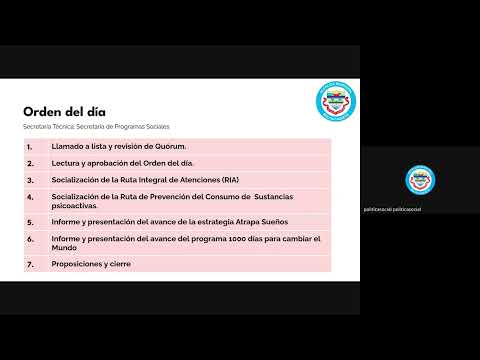
- The agenda includes several key points: reading and approval of the agenda, socialization of integral attention routes, prevention strategies for substance abuse, progress reports on various programs, and closing propositions.
Discussion on Socializations and Reports
- There is an emphasis on socializing reports related to childhood and adolescence programs in the municipality, highlighting coverage challenges faced by these initiatives. However, no reports were received from ICBF or Fundes Sur regarding their respective strategies.
- A suggestion is made to remove certain socialization points from the agenda due to lack of responses from involved entities, indicating a need for alternative topics to discuss during this session.
Proposal Adjustments
- The speaker proposes removing point three (socialization of program updates) due to disconnection issues with relevant parties who could provide necessary information about ongoing programs like "Mil Días para Cambiar el Mundo." This program focuses on food security and family support.
- It is noted that many attendees are already familiar with previous presentations regarding improvement plans aimed at early childhood development but acknowledges that some may not be aware of all details discussed previously. Suggestions are made for concise discussions moving forward.
Clarification Requests
- A request is made for clarification regarding which entity oversees the "Mil Días para Cambiar el Mundo" program; it’s confirmed that while Solita participates in it, another organization leads its direction. Contact information will be shared during the meeting for follow-up inquiries.
Importance of Improvement Plans
Plan de Mejoramiento para la Infancia y Adolescencia
Introducción al Plan de Mejoramiento
- Se presenta el plan de desarrollo y las actividades realizadas por la alcaldía, destacando el cumplimiento del plan de mejoramiento compartido por la administración saliente.
- Se enfatiza que un plan de mejoramiento debe ser más que un documento; debe incluir acciones concretas basadas en diálogos previos sobre las necesidades de la infancia y adolescencia.
Socialización del Plan
- Se propone socializar el plan de mejoramiento, sugiriendo que se relacionen los puntos discutidos en una reunión anterior sobre participación infantil.
- La idea es avanzar con claridad en la reunión, asegurando que todos los participantes estén informados sobre el contenido del plan.
Contexto y Justificación
- El orador reitera la importancia del plan, señalando que este se basa en cuatro años de diálogo con la comunidad y debe ser adoptado por la nueva administración como un requerimiento legal.
- Se menciona que el seguimiento del plan se realizó el 31 de agosto, evaluando cada actividad específica para determinar su estado actual.
Detalles Específicos del Plan
- El plan incluye columnas diferenciadas según grupos etarios: primera infancia (gestación a 5 años), infancia (6 a 11 años), y adolescencia (12 a 17 años).
- Una actividad clave es ampliar la cobertura de programas para primera infancia, logrando un cumplimiento del 100% en jornadas de capacitación relacionadas.
Actividades Adicionales y Gestión
- Otra actividad importante es construir parques infantiles; actualmente hay un nivel mínimo de gestión (20%) relacionado con recursos asignados.
Child Development Center Initiatives
Prioritization of Resources for Child Development
- The municipal administration has prioritized the development of child centers, focusing on providing educational materials and infrastructure improvements.
- There is currently a 0% compliance level regarding resource allocation for improving deteriorated facilities, with inspections confirming the need for upgrades.
Strategies Against Child Abuse
- A continuous strategy to prevent sexual abuse and child maltreatment is emphasized, highlighting the importance of community engagement in these efforts.
- Training sessions are being conducted for public servants to activate response protocols for reported cases, achieving a 100% compliance rate in collaboration with family services.
Transportation Services for Education
- The municipality aims to provide school transportation services to rural educational institutions, currently achieving a 50% compliance level due to limited resources.
- Only two out of four targeted institutions have received adequate transport support, indicating challenges in meeting full coverage.
School Feeding Programs
- The municipality participates in a common fund managed by the governor's office for school feeding programs, ensuring 100% compliance with approximately 800 student placements throughout the academic year.
Cultural and Artistic Education Initiatives
- Efforts are underway to implement artistic and sports training programs in rural schools; however, there is currently a 0% compliance rate due to lack of contracted instructors.
- Despite no formal instructors being hired, recreational activities have been provided intermittently as an alternative means of engaging students.
Adolescent Participation and Resource Management
- All planned participation spaces have been successfully established with a 100% compliance rate through various participatory meetings and commissions.
Infrastructure and Resource Management in Education
Initial Assessment and Resource Allocation
- A minimum compliance level has been established, focusing on an initial management assessment of infrastructure through a detailed inventory to identify urgent needs.
- This process is crucial for making informed decisions regarding resource allocation to areas requiring immediate attention, ensuring better service delivery to the community.
- The initiative includes assessing laboratory needs, particularly for chemistry labs, aiming to enhance educational quality by providing necessary tools for effective learning.
Community Projects and Infrastructure Development
- Plans are underway for constructing a municipal auditorium; however, resources have not yet been allocated. Efforts are being made to improve existing facilities as alternatives.
- Enhancements to the old center aim to create a venue for community meetings that can foster participation and dialogue among various societal groups.
Sports Facilities and Educational Improvements
- There is a recurring requirement for maintaining sports facilities, with current compliance at 0%. The goal is to secure financial resources for improving educational infrastructure across four institutions.
- Although discussions include youth programs, the focus remains on early childhood and family initiatives within the improvement plan.
Higher Education Initiatives
- The municipality has begun collaborating with educational institutions like ESAP and SENA to manage higher education programs and entrepreneurship training opportunities.
- A short-term construction course is being offered, aimed at equipping 20 individuals with skills necessary for employment generation.
Governance and Project Management
- Emphasis is placed on governance activities aimed at managing projects that benefit children, adolescents, and youth. At least two projects are targeted under this commitment.
- Current efforts include enhancing cultural centers and sports venues while addressing outdated information regarding children's rights in the municipality.
Inclusion of Vulnerable Populations
- There is no existing municipal information system specifically tracking child demographics; thus, data collection efforts need improvement.
- It’s essential to include children with disabilities in cultural, artistic, and sports training programs. Some progress has been made in integrating these individuals into various initiatives.
Parenting Support Programs
- Workshops focused on parenting guidelines have been conducted by the Family Commissioner’s office as part of support initiatives directed towards families in the municipality.
Community Engagement Spaces
- The municipal library serves as a primary space for children's participation processes within the community.
Employment Generation and Housing Improvement Initiatives
Overview of Employment Projects
- The municipality has initiated projects aimed at generating employment, with a focus on improving housing for victimized families. This initiative was officially included in the development plan as of June.
Housing Improvement Strategies
- The territorial development plan has allocated resources for housing solutions targeting the most vulnerable families within the municipality. This includes a strategic focus on infrastructure improvements.
Goals and Progress Tracking
- A target has been set to improve eight homes, contributing to an overall compliance rate of 51.36% across various activities related to housing improvement.
Future Objectives
- The ultimate goal is to achieve 100% compliance by 2026 or 2027, with aspirations to exceed this target (up to 120%). Continuous efforts are necessary even if initial goals appear modest.
Upcoming Meetings and Participation
- Participants were reminded about the upcoming municipal meeting scheduled for October 28th at 8 AM in the municipal library, encouraging attendance and participation from all involved parties.
- Confirmation of invitations was requested, with assistance offered by technical secretary Alejandra in disseminating details about the meeting.
Conclusion of Discussion