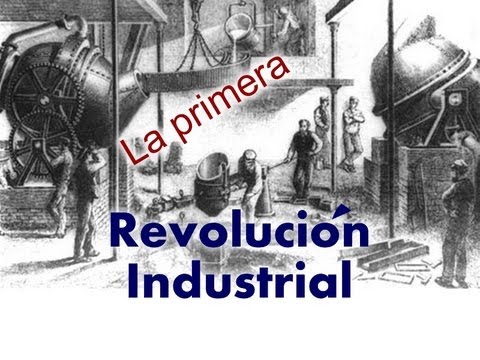
Orígenes de la 1ra. Revolución Industrial - EDUpunto
Industrial Revolution: Key Developments
Agricultural Innovations and Early Changes
- At the end of the 17th century, Europe was primarily an agrarian and artisanal society, relying heavily on human energy for production.
- Significant agricultural advancements included crop rotation, introduction of new species from America, use of fertilizers, and improved irrigation techniques, which collectively enhanced food production.
Transition to Textile Production
- The textile industry faced competition as English wool was replaced by cotton imported from colonies due to its cost-effectiveness and better handling.
- In 1764, the invention of the spinning Jenny by an Englishman revolutionized textile manufacturing by multiplying operator efficiency equivalent to eight spinning wheels.
Advancements in Industry
- The iron industry developed methods for producing high-quality iron, leading to superior tools and machinery.
- The perfected steam engine emerged in 1774, transforming heat from steam into motion without human effort; it was applied across various sectors including textiles, railways, ships, and water pumps.
Economic Growth Factors in England
- Industrial growth spurred urbanization; improvements in transportation bolstered commerce while banking and finance flourished alongside these developments.
- England's rapid growth stemmed from its global empire that provided resources, control over trade routes facilitated commerce with colonies, abundant coal deposits for energy needs, a growing population due to better food supply contributing labor force availability.