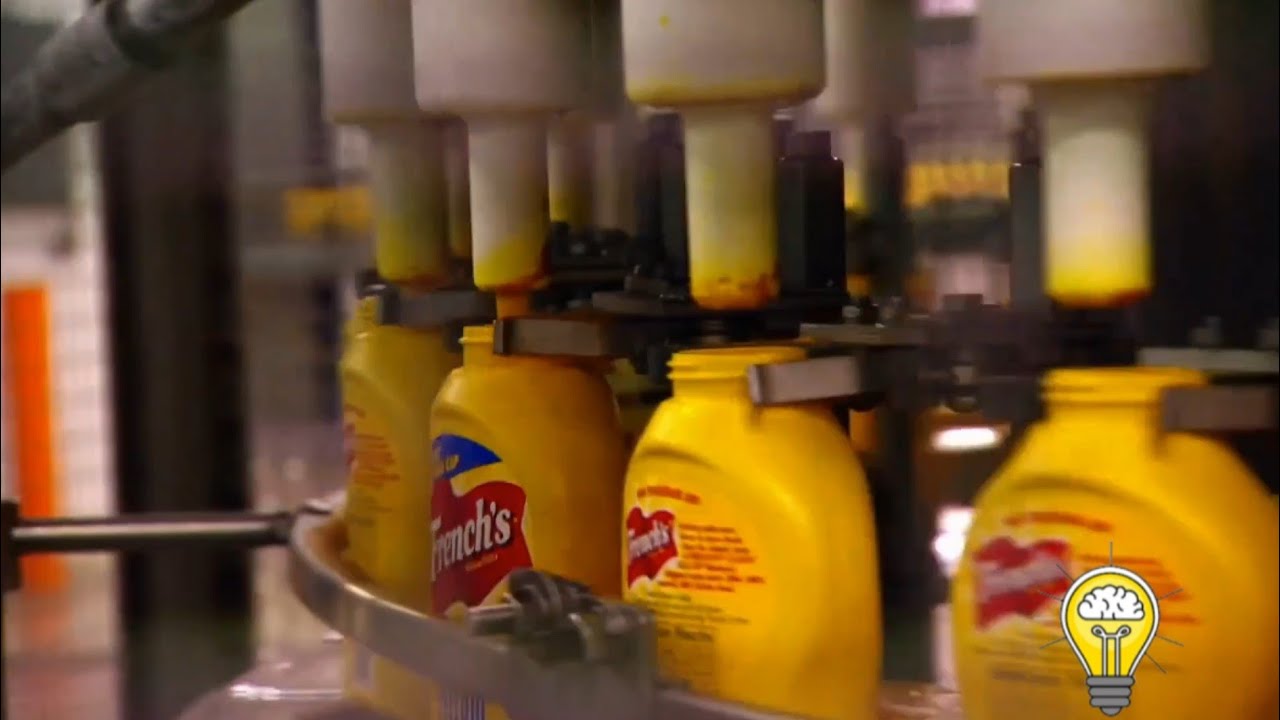
Como é feito a mostarda/ fabricação industrial do molho mostarda.
How is Mustard Made?
Overview of Mustard Consumption
- Over 500,000 tons of mustard are consumed globally each year, commonly used in hot dogs, hamburgers, and sandwiches.
- Mustard can be found in various forms: powder or oil from mustard seeds, or as a paste made by mixing powder with vinegar and salt.
Historical Background
- The origins of mustard trace back over 4,000 years to the Indus Valley civilization in South Asia.
- Romans were the first to use mustard as a condiment by mixing unfermented grape juice with ground seeds; the term "mustard" derives from Latin "musum ardens," meaning "burning must."
Cultivation and Harvesting
- Large-scale mustard production began in France during the 9th century. The Brassica juncea plant grows robustly with minimal irrigation and can reach heights of up to 1.5 meters.
- Mustard leaves can be harvested between 40 to 70 days after planting for culinary uses like salads and soups; they have a spicy flavor that varies by variety.
Processing Seeds into Condiment
- Mustard seeds are harvested when dry; they undergo washing and soaking before being ground into a smooth paste.
- Common ingredients include water, white vinegar, turmeric (for color), paprika (for flavor), salt, and spices. The mixture proportions typically consist of approximately 60% water, 20% vinegar, 15% seeds, and 5% salt/spices.
Production Process
- A rotary mixer combines ingredients at high speeds for about an hour before transferring them to stainless steel mills for homogenization.
- The grinding process heats the mixture to around 60°C, thickening it into a creamy yellow mustard. Quality control ensures particle size is fine enough for smooth texture.
Final Steps Before Packaging
- After cooling overnight in stainless steel tanks, yellow mustard is bottled. It has a shelf life of about 15 months but should be refrigerated once opened.