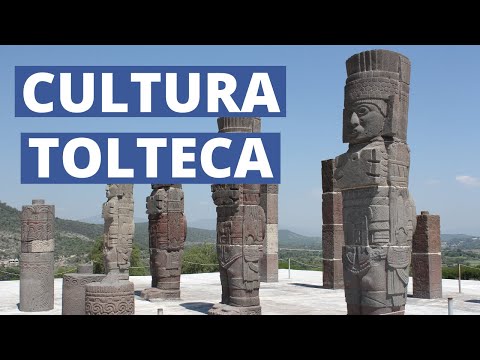
La CULTURA TOLTECA explicada: características, organización, ubicación y más
The Toltec Culture in Mesoamerica
This section provides an introduction to the Toltec culture, its geographical area, and its historical significance.
The Toltec Civilization
- The Toltec culture emerged during the pre-Columbian era in Mesoamerica.
- It was centered in present-day Mexico and flourished between the 10th and 12th centuries AD.
- The capital of the Toltecs was Tula, located in the State of Hidalgo, about 60 kilometers from Mexico City.
Limited Information
- There is limited information available about the Toltecs.
- Most of what is known comes from Aztec accounts and oral tradition, which often mix history with legends and myths.
Multi-Ethnic Culture
- According to legends, the Toltecs were a multi-ethnic culture that unified different peoples into a single civilization.
- They were governed by a monarchy for over 300 years, with religion and war playing significant roles.
Historical Debate
- Some historians question the existence of the Toltecs, considering them a mythological creation of the Aztecs.
- However, other experts believe in their existence as an expression of the Nahuatl people.
Origin and Name
- The origin of the name "Toltec" is subject to debate.
- It may mean "inhabitant of Tula" or refer to their mastery as artisans or artists.
Influence on Aztecs
- The Aztecs considered themselves descendants of the Toltecs, emphasizing their dominance in Mesoamerica.
Nomadism and Migration
This section explores the early nomadic period of the Toltecs and their migration to establish their kingdom.
Nomadic Origins
- The Toltecs were initially a nomadic people.
- Around 511 AD, they left Huehuetlapallan and embarked on a 104-year journey led by seven lords.
Settlement in Tollan
- After several stops, the Toltecs settled in Tollantzinco for 20 years before establishing their kingdom in Tollan or Tula.
- In 667 AD, the Toltec culture became a monarchy that lasted for 384 years under eight different kings.
Legend of King Mixcoatl
- According to legend, King Mixcoatl led the Toltecs to Tollan-Xicocotitlan.
- His son, Topiltzin, consecrated himself to Quetzalcóatl and achieved great prosperity during his reign.
Achievements and Expansion
- Under Topiltzin's rule, the Toltecs expanded their territory through conquests.
- They formed alliances with cities like Culhuacán and Otumba, reaching architectural splendor in Tollan-Xicocotitlan.
Conflict and Decline
- A conflict between Topiltzin and Quetzalcóatl led to the decline of the Toltec civilization in the 10th century.
- Attacks from nomadic peoples and drought also contributed to their downfall.
Toltec Culture and Influence
This section explores the history of the Toltec culture, its expansion, and its relationship with other civilizations.
Height of Toltec Civilization
- Tollan-Xicocotitlan became a center of power around 950 AD.
- Between 900 and 1200 AD, the Toltecs expanded their domains to reach parts of Yucatan and influenced regions like Oaxaca, Chiapas, and Central America.
Political and Social System
- The Toltecs collected tributes from conquered peoples and developed a political, social, and religious system that lasted until the arrival of the Spanish.
Decline and Migration to Cholula
- The decline of the Toltec civilization began around 1150 AD when they moved their capital to Chapultepec.
- Some legends suggest that a group of Toltecs migrated to Cholula during this period.
Relationship with Mayans
- The relationship between the Toltecs and Mayans is a topic of debate among historians.
The Toltec Culture
This section provides an overview of the Toltec culture, including its geographical and temporal location, theories about the location of its capital city, and its general characteristics.
Geographical and Temporal Location
- The Toltec culture appeared in Mesoamerica after a period known as darkness between 650 and 800 AD.
- They migrated from the northeast of present-day Mexico to settle in Morelos, Hidalgo, Puebla, Mexico City, and Tlaxcala.
- Their dominance extended from 800 to 1200 AD.
Theories about Tollan
- There are different theories about the location of Tollan, the capital of the Toltecs.
- Some believe it was located in Tula, Hidalgo, while others argue that it originated in Teotihuacán and Tula served as a refuge for survivors.
General Characteristics
- The Toltecs were skilled architects and builders.
- They introduced religious beliefs that later became widespread in Mesoamerica.
- Quetzalcóatl was their main god.
Economy and Trade
This section focuses on the economy of the Toltec culture, including their economic activities such as crafts, commerce, metallurgy, agriculture, and tribute collection.
Economic Activities
- Crafts, commerce, metallurgy, and agriculture were important economic activities for the Toltecs.
- They collected tribute from conquered peoples to increase their wealth.
Agriculture
- Agriculture was crucial for the Toltec economy. They created a network of canals for irrigation purposes.
- Common crops included corn (maize), beans, and amaranth.
Trade
- Trade played a significant role in the Toltec economy. It allowed them to obtain raw materials not available near their settlements.
- They collected tribute from defeated peoples, including valuable materials like mother-of-pearl.
Language, Writing, and Clothing
This section discusses the language, writing system, and clothing of the Toltec culture.
Language and Writing
- The Toltecs spoke Nahuatl, which became the lingua franca of Mesoamerican civilizations.
- They developed a pictographic writing system based on their environment.
Clothing
- Elite members of the Toltec culture wore belts, capes (tilmatli), skirts (cueitl), and an ichcahuipilli (thick cloth).
- Leaders' wives wore rectangular cut dresses called quexquémitl.
- Lower-class Toltecs wore simpler garments like loincloths.
Religion
This section explores the religious beliefs of the Toltec culture.
- The religion of the Toltecs was polytheistic.
- Quetzalcóatl represented good, while Tezcatlipoca represented evil.
- Their religious influence extended to subsequent Mesoamerican cultures.
Toltec Mythology and Exile of Quetzalcóatl
This section discusses the mythology surrounding Quetzalcóatl, a prominent figure in Toltec culture, and his exile after being defeated by Tezcatlipoca. The myth of his promised return led the Aztecs to believe that Hernán Cortés was Quetzalcóatl himself.
Quetzalcóatl's Exile and Promise to Return
- Quetzalcóatl went into exile after being defeated by Tezcatlipoca in Toltec mythology.
- He left on a raft of serpents and promised to return.
- Some stories suggest that this promise led the Aztecs to believe that Hernán Cortés was Quetzalcóatl returning to his people.
Architecture and Dwellings of the Toltecs
This section explores the architectural skills of the Toltecs beyond temples and palaces, focusing on their well-constructed houses. The importance given to religion is evident in these dwellings, with altars placed centrally.
Quality Construction and Organization of Houses
- The Toltec houses were known for their quality construction.
- An important aspect was the central altar dedicated to religion.
- Rooms, including the kitchen, were located around the altar.
- Adobe was the main material used for construction, but stones, wood, or cement were also used depending on social differences.
Political Organization of the Toltecs
This section delves into how political organization among the Toltecs was influenced by their origins as nomadic people and their emphasis on war. Strong leadership supported by priests played a crucial role in decision-making.
Factors Influencing Political Organization
- Nomadic origins and importance of war shaped political structure.
- Strong leadership sought, especially during territorial conquests.
- All decisions, administrative or military, required support from the gods through priests.
Warrior Caste and Military Administration
This section highlights the significance of the warrior caste within Toltec society. The military played a central role in expanding territories and creating an empire. However, their militaristic administration also contributed to the downfall of the civilization.
Importance of Warriors in Toltec Society
- The warrior caste was the most important social class.
- King Topiltzin-Quetzalcóatl led significant military campaigns for expansion.
- Entire golden age of Toltec civilization based on militaristic administration.
- Wars against neighbors and tributes provoked a coalition that defeated the Toltecs.
Priests and Elite Status
This section focuses on the priestly caste within Toltec culture. They held influential positions, particularly in administrative aspects. However, leadership in military matters rested with the warrior class.
Influence and Roles of Priests
- Priestly caste formed part of the elite within Toltec culture.
- Their influence was noticeable in administrative aspects.
- Warrior class exercised leadership in military matters.
Kings and Monarchy
This section discusses different kings who ruled over the 300-year monarchy of the Toltecs. Topiltzin, also known as Quetzalcoatl, stands out for his achievements, while Huemac's reign marked a decline due to internal conflicts and external pressures.
Notable Kings
- Topiltzin adopted Quetzalcoatl's name to unite religious, political, and military aspects.
- Expanded territory and brought prosperity to his kingdom.
- Huemac's reign led to hardship and weakened power due to conflicts.
Laws and Social Organization
This section explores the laws enacted within Toltec civilization and the social organization that divided society into different classes. The king was responsible for enacting laws, while the military ensured their enforcement.
Enactment of Laws and Punishments
- King held responsibility for enacting laws.
- Military ensured law enforcement.
- Harsh punishments included sacrifice to gods.
- Lighter punishment involved becoming a slave to upper classes.
Social Classes and Pyramid Structure
This section examines the social classes within Toltec society, including the king, warriors, priests, and others in lower classes. The popularity and power of kings were closely tied to victories on the battlefield.
Social Classes
- Upper class consisted of kings, warriors, and priests.
- Popularity and power of kings linked to military victories.
- Lower class included artists, merchants, craftsmen with limited political influence.
Timestamps are approximate and may vary slightly depending on the source video.
Influencia de los toltecas en la cultura maya
Esta sección habla sobre la influencia de los toltecas en la cultura maya y las teorías que existen al respecto.
Teorías sobre la influencia de los toltecas en la cultura maya
- Muchos expertos afirman que los toltecas tuvieron una influencia comprobada en la cultura maya, aunque no se puede asegurar si llegaron militarmente al Yucatán.
- Otros historiadores opinan que fueron los mayas quienes fundaron Tula, y hubo un contacto comercial y político-religioso entre ambas culturas.
- Existen teorías sobre la ubicación de Tollan, la capital de los toltecas. Algunos afirman que estuvo en Tula, mientras que otros sostienen que su origen estaba en Teotihuacán.
Aparición de la cultura Tolteca
En esta sección se habla sobre el surgimiento y expansión de la cultura Tolteca.
Ubicación geográfica y temporal de los toltecas
- La cultura Tolteca apareció en Mesoamérica entre los años 650 y 800 d.C.
- Se desplazaron desde el noreste del actual México hasta asentarse en Morelos, Hidalgo, Puebla, Ciudad de México y Tlaxcala.
- Su dominio cultural abarcó desde el periodo clásico hasta el postclásico (800 - 1200 d.C.).
Expansión territorial de los toltecas
- Los toltecas fueron inicialmente un pueblo nómada, pero lograron dominar un territorio extenso, incluyendo la zona sureste de la península del Yucatán.
- Existen diversas teorías sobre la ubicación de Tollan, la capital tolteca. Algunos afirman que estuvo en Tula, mientras que otros sostienen que su origen estaba en Teotihuacán.
Ubicación de Tollan y diferentes teorías
En esta sección se discuten las diferentes teorías sobre la ubicación de Tollan, la capital tolteca.
Diferentes teorías sobre la ubicación de Tollan
- Un grupo de antropólogos mexicanos afirmó en 1941 que Tollan estuvo situada en la actual ciudad de Tula, en Hidalgo. Sin embargo, esta conclusión ha sido negada por otros expertos.
- Algunos arqueólogos como Laurette Séjourné sostienen que el origen de Tollan se encontraba en Teotihuacán y que Tula fue solo un refugio para los supervivientes de esa ciudad.
- Enrique Florescano, historiador del Instituto Nacional de Antropología e Historia, también comparte esta última hipótesis.
Características generales de la cultura tolteca
Esta sección describe algunas características destacadas de la cultura tolteca.
Maestría en arquitectura y creencias religiosas
- Los toltecas eran reconocidos por su maestría en el ámbito de la arquitectura. La palabra náhuatl "tolteca" se traduce como "maestro constructor".
- Introdujeron en Mesoamérica muchas de las creencias religiosas que luego se generalizaron, siendo la más importante la adoración a Quetzalcóatl.
Economía y actividades principales de los toltecas
En esta sección se habla sobre la economía y las actividades principales de los toltecas.
Actividades económicas de los toltecas
- La cultura tolteca experimentó un periodo próspero caracterizado por el crecimiento económico y la estabilidad.
- Sus actividades principales eran la artesanía, el comercio, la metalurgia y la agricultura.
- Cobraban tributos a los pueblos conquistados y tenían una compleja red de canales para el riego de sus cultivos.
Lengua, escritura y vestimenta de los toltecas
Esta sección aborda aspectos relacionados con el lenguaje, escritura y vestimenta de los toltecas.
Lengua y escritura
- Los toltecas hablaban náhuatl, que se convirtió en la lengua franca de todas las civilizaciones mesoamericanas.
- Desarrollaron un sistema de escritura pictográfico basado en su entorno. Sus símbolos representaban seres y objetos cotidianos.
Vestimenta
- La información sobre cómo vestían los toltecas proviene principalmente de estatuas y monumentos elaborados en sus ciudades.
- Los miembros élite solían vestir cinturones, capas (tilmatli), faldillas (cueitl) y una tela gruesa llamada ichcahuipilli.
- Las esposas de los dirigentes se distinguían por usar un vestido rectangular.
La influencia de la religión tolteca y su organización social
Esta sección explora la influencia de la religión tolteca en las culturas mesoamericanas posteriores, así como la estructura social y los privilegios de sus miembros.
Organización social
- Los soldados estaban divididos en diferentes órdenes militares con nombres de animales, como los jaguares o los coyotes. Los altos cargos religiosos también tenían funciones administrativas y actuaban como guías para la sociedad.
- Existía una clase media formada por artistas, comerciantes y artesanos que tenían más privilegios que los campesinos pero menos influencia política o administrativa. En la parte baja de la pirámide social se encontraban los obreros y campesinos, mientras que los esclavos y prisioneros no tenían derechos.
Influencia cultural
- Los toltecas dejaron su sello en la arquitectura mesoamericana posterior, influyendo en civilizaciones como los mayas. También destacaron en el uso del amaranto en su gastronomía para evitar hambrunas durante periodos de sequía.
- Algunas tradiciones toltecas se mantuvieron hasta la llegada de los españoles al continente, extendiéndose a través de guerras y llevando sus creencias religiosas a pueblos vencidos. Se realizaban sacrificios humanos como ofrenda a Tlaloc, el dios de la lluvia, para obtener sus favores.
- El arte tolteca se manifestaba principalmente en la arquitectura, con estatuas, relieves murales y cerámica que representaban personajes y dioses de su cultura. Los atlantes, guerreros de piedra decorados con plumas y mosaicos, son una de las obras más conocidas.