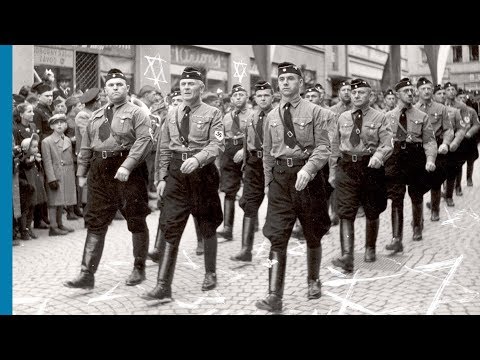
The Main Principles of Nazi Ideology
The Rise of Nazi Ideology and Its Foundations
Historical Context and Early Influences
- The trauma from World War I and the interwar period led to various political movements incorporating antisemitism, culminating in the rise of Nazism in Germany.
- Adolf Hitler, born in Austria in 1889, became a dominant figure in Nazi ideology after moving to Munich in 1913.
- After serving as a lance corporal during WWI, Hitler returned embittered by Germany's defeat and joined the German Workers' Party, which later became the NSDAP (Nazi Party).
Growth of the Nazi Party
- By 1923, membership in the Nazi Party had grown to approximately 56,000 amid economic turmoil under the Weimar Republic.
- The republic faced severe challenges including hyperinflation and unemployment, leading to widespread anti-Republican sentiment and political violence.
- In November 1923, Hitler attempted a coup known as the Beer Hall Putsch but was arrested and sentenced to five years for treason; he served only nine months.
Mein Kampf and Ideological Development
- During his imprisonment, Hitler wrote Mein Kampf, outlining his vision for Germany and key principles of Nazi ideology.
- Nazi ideology was characterized as racial, biological totalitarianism that divided humanity into superior (Aryan) and inferior races.
- The Nazis viewed Jews as an "anti-race," attributing all societal problems to them while considering them inherently evil or destructive.
Sources of Nazi Ideology
- The Nazis did not originate their ideas but synthesized earlier beliefs from 19th-century scientific racism and modern antisemitism into a cohesive worldview.
- They argued that Aryans had a natural right to rule over others, justifying territorial expansion into Eastern Europe at the expense of "subhuman" Slavic peoples.
Policies Derived from Ideology
- This ideology led to policies such as eastward expansion based on false claims about population density in Germany being overcrowded with "subhumans."
- The T4 program during WWII exemplified their belief system by targeting mentally handicapped individuals for euthanasia under the guise of societal contribution.
Ideological Foundations of Nazi Policy Making
Coalescing 19th Century Ideas into a Distinct Worldview
- The Nazis synthesized various 19th-century ideas to create a unified worldview that explained both the functioning of the world and how it should operate. This ideology became the foundation for policy-making, initially in Germany and eventually globally.
- A significant aspect of this ideology was the portrayal of Jews as a major threat due to their perceived destructive and immutable nature, which justified their exclusion from society.
Core Tenets of Nazi Totalitarianism
- Nazi totalitarianism operated on two levels: asserting that no equality exists among nations or races, with the Aryan race deemed superior and destined to rule.
- Internally, this ideology dictated how Germans would be governed, emphasizing strict adherence to leadership under Hitler through the "Führerprinzip," where dissent against his policies equated to dissent against the nation itself.
Nature's Hierarchy vs. Enlightenment Equality
- The Nazis believed in a natural hierarchy that contradicted Enlightenment ideals of equality, which they associated with socialism, communism, capitalism, and democracy—all traced back to Jewish origins. Thus, they viewed these ideologies as fundamentally flawed because they opposed natural order.