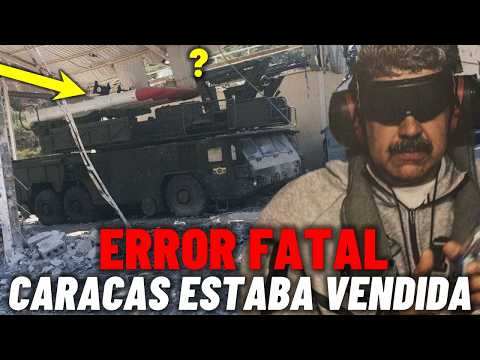
🚁Lo que NADIE TE CONTÓ contó de la Operación Absolute Resolve
Understanding the Security Protocols Surrounding Nicolás Maduro
Initial Observations of U.S. Military Activity
- The narrative begins before Nicolás Maduro's capture, highlighting a consistent reaction from the Venezuelan regime whenever U.S. combat aircraft approached its airspace.
- A predictable security protocol was observed in Maduro's protection, indicating that when a target becomes predictable, it loses its untouchability.
Introduction to Special Operations and Contextual Background
- The video transitions into discussing special operations and introduces a game related to global conflict during World War III.
- The game allows players to choose various nations, including Venezuela, and engage in strategic military gameplay against other players.
Research Methodology for the Video
- The creators consulted with special forces personnel and combat pilots for insights on military operations.
- They also referenced Yaser Trujillo’s accounts regarding the Bolivarian National Armed Forces and gathered local intelligence from residents near Fuerte Tiuna.
Strategic Planning by U.S. Military Command
- Since summer, U.S. Southern Command has been preparing options for President Trump, including limited bombings or prolonged air campaigns.
- One audacious plan involved capturing Maduro as a means to achieve significant results at minimal cost.
Intelligence Gathering on Maduro's Daily Life
- Delta Force teams collaborated with CIA operatives to monitor every aspect of Maduro's life through covert observation posts around Fuerte Tiuna.
- Their goal was to gather intelligence on his daily routines and identify vulnerabilities in his security protocols.
Discoveries During Naval Operations
- Concurrently, the U.S. Navy conducted aerial patrols testing Venezuela’s Russian-made air defenses.
- These patrol flights revealed that as U.S. fighter jets approached Venezuelan waters, Maduro increasingly retreated into his bunker at Fuerte Tiuna.
Analysis of Fuerte Tiuna's Defense Structure
- Understanding whether the operation could succeed hinged on analyzing both general defenses of the presidential complex and specific vulnerabilities of the bunker itself.
- Fuerte Tiuna is described as more than just a military base; it serves as a fortified complex housing key military units and functions as the political-military brain of the regime.
Presidential Security and Military Operations in Venezuela
Overview of the Presidential Bunker
- The presidential bunker features galleries over 1 km in diameter, with two fortified doors: one leading to Fort Tiuna and another to the residential area of Alto Prado.
- Inside Fort Tiuna are battalions responsible for presidential protection, including a cavalry battalion and rapid reaction units equipped with Russian-made air defense systems.
Operation Absolute Resolve
- The operation begins when Donald Trump orders the capture of Venezuela's president, aiming to encapsulate the government and enforce U.S. directives.
- Venezuelan air defenses pose significant threats, particularly from the Russian Buk M2E system, which is designed for medium-range anti-aircraft operations.
Challenges of Air Defense Systems
- The Buk system integrates radar and launch vehicles into a single mobile unit, making it difficult to target; its mobility enhances its effectiveness.
- Captured Buk systems during the Ukraine war may have provided insights for U.S. countermeasures against these air defense systems.
Tactical Approaches to Neutralizing Air Defenses
- The southern region of Caracas is protected by various anti-aircraft batteries; effective strategies include causing collapse or creating confusion within these defenses.
- Historical context: In 1990's Operation Desert Shield, U.S. forces took three months to dismantle Iraqi air defenses—contrastingly, a quick breach was necessary in this scenario.
Communication Breakdown as a Strategy
- To disrupt Venezuelan air defenses effectively, it was crucial to destroy communication systems rather than just physical assets.
- Venezuela lost satellite communications due to economic pressures that prevented payment for replacement satellites; this left operators reliant on outdated radio systems.
Impact of Communication Failures
- Key communication facilities were targeted during attacks, isolating Venezuelan units and forcing them to use vulnerable mobile phones susceptible to interception.
- Even if new satellites had been available, they likely would have faced interference or destruction from U.S. capabilities.
Advanced Weaponry Utilized Against Air Defenses
- The U.S. deployed Lucas (Low Cost and Crude Combat Attack System), an advanced weapon designed specifically for overwhelming enemy air defense systems through sheer numbers.
- Lucas operates collaboratively with other units while also being supported by electronic warfare aircraft like the EF18 Growler against any remaining threats from Buk systems.
Military Strategy and Tactical Operations in Venezuela
Overview of the Attack on Fuerte Tiuna
- The initial missile strikes targeted radar systems, leading to a delayed response from surviving air defense units who were hesitant to activate their radars due to prior attacks.
- Surveillance squadrons also suffered casualties; for instance, Squadron 3911 reported the death of a member during a nighttime assault while monitoring the Caribbean front.
- The pressure from incoming stealth fighter jets (F35) left remaining air defenses disoriented and fearful, complicating their operational effectiveness.
Infiltration Tactics
- The U.S. aimed to infiltrate 11 to 15 helicopters into Fuerte Tiuna without detection, necessitating low-altitude flight through mountainous terrain that created radar shadows.
- The collapse of communication systems and air defense allowed special forces helicopters to approach undetected, marking a critical phase in the operation.
Execution of the Assault
- As cruise missiles and drones struck targets in Fuerte Tiuna, surveillance cameras captured these moments, indicating precise coordination between ground intelligence and aerial assaults.
- The CIA's traditional espionage capabilities combined with NSA's cyber operations likely facilitated real-time monitoring of security cameras around Fuerte Tiuna during the attack.
Impact on Venezuelan Defense
- Initial minutes of the attack saw significant destruction within presidential guard units at Fuerte Tiuna, alongside electrical substations causing widespread blackouts.
- With power outages affecting visibility and communications, elite Night Stalker helicopters executed surprise landings amidst chaos.
Special Forces Engagement
- Helicopters like the MH47G utilized advanced sensors for low-altitude navigation; they approached Caracas from unexpected angles to avoid detection by enemy forces.
- A coordinated distraction tactic was employed where some helicopters landed away from primary targets while others engaged defenders directly.
Psychological Warfare
- Defenders experienced confusion as darkness enveloped them followed by explosions; this psychological impact was compounded by sudden helicopter appearances amid failed communications.
- The urgency of capturing Maduro before reinforcements arrived heightened risks for U.S. forces operating under time constraints within fortified locations.
This structured summary encapsulates key tactical elements discussed in the transcript regarding military operations in Venezuela. Each bullet point is linked with timestamps for easy reference.
Operation to Capture Maduro: A Detailed Analysis
Overview of the Operation
- The operation involved the use of night vision systems by operators, which slowed down their response time during critical moments.
- Russian Mampat Igla missile operators attempted to engage but faced failures due to electronic countermeasures employed by helicopters. Some missiles were successfully diverted or failed entirely.
Strategic Movements and Challenges
- U.S. special forces established two security rings around Maduro's bunker, with Rangers on the outer ring and Delta Force closer in, indicating a well-coordinated approach.
- The operation took approximately 90 minutes, during which U.S. forces encountered significant resistance resulting in multiple injuries among their ranks, including severe wounds to pilots.
Access Points and Security Measures
- There was concern about a secondary escape route for Maduro; local sources reported no helicopter activity that night, raising questions about how this exit was secured.
- It was suggested that prior infiltration by special forces could have been conducted months before the operation to monitor and secure access points effectively. This would prevent any potential escape routes from being exploited by Maduro.
Tactical Engagement and Outcomes
- As fuel levels dwindled for helicopters, defenders began reorganizing for a counterattack while Black Wasps (a tactical unit) held their ground inside the presidential bunker.
- The JTAC (Joint Terminal Attack Controller) called for air support from armed MH60 helicopters as pressure mounted on Rangers outside the perimeter, showcasing real-time tactical adjustments under duress.
Conclusion of the Operation
- Delta Force ultimately succeeded due to superior training and equipment, particularly better night vision gear, allowing them to execute their mission effectively despite challenges faced during entry into the bunker. They extracted valuable intelligence materials post-operation.
- The operation is noted as a significant event in special operations history regarding high-value target captures and may influence future strategic opportunities for U.S. interests in Venezuela moving forward.