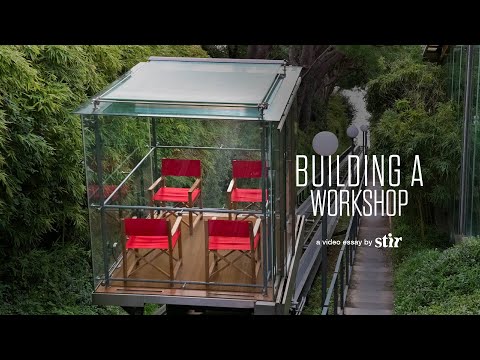
Building A Workshop with RPBW: An iconography of the past, a blueprint for the future
Exploring the Essence of Architecture
The Philosophy of Architectural Responsibility
- The speaker emphasizes the importance of curiosity and inventiveness in architecture, highlighting that they do not adhere to a specific style, which fosters optimism.
- They discuss the responsibility that comes with building structures in urban environments, stressing that buildings should be meaningful to various communities and professions.
Understanding Architectural Resolution
- The speaker reflects on how their perspective on architecture has evolved, noting the clarity gained in understanding architectural details like reflections and corners.
- They compare architecture to machinery, emphasizing the organized complexity involved in creating buildings through scientific precision.
Collaborative Methodology in Architecture
- The speaker describes their experience at RPBW since 2009, focusing on collaboration and community engagement as fundamental aspects of their work.
- They recount their unexpected journey into the firm after initially working elsewhere, illustrating how this opportunity redefined their understanding of architecture.
Learning and Growth within RPBW
- Reflecting on their time at RPBW, they describe it as an incredible school where questioning every detail is encouraged for personal growth.
- The speaker shares feelings of cultural identity while working abroad and expresses admiration for RPBW as a top choice for innovative architectural practice.
Embracing Newness and Radicality
- They assert that exploring new construction methods is integral to RPBW's ethos since its inception, fostering a culture of research and innovation.
- Each project is seen as an individual exploration rather than adhering to a signature style; this approach allows for unique identities in each building.
Defining Home Through Architecture
- The discussion shifts towards what "home" means within the context of RPBW's work. It highlights how radical ideas are part of the firm's nature.
- A reflection on iconic structures like Pompidou Center illustrates how enduring designs can evoke strong emotional responses over time.
Exploring Innovative Wood Structures in Architecture
The Concept of Wood in Urban Design
- The project initially proposed a steel structure, but the client suggested incorporating wood, leading to a radical shift towards a fully wooden building.
- Renzo's idea to construct the entire 20,000 square meter building in wood surprised the team; however, thorough structural engineering studies confirmed its feasibility.
- The client envisioned the building as a manifesto for utilizing wood extensively, aiming to promote the Japanese wood industry through this architectural endeavor.
Challenges and Inspirations
- Japan's seismic conditions complicate high-rise wooden construction; thus, extensive research was necessary to ensure safety and stability.
- Inspiration was drawn from Japan's unique cedar forests where trees grow tall due to close planting, influencing the design of columns resembling these natural forms.
Architectural Expression and Structure
- The design aimed for a "forest" of wooden columns that mimic cedar trees with varying thicknesses—thicker at the base and tapering upwards—to follow structural load paths effectively.
- Columns were strategically placed at the perimeter of the building to serve both structural support and aesthetic expression, becoming central features visible from outside.
Collaboration and Sustainability Ethos
- Emphasis on column expression reflects traditional Japanese architecture while creating a public gathering space at the project's heart.
- The collaborative process between client and design team is likened to a "ping pong match," highlighting dynamic interactions that shape architectural outcomes.
Commitment to Sustainable Practices
- Sustainability is integral to Renzopiano Building Workshop’s ethos; projects aim for positive impacts on their environments rather than negative ones.
- Key sustainability commitments include energy efficiency and thoughtful integration into local contexts, ensuring buildings enhance their surroundings.
Understanding the Ethos and Approach of Renzo Piano Building Workshop
The Importance of Conceptual Consistency
- Emphasizes the need to maintain a central concept throughout all project phases to avoid losing direction during construction.
- Highlights the significance of teamwork and energy from colleagues, which fosters a supportive environment conducive to innovation.
Project-Specific Challenges
- Discusses how each project presents unique challenges based on its context, client, and environment, necessitating tailored responses.
- Suggests that both ethos and team dynamics are interdependent in driving the workshop's innovative approach.
The Asian University for Women: Client Interaction and Project Vision
Initial Client Engagement
- Describes the initial clear communication with the client regarding a master plan created by Mosha Sappi for academic buildings.
- Notes that preserving nature was central to their design philosophy, aiming to occupy only one-tenth of the site as a strong statement about environmental respect.
Architectural Philosophy for Empowerment
- Explores how architecture can empower women facing societal challenges in Bangladesh by fostering transparency and community within educational spaces.
- Stresses the importance of creating intimate yet open living environments where students feel safe and connected.
Long-term Impact of Architecture on Students
Lasting Impressions Through Design
- Discusses how architecture plays a crucial role in shaping students' experiences over years, leaving lasting memories tied to their education.
- Advocates for low-carbon building practices as part of an educational mission about environmental fragility and sustainable living.
Cultural Sensitivity in Construction
- Emphasizes that architectural designs should reflect local materials and cultural contexts rather than imposing foreign aesthetics.
- Concludes that architecture should serve as a background enabling community living rather than dominating or overshadowing student experiences.
Pate Headquarters Design Insights
Architectural Structure and Design
- The Pate headquarters features two top floors designated for the main office, with a B2B level below and seven screening rooms integrated within.
- A significant structural beam, 3 meters tall, is supported by four columns spaced approximately 11 meters apart; this design allows for lighter elements due to tension suspension.
- The building's south facade incorporates small wings to manage solar heat gains effectively, enhancing natural ventilation through operable louvers that function like a chimney.
Importance of Light in Architecture
- Light is emphasized as a crucial material in architecture; it plays an essential role in creating inviting spaces for occupants.
- The interior design respects historical elements while providing open access from the city to the cinema area, allowing visitors without tickets to enjoy the space.
Philosophy Behind Architectural Practice
Integration of Science and Art
- The speaker expresses fascination with how buildings are designed like machines, emphasizing precision and organization akin to mechanical engineering or watchmaking.
- Renzo Piano Building Workshop balances legacy projects with innovative disruptions, maintaining a spirit of radicalism while respecting historical context.
Contextual Relevance in Architecture
- Working with context involves understanding not just physical surroundings but also political and historical influences on architectural decisions.
- Poetry in architecture differentiates mere construction from true artistry; when buildings resonate emotionally or aesthetically, they transcend basic functionality.
Impact of Iconic Buildings on Urban Spaces
Revolutionizing Cityscapes
- The building discussed was revolutionary upon its completion in 1777, acting as a catalyst for urban renewal in an older part of Paris.
- Public opinion remains divided about the building's aesthetic value; however, it undeniably represents a pivotal moment in architectural history.
Ongoing Influence and Concerns
- Current renovations raise concerns about the vibrancy of the surrounding area during closure; losing such attractions can diminish urban life quality.
- Renzo Piano’s team likens their role to guardianship over architectural integrity amidst ongoing changes and public sentiment.
Collaborative Architectural Practices
Importance of Collaboration in Architecture
- The architectural process is described as a collaborative effort involving architects, clients, and consultants, emphasizing the importance of frequent interactions among all parties.
- Despite advancements in 3D modeling and graphic representation, physical models and one-to-one mockups are still utilized to ensure that the project aligns with the original vision.
Case Studies: Istanbul Modern and Sydney Harbor Projects
- Discussion transitions to two significant projects: Istanbul Modern and apartment buildings in Sydney Harbor, highlighting their distinct typologies.
- The speaker reflects on balancing cultural identity for the Istanbul project while addressing contemporary structural considerations for the Sydney project.
Design Philosophy Behind Istanbul Modern
- The Istanbul Modern museum represents a new interpretation of a cultural site within a larger renovation of an old port area, transforming brownfields into vibrant urban spaces.
- The design aims to maintain visual continuity between water and park by elevating the building, allowing public access through ground-level entry points.
Insights on Sydney Project's Design Challenges
- The Sydney project encompasses 112,000 square meters on a relatively small site, also part of a waterfront refurbishment initiative.
- A triangular cluster design was chosen to optimize views towards iconic landmarks like the Opera House and Blue Mountains while ensuring each apartment has desirable vistas.
Emphasis on Outdoor Living in Urban Design
- Recognizing Sydney's outdoor lifestyle, efforts were made to incorporate open living spaces within skyscraper designs that facilitate interaction with fresh air and natural surroundings.
Toilotti Project: A Tribute to Resilience
Overview of Toilotti Project Development
- The Toilotti project is under construction as a donation from Renzo Piano Building Workshop following an accident in Genoa's harbor in 2013. It aims to serve as both a working tower and a landmark tribute.
Safety Considerations in Design
- The new tower is strategically located for security reasons; additional piers were constructed to protect against ship collisions.
Structural Innovations
- Features sophisticated structural elements including trusses and bracing systems that echo maritime themes found throughout the port area.
Integration with Surrounding Environment
- Designed with heavy foundations for stability, the pilot cabin reaches 60 meters high; overall height including roof structures extends to 95 meters.
Master Planning Context
- This project is part of a broader master plan initiated in 2020 aimed at revitalizing Genoa’s waterfront area.
Waterfront Development in Genoa
Overview of the Waterfront Project
- The waterfront project in Genoa includes a developed area called Porto Antico, designed in 1992, and a new section known as Waterfront Devante. This initiative emphasizes the city's connection to the sea for cultural and spatial regeneration.
Key Design Principles
- The primary goal is to reintroduce water to the old city walls, focusing on shipping and marina activities rather than recreational beaches. This approach aims to enhance urban life by integrating maritime elements into the city.
Building Strategy
- The development consists of various functions: residential buildings, a hotel, and facilities for startups related to low economy sectors linked to the sea. A balanced mix of uses is seen as essential for community engagement.
Sustainability Goals
- The project aims to construct only 50% of previous square meters while reducing overall volume by one-third. Additionally, it will create a public space that includes a 1-kilometer park alongside marina facilities.
Energy Efficiency Standards
- All buildings within this waterfront development are mandated to be net-zero energy structures. They will utilize solar panels and water exchange systems for heating and cooling, minimizing reliance on grid energy.
Manifesto for Urban Development
Guidelines Creation Process
- A manifesto was created collaboratively with the city of Genoa before project initiation. This document outlines rules that private investors must adhere to when developing properties within this urban plan.
Importance of Meaningful Projects
- The office prides itself on rejecting projects lacking value or meaning. By establishing clear guidelines embraced by municipal authorities, developers are encouraged to meet high aspirations set forth in the master plan.
Philosophy Behind Urban Architecture
Ethical Considerations in Architecture
- Architects must consider their societal impact; they should evaluate whether a project is necessary before proceeding. Starting from public spaces helps identify what remains available for meaningful architectural contributions.
John Hopkins University Project Insights
Initial Approach
- For this university project focused on democracy's evolution, architects began with an overarching concept—creating spaces that reflect democratic values through design elements like transparency and openness.
Conceptual Framework
- The metaphor of bringing back Maryland's forests serves as inspiration for creating an environment conducive to studying democracy over time. It emphasizes retreat-like qualities where faculty can engage deeply with their research topics.
Intangible Aspects of Democracy in Design
Balancing Public Space with Individual Freedom
- There’s an inherent tension between individual freedom represented by democracy and collective ownership reflected through public spaces like forests. This duality shapes how architecture can facilitate both personal choice and communal access.
Architectural Agency and Public Responsibility
Balancing Authoral Agency and Public Good
- The discussion begins with the tension architects face between exercising their creative authority and addressing public needs, highlighting a struggle to balance these two aspects.
- The speaker emphasizes the importance of understanding the intangible concepts in architecture while also recognizing the responsibility to give back to the public, suggesting that this balance is crucial for effective design.
- Listening to clients, consultants, and colleagues is presented as a key strategy for navigating this balance; learning from past experiences and teaching younger professionals can enhance one's approach.
- Engaging in conversations—whether positive or negative—is deemed essential for growth; criticism can provide valuable insights that contribute to an architect's learning curve.
- The speaker reflects on how daily experiences shape an architect's journey, emphasizing continuous learning through both successes and challenges.
Personal Journey in Architecture
- The speaker shares their background as a product of Genoa, Italy, expressing a deep connection to their roots and how it influences their architectural philosophy.
- A commitment to practical outcomes is highlighted; projects are approached with the mindset of building them from day one rather than merely conceptualizing designs without intent.
- An analogy comparing architecture to riding a bicycle illustrates the gradual mastery required in the field; initial struggles lead to eventual proficiency through practice and collaboration with peers.
- Collaboration with colleagues and students fosters creativity; sharing ideas helps maintain energy levels while also allowing for mutual learning across experience levels.
- Curiosity and bravery are emphasized as essential traits for architects; engaging with new ideas keeps professionals motivated throughout their careers.
Project Development: Revitalizing Urban Spaces
- The conversation shifts focus towards a specific project located in Lagosa, Milan—a historically significant area undergoing transformation due to urban development efforts by local educational institutions.
- The project aims not only at expanding campus facilities but also at integrating engineering and architecture education within an evolving urban context that respects historical narratives.
- Acknowledgment of nature reclaiming abandoned industrial sites highlights environmental considerations; preserving existing ecosystems becomes integral to revitalization efforts.
- Initial site assessments reveal dense forestation amidst remnants of 1950’s buildings; plans are made to restore natural elements while incorporating modern infrastructure into the landscape.
- Strategies for site remediation involve innovative methods like phytoremediation (using plants), showcasing a commitment to sustainable practices over traditional soil decontamination techniques.
Urban Campus Design and Sustainability
Conceptualizing the Urban Environment
- The design approach emphasizes the importance of preserving the essence of the forest and surrounding area, viewing it as a large laboratory for experimentation.
- The project aims to create spaces not just for classrooms but also for future-oriented functions, integrating innovative ideas from polytechnic institutions.
- A key focus is on achieving unity within the campus while striving towards a zero-carbon footprint, reflecting a commitment to sustainability.
Architectural Inspiration and Structure
- Inspiration is drawn from existing buildings, particularly in roof design, which mimics industrial shed shapes to enhance energy efficiency and sustainability.
- The architectural vision includes a floating element that unifies various structures while allowing natural light to permeate through transparent materials.
Community Spaces and Interaction
- Central to the design is a circular commons area that fosters community interaction, surrounded by significant landmarks like gazometers.
- The structure incorporates tensioned and compressed elements aimed at creating expansive circular areas devoid of internal columns.
Environmental Integration
- Plans include developing pathways within a natural forest environment using softscape techniques to minimize ecological disruption.
- The intention is not merely to create an urban park but rather an urban forest that integrates nature with built environments seamlessly.
Pedestrian-Centric Design
- A pedestrian-friendly street will run through the campus, promoting interaction between buildings and greenery over its 300-meter length.
- A large roof structure will be designed to provide most of the campus's energy needs throughout the year.
Project Initiation Philosophy
- The foundation of any building workshop begins with site exploration; understanding local context is crucial before conceptualizing designs.
- Collaboration among team members during site visits enhances collective insights into environmental listening and project visioning.
Understanding Community Engagement in Projects
Importance of Community Relations
- The speaker emphasizes the necessity of mending relationships with surrounding areas, highlighting that community engagement is crucial for project success.
- Understanding what can be given back to the community is essential; this includes contributions to local spaces such as parks and squares.
- The act of giving back to a community is described as fundamental, suggesting it fosters goodwill and collaboration between projects and local residents.
- Utilizing local resources effectively—such as soil and materials—is also stressed, indicating a sustainable approach to project development.
- Overall, the discussion underscores the interconnectedness of community support and successful project implementation.