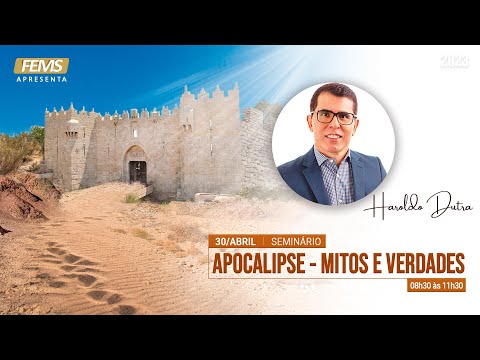
Haroldo Dutra Dias - Apocalipse: Mitos e Verdades (Seminário)
Understanding the Transition of Humanity
Historical Context of Human Evolution
- The discussion begins with a reflection on the history of humanity, noting that Earth underwent a planetary transition approximately 200,000 years ago.
- At this time, early human-like species emerged, but not yet Homo sapiens. The planet is home to around 3 million living species, with humans being one of them.
- Spiritual efforts were made for the emergence of Homo sapiens about 35,000 to 40,000 years ago as they began to inhabit Africa.
Evolution from Primitive to Advanced Societies
- This period marks a shift from a primitive world to one characterized by expiation and testing; early humans lacked modern conveniences and lived in caves.
- Early Homo sapiens utilized intelligence and reason to create tools for survival in challenging natural environments.
Conceptualizing Divinity
- As societies evolved, so did their conception of divinity; various civilizations associated God with natural phenomena like lightning or oceans.
- The emergence of language allowed humans to form societies and cultures, moving beyond mere survival in nature.
Societal Changes Over Time
- Despite changes in human society over the last 40,000 years, geological features like continents have remained stable; significant transformations are primarily social and ideological.
- Humans began forming tribes and communities where God was perceived as a tribal chief or monarch rather than an abstract entity.
Free Will and Moral Choices
- The concept of free will is introduced; individuals can choose poorly but learn through consequences—this reflects evolution in moral understanding.
- Society organized itself into hierarchies (e.g., kings), further anthropomorphizing God into a monarch figure seated on a throne.
Modern Perceptions of God
- Today’s view often depicts God as an authoritative figure judging humanity—a perspective that may still dominate among many people globally.
- Understanding the Book of Revelation requires revisiting these concepts about God's nature—God is incorporeal and cannot be confined to human attributes.
Scientific Insights on Human Connection
- A reference is made to scientist Neil deGrasse Tyson discussing genetic similarities between humans and other species (e.g., fruit flies share 80% genetic code).
Understanding Evolution and Spirituality
The Distinction Between Species
- The speaker highlights the minimal genetic difference (only 2%) between humans and chimpanzees, questioning the perceived superiority of human intelligence by asking if a chimpanzee has ever composed a symphony or designed an aircraft.
Communication with Higher Beings
- A reference to Millôr Fernandes suggests that extraterrestrial intelligence may exist because they have not attempted to communicate with humanity, likening this to speaking to a gorilla about complex family issues.
Human Evolution and Spiritual Inquiry
- The speaker posits that advanced spirits, being only slightly more evolved than humans, might question our destructive behaviors towards nature, emphasizing our lack of answers in such discussions.
Humility in Understanding Our Place
- The narrative introduces Tiffany, a dog viewed as part of the family. It draws parallels between her existence and that of angels, suggesting humility is necessary when considering our place in the evolutionary hierarchy.
Love as a Unifying Force
- Paulo's assertion that love is the bond of perfection is discussed; without love, connections with higher beings would be impossible. This emphasizes love's role in spiritual evolution and unity among all beings.
The Concept of God Through Nature
New Perspectives on Divinity
- The speaker introduces a new concept of God influenced by experiences in nature, particularly during a visit to Sucuri River where underwater life symbolizes deeper truths about existence.
Cosmic Connection and Creation
- A poem by Augusto dos Anjos reflects on cosmic matter as essential for life’s movements. It suggests that creation is intertwined with divine energy and knowledge.
Understanding Existence through Metaphor
- The metaphorical ocean represents God's mental substance where all creation exists. This idea positions God as an omnipresent force rather than a distant entity.
The Interconnectedness of All Life
Fluidity Between Realms
- Discussing the experience of floating in water leads to insights about existing within various forms—air being less dense than water—and how we are enveloped by spiritual fluids akin to oxygen.
Divine Presence in Creation
- Emphasizes that we are immersed in divine fluidity; thus, there’s no separation from God. This challenges traditional views on physical boundaries between creator and creation.
Scientific Insights into Spiritual Concepts
Parallels Between Universe and Consciousness
- Citing research comparing universal structures (like galaxies) to brain patterns illustrates how interconnectedness pervades both physical reality and consciousness itself.
Misconceptions About Divinity
- Clarifies misconceptions regarding God's nature; while He is present within His creations, He should not be conflated with them.
Evolutionary Context Within Our Solar System
Historical Views on Deity
- Reflecting on ancient perceptions of God as powerful yet fearsome (like lightning), contrasting it with modern understandings shaped by advancements like the James Webb telescope which reveal more about our universe's complexity.
Current Astronomical Discoveries
Exploring the Cosmos and Spirituality
The Absence of Life in Our Solar System
- The speaker asserts that there are no embodied beings on planets like Jupiter, Saturn, Uranus, or Neptune, emphasizing humanity's unique position in the universe.
- They mention the vastness of our galaxy, estimating around 200 billion solar systems within the Milky Way alone.
- A staggering estimate of two trillion galaxies is presented, each containing approximately 200 billion suns and an average of seven planets.
Understanding Divine Administration
- The speaker discusses a concept of God as not merely a judge but as a being managing an immense cosmic order.
- They humorously suggest that God has more significant matters than individual human actions to oversee.
- Reference is made to André Luiz's teachings as essential for understanding deeper spiritual concepts.
Divine Intelligence and Hierarchies
- The discussion shifts to divine intelligences operating under God's influence, likening them to various religious interpretations such as Hindu devas and Christian archangels.
- The speaker describes different levels within these hierarchies, from angels still learning to seraphim who lead.
Light and Inner Divinity
- A poetic reference is made to Caetano Veloso’s music about inner light existing within everyone, suggesting a shared divine essence among humans.
- The idea that humanity has evolved from primitive forms into intelligent beings over thousands of years is introduced.
Transitioning Societies and Apocalyptic Revelations
- The speaker emphasizes that societal changes during planetary transitions involve shifts in culture and values rather than physical geography.
- A humorous anecdote about absurd taxation illustrates public ignorance regarding deeper issues like those described in apocalyptic texts.
Unveiling Hidden Truths
- Clarification on the term "Apocalypse," which means revealing or bringing hidden truths to light rather than destruction.
- This revelation process involves uncovering personal flaws that others may see before one does themselves.
Understanding Life and Death: A Philosophical Perspective
The Concept of Life and Death
- The speaker discusses the historical perspective on parental authority over life and death, suggesting that in the past, parents felt entitled to make drastic decisions about their children's lives based on academic performance.
- A personal revelation occurs during therapy, where the speaker acknowledges a latent capacity for violence, prompting reflections on what it means to be an assassin.
- The discussion shifts to experiences of failure in education, highlighting societal pressures faced by students who struggle academically.
Educational Systems and Societal Expectations
- Parents often seek interventions when children perform poorly in school, leading to referrals to mental health professionals rather than educational support systems.
- The speaker contrasts the concept of enrolled students with those who are truly engaged in learning, emphasizing a disconnect within educational frameworks.
Cosmic Perspectives on Existence
- An exploration of the vastness of the universe is presented, noting that there are billions of galaxies and solar systems potentially housing primitive planets undergoing trials.
- The idea is introduced that opportunities for growth and learning exist throughout the cosmos; one does not need to travel far for enlightenment or education.
Choices and Free Will
- The speaker reflects on divine placement within the universe, questioning why certain worlds are distant from each other to prevent chaotic communication between them.
- Emphasizing free will, individuals must choose between different types of worlds—one focused on regeneration versus one filled with conflict and envy.
Evolutionary Perspectives
- There’s a discussion about human evolution being irreversible; once knowledge is gained or experiences are had, one cannot revert back to ignorance or previous states of existence.
- Individuals may choose not to evolve further but must recognize that this choice isolates them from others who continue progressing.
Apocalyptic Insights
- The notion arises that while individuals can pause their evolution indefinitely, life continues around them without interruption.
- The speaker reassures listeners about Earth's longevity despite eventual cosmic changes; humanity's evolution aligns with divine renewal processes described in spiritual texts.
Cosmic Cycles and Future Transformations
- A scientific explanation follows regarding stellar life cycles—how stars produce elements through fusion until they exhaust hydrogen supplies leading to explosive transformations.
Understanding the Apocalyptic Literature
The Nature of Eternal Beings
- Discusses the concept that certain beings are not subject to earthly trials or reincarnation, emphasizing their eternal existence in the presence of God.
- Questions whether beings on other planets, like Mars, have biological bodies and suggests they exist in a more subtle form than humans.
Perspectives on Spirituality and Revelation
- Highlights that many biblical texts are incomprehensible without the key provided by spiritual science, which is fully realized in Spiritism.
- Explains that the Apocalypse narrates Earth's history and its purification using apocalyptic language, indicating a transition from primitive worlds to celestial ones.
Historical Context of Prophetic Literature
- Notes a 200-year silence in prophetic revelation after Zechariah until Jesus' arrival, suggesting this period was filled with significant literary activity rather than true silence.
- Mentions how many important texts were excluded from the Bible, leading to an incomplete understanding of spiritual literature.
Symbolism in Apocalyptic Texts
- Clarifies that apocalyptic imagery (like agitated seas) symbolizes cultural conflicts rather than literal water phenomena.
- Emphasizes that terms like "ocean" or "tsunami" refer to societal upheavals rather than physical oceans.
Interpretation of Dreams and Symbols
- Introduces Daniel's dream interpretation involving a statue made of various materials representing different empires, illustrating complex symbolic meanings.
- Describes how Daniel interpreted Nebuchadnezzar's dream as four beasts instead of a statue, showcasing the layered nature of prophetic visions.
The Role of Temptation and Knowledge
- Reflects on Adam's initial state in paradise where he had no need for labor or protection until temptation arose through Eve and the serpent.
The Nature of Humanity and Divine Temptation
The Fall from Grace
- Discussion on the temptation of humanity to seek control and power, likening it to the desire to be God. The act of eating from the forbidden tree symbolizes this fall.
- Introduction of Cain and Abel, highlighting the tragic outcome where Cain kills his brother Abel, showcasing early human conflict.
Biblical Interpretation Challenges
- A narrative about Adam, Eve, and their children raises questions about biblical interpretations, particularly regarding the origins of characters like Cain's wife.
- Critique on literal interpretations of the Bible; questioning how certain figures (like a mother-in-law for Cain) fit into creation narratives.
Prophetic Dreams and Civilizational Decline
- Reference to Daniel’s dream involving empires represented as animals; emphasizes a decline in moral values across civilizations.
- Description of successive empires depicted in dreams as increasingly worse than their predecessors, symbolizing societal decay.
Human Cruelty vs. Animalistic Behavior
- Commentary on modern civilization's violent actions (e.g., war crimes), comparing humans to ferocious animals in terms of cruelty.
- Reflection on how civilized nations engage in brutal acts against innocents, drawing parallels between human behavior and animal instincts.
The Nature of Evil and Redemption
- Exploration of human violence towards vulnerable populations (e.g., pregnant women), suggesting that such actions reveal a deeper demonic nature within humanity.
- Discussion on apocalyptic themes where evil is not destroyed but rather transformed or purified through suffering and labor.
Personal Anecdotes Reflecting Divine Mercy
- A personal story involving a family dealing with mental illness illustrates divine mercy amidst suffering.
- Historical anecdote about slavery highlights deep-seated human cruelty; serves as a cautionary tale about recognizing one's potential for darkness.
Caution Against Ignoring Inner Darkness
- Warning against awakening one’s darker impulses; emphasizes self-awareness regarding one's capacity for evil.
- Fear expressed towards intelligent individuals who can manipulate perceptions; suggests that intelligence can mask malevolence.
Divine Mercy and Human Redemption
The Nature of Divine Mercy
- The speaker emphasizes that while divine mercy is immense, it should not be confused with infinity, highlighting the distinction between the two concepts.
Critique of Healing Practices
- A warning against criticizing German medical practices related to healing, suggesting that observers may lack understanding of the underlying circumstances.
Historical Context of Suffering
- Reference to a nurse during the Nazi era who was responsible for Jewish pregnant women, illustrating how her actions led to tragic outcomes during childbirth. This serves as a backdrop for discussing divine mercy in extreme situations.
Redemption Through Pain and Labor
- The speaker discusses the necessity of suffering and labor for redemption, linking this idea to apocalyptic themes where work and pain are seen as transformative forces in human experience.
Symbolism in Apocalyptic Literature
- An exploration of the symbolism within the Book of Revelation (Apocalypse), connecting it to Yom Kippur—a day associated with judgment and purification in Jewish tradition.
The Concept of God in Kardec's Works
Understanding Cosmic Fluid
- Encouragement to read "A Gênesis" by Kardec, particularly focusing on his explanation of cosmic fluid which aims to reshape perceptions about God beyond historical tyrants or fictional characters.
Solidarity Among Worlds
- Discussion on solidarity among worlds as described by Kardec, indicating an extraordinary change is imminent that will affect various aspects of life including motherhood and death rituals.
Spiritual Hierarchies Explained
- Introduction to Kardec’s classification system for spirits from "Revista Espírita," emphasizing that these classifications serve more than just descriptive purposes; they reflect moral progress.
The Future Generation According to Spiritism
Emergence of a New Generation
- Mentioning a message from spirits regarding a new generation characterized by moral superiority and spiritual gifts such as healing abilities.
Transformation Across Human Activities
Os Miseráveis e a Transição Planetária
A Grande Obra de Victor Hugo
- The speaker references "Os Miseráveis" by Victor Hugo, hinting at a planned return to discuss its themes further.
Oportunidade para Todos
- The speaker emphasizes that everyone is a child of God and deserves opportunities, suggesting that no one can claim exclusion from divine grace.
Metáfora da Transição Planetária
- Introduces the metaphor of planetary transition as a self-service experience where individuals must account for their actions on a scale.
- Discusses how one's choices (good or bad) will determine their next existence, highlighting the importance of moral decisions.
Condições dos Mundos Primitivos
- Describes primitive worlds lacking modern comforts, indicating that emotional maturity may not correlate with technological advancement.
Apocalipse e Purificação
- The speaker connects the concept of Apocalypse to purification and construction, stressing the need for guidance from those who have experienced higher realms.
A Parábola do Filho Pródigo
Reflexão sobre os Filhos
- Discusses the parable of the prodigal son, focusing on the dynamics between the younger son who strays and the older son who remains but harbors resentment.
A Necessidade de Misericórdia
- Highlights that true evolution is driven by love and forgiveness rather than vengeance, contrasting attitudes between both sons.
Jesus e os Pecadores
- Explains why Jesus shared this parable while dining with sinners, illustrating his mission to reach out to all souls regardless of their past actions.
Os Dois Filhos na Parábola
- Identifies two types of people: those who recognize their flaws (younger son/prostitutes/publicans) and those who believe in their purity (older son/religious leaders).
O Filho Oculto na Parábola
A Humildade de Jesus
- Argues that Jesus represents an unseen third son in the parable—our elder brother—who embodies perfection and aims to guide humanity back to God.
Compromisso com a Salvação
- Emphasizes Jesus' commitment to saving all souls, reinforcing hope during difficult times by reminding listeners of his protective role as an elder brother.
The Central Figure of Revelation
The Lamb as the Core Symbol
- The speaker emphasizes that the central figure in the Book of Revelation is not a tsunami, seals, or bowls; rather, it is the Lamb, symbolizing Christ.
- This assertion highlights the importance of understanding Christ as the most perfect expression of God on Earth.
- The speaker expresses joy in recognizing this connection and significance of Christ within the context of Revelation.
- Acknowledgment is made that this Lamb is also referred to as "our brother," indicating a personal relationship with believers.