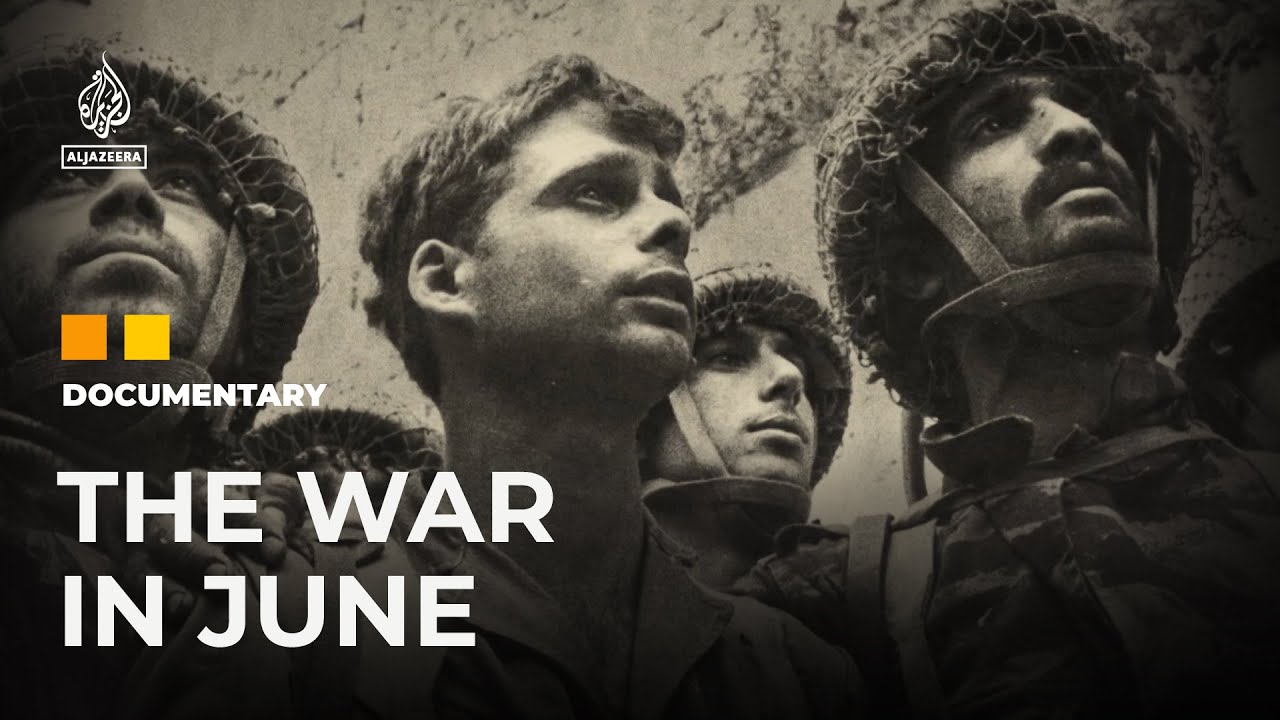
Six days that changed the Middle East: The '67 Arab-Israeli War | Featured Documentary
Introduction
The video introduces the topic of the Six-Day War and its significance in the Middle East.
Background of the Conflict
- The 15th of May 1967 marked the parade of military might in Israel to celebrate 19 years since its founding.
- Egyptian President Kamal Abdullah ordered his forces to take up positions along the borders with Israel.
- On the 5th of June 1967, Israel launched an all-out war against its Arab neighbors, achieving total victory after six days of fighting.
Impact and Consequences
This section explores the impact and consequences of the Six-Day War.
Territorial Changes
- The war resulted in significant territorial gains for Israel, changing the map of the Middle East.
- Israeli occupation of these lands remains a major obstacle to peace in the region.
Historical Context
- The roots of this war can be traced back two decades before June 5th, 1967.
- On May 14th, 1948, David Ben-Gurion declared the establishment of the state of Israel.
- Arab armies entered Palestine shortly after, leading to a thin line of defense for Tel Aviv.
- A U.N. brokered truce relieved pressure on Israelis defending their territory.
Arms Acquisition and Embargo
- The Zionist movement purchased arms on European black markets while Arab armies received mainstream supplies from various countries.
- In 1948, a United Nations embargo on armed shipments to the Middle East was imposed, which Britain and France adhered to.
- When the truce ended, better-equipped Israelis set out to expel Arab armies from Palestine.
Negotiations and Armistice Agreements
This section focuses on negotiations and armistice agreements following the initial conflict.
Encirclement at Al-Faluja
- As Israeli troops advanced, an Egyptian Brigade was encircled at the Palestinian Village of Al-Faluja.
- Major Ariel Sharon led an attack on an Egyptian army base near Gaza, resulting in casualties.
Armistice Agreement
- Delegations from Egypt and Israel met on the island of Rhodes under UN sponsorship.
- After a month of bargaining, they reached an armistice agreement primarily focused on evacuating the Faluja pocket.
- By summer 1949, Lebanon, Jordan, and Syria also signed armistice agreements with Israel.
Rise of Gamal Abdul Nasser
This section explores the rise of Gamal Abdul Nasser and its implications for Israel.
The Free Officers Movement
- In July 1952, the Free Officers launched a coup d'etat in Egypt, leading to King Farouk's exile.
- Lieutenant Colonel Gamal Abdul Nasser quickly rose to become Egypt's de facto leader.
Ben-Gurion's Fears
- David Ben-Gurion feared that a new leader like Kamal Ataturk would unite the Arab world against Israel.
- His apprehension increased when Nasser came to power in 1954.
Provocations and Response
This section discusses provocations from both sides and Israel's response.
Return of Ben-Gurion
- In February 1955, Ben-Gurion returned to political life as defense minister.
- Shortly after his appointment, Israeli paratroopers attacked an Egyptian army base near Gaza.
Conclusion
The Six-Day War had significant consequences for territorial control in the Middle East. It resulted in major gains for Israel and ongoing occupation of these lands remains a challenge to peace in the region. The conflict had its roots in the establishment of Israel in 1948 and subsequent tensions between Arab nations. Negotiations and armistice agreements followed the initial conflict, but fears of a united Arab world against Israel persisted with the rise of Gamal Abdul Nasser. Provocations from both sides continued, leading to further escalations.
Strait at the entrance to the Gulf of Aqaba
This section discusses the strengthening of Egypt's army and their search for weapons from the west. It also mentions Russia's involvement in Middle East affairs and Egypt's arms deal with Czechoslovakia.
Egypt's Search for Weapons
- Egypt sought more weapons from the west to strengthen its army, specifically ships sailing to and from the Israeli Port of Eilat. However, their efforts were unsuccessful.
Russia's Involvement
- Russia's new foreign minister, Mr. Shapilov, quickly engaged in talks with President Nasser and became involved in Middle East affairs.
Arms Deal with Czechoslovakia
- Egypt signed a significant arms deal with Czechoslovakia, which was actually facilitated by the Soviet Union. The deal included 200 aircraft, tanks, and cannons.
Ben-Gurion's Second Term as Prime Minister
This section focuses on Ben-Gurion's second term as Israel's prime minister and his response to Egypt's growing strength.
- In November 1955, Ben-Gurion began his second term as Israel's prime minister. One of his main concerns was how to address Egypt's increasing military power.
- Eight months later, an opportunity arose when Nasser announced the nationalization of the Suez Canal, which outraged Britain and France who were owners of the international Canal company foreign.
- Britain and France believed that military intervention was necessary to recapture the canal and remove Nasser from power.
The Suez Crisis
This section covers the events surrounding the Suez Crisis, including the tripartite secret agreement and the military intervention by Britain and France.
- A tripartite secret agreement was made on October 29, 1956. Israeli forces crossed the border into Egypt, while Britain and France called for both sides to withdraw.
- When Nasser rejected the ultimatum, British and French troops began landing in Port Said at the Mediterranean end of the canal.
- Under heavy international pressure, Britain and France were eventually forced to withdraw from Port Said in December.
Israel's Occupation of Sinai
This section discusses Israel's occupation of Sinai after the Suez Crisis and their eventual withdrawal.
- After the withdrawal of British and French forces, global attention shifted to Israel, which still occupied the whole of Sinai and the Gaza Strip.
- In March 1957, Ben-Gurion ordered the Israeli Army to withdraw to pre-war borders but secured two major gains: UN troops stationed along borders with Egypt and Gaza to prevent Palestinian raids, and guaranteed free passage for Israeli shipping through the Tehran Strait.
Fragile Peace on Egyptian Border
This section highlights a fragile peace between Egypt and Israel following their withdrawal from Sinai.
- The Sinai campaign provided Israel with approximately ten years of unsigned peace on its Egyptian border between 1957 and 1967. However, there was still underlying hostility between Cairo and Tel Aviv during this period.
Operation Focus
This section focuses on Operation Focus, a new strategy devised by Azar Weitzmann for Israel's Air Force.
- Azar Weitzmann developed a new strategy called Operation Focus for Israel's Air Force.
- The strategy aimed to neutralize the Arab Air Forces, particularly their high-performance supersonic Soviet fighter, the Mig-21.
Israeli Peace Activist and Mig-21
This section discusses an Israeli peace activist's actions and the revelation of Egypt's air defense weaknesses.
- An Israeli peace activist, a commercial pilot, bought a small plane named "Peace" and attempted to fly to Egypt as a gimmick for the 1965 elections. Although he was not elected, his flight revealed Egypt's air defense weaknesses.
- In August 1966, an Iraqi pilot defected to Israel with his Mig-21, providing valuable insights into its capabilities.
New Section
This section discusses the Israeli Air Force's combat experience with the Mig aircraft and the escalation of border skirmishes with Syria.
Israeli Air Force's Combat Experience
- The Israelis put their knowledge about the Mig aircraft to test in actual combat.
- In April 1967, border skirmishes with Syria escalated into a full-scale aerial battle.
- The Israeli Air Force shot down seven enemy aircraft, marking a significant victory.
Reports of Israel Massing Army on Syrian Border
- Following the battle, reports emerged that Israel was massing its army on the Syrian border.
- These reports, possibly originating from Soviet intelligence, raised concerns and spurred action.
Nasser Orders Egyptian Troops into Sinai
- On May 14th, 1967, Egyptian President Nasser ordered troops into Sinai.
- This apparent escalation prompted further actions and preparations for war.
New Section
This section covers Nasser's actions and the Arab world's response leading up to the start of hostilities.
Attempt to Roll Back Israeli Gains
- Nasser saw an opportunity to roll back Israel's gains following the 1956 War.
- On May 16th, Egypt asked the U.N. to withdraw peacekeeping troops from Sinai.
- A week later, Nassar announced the closing of the Tehran Strait to Israeli shipping.
Arab World Reacts
- News of Nasser's actions sparked widespread protests across the Arab world.
- People took to the streets in various countries expressing support for Egypt.
Decision to Open Hostilities
- Israel made a decision to open hostilities on June 5th, 1967.
- The Israeli Air Force launched Operation Focus, an aerial attack they had been rehearsing for years.
New Section
This section focuses on the events leading up to the start of the war and the Israeli preparations.
Morning of June 5th, 1967
- On the morning of June 5th, 1967, Cairo became a pivotal location.
- Marshall Abdel Hakeem Ahmed visited troops deployed on the borders with Israel.
Media Influence and Perception
- Israeli media invoked memories of the Holocaust to create a sense of threat among Israelis.
- The Egyptian leader was referred to as "the Egyptian tyrant" in Hebrew media.
Israeli Preparations
- Despite being perceived as the underdog, Israel was more prepared for war than its Arab opponents.
- The Israeli Chief of Staff met with troops waiting for a green light to strike.
New Section
This section covers Israel's decision to strike first and their successful attack on Egyptian airfields.
Decision to Strike First
- Israel believed that striking first was a reaction to what they perceived as aggressive actions by Egypt.
- They decided to launch Operation Focus, aiming to destroy the Egyptian Air Force on the ground.
Attack on Egyptian Airfields
- In the early hours of June 5th, 1967, the Israeli Air Force launched their attack.
- Over 200 jets flew over Egyptian airfields from unexpected directions.
- The attack resulted in significant damage and destruction of enemy aircraft.
New Section
This section highlights Israel's success in attacking multiple airfields and the false reports of Egypt's air attack failure.
Successful Attack on Airfields
- The Israeli Air Force successfully attacked 18 Egyptian airfields.
- The Egyptians suffered a loss of 80% of their Air Force, with over 300 planes destroyed on the ground.
False Reports of Failure
- Cairo radio falsely reported the total failure of the enemy's air attack.
- This misinformation created a false sense of success for Egypt.
New Section
This section mentions airstrikes by Jordan, Syria, and Iraq, which gave Israel a pretext to widen the scope of the war.
Airstrikes by Arab Countries
- Jordan, Syria, and Iraq launched their own airstrikes in response to Egypt's apparent success.
- However, these attacks were ineffective.
- These actions provided Israel with a pretext to expand the conflict.
New Section
This section discusses the events of the war and the impact on various countries involved.
Israeli Air Superiority (0:31:23s - 0:32:21s)
- Israel launched a surprise attack on El Mazda Air Base, Damascus, and other targets.
- The Syrian, Iraqi, and Jordanian air forces suffered heavy losses.
- Operation Focus ensured Israel's total air superiority in the Middle East.
- The Arab armies were left without air support.
Egyptian Front Collapse (0:32:48s - 0:34:56s)
- Despite initial success in holding off Israeli advances into Sinai, Egyptian Deputy Supreme Commander Marshall Ahmed ordered a withdrawal after witnessing Israel's air supremacy firsthand.
- This decision led to the collapse of the Egyptian front.
Israeli Advances (0:35:20s - 0:37:04s)
- Israeli troops reached the Eastern Bank of the Suez Canal and occupied Sinai Peninsula and Gaza Strip.
- Jordan's King Hussein launched an unsuccessful offensive against Israel but managed to endanger parts of Jerusalem.
- Israelis launched an assault against Jordanians, leading to the fall of West Bank and Jerusalem.
Ceasefire and Golan Heights (0:37:30s - 0:39.48s)
- With Egypt and Jordan defeated, Israel turned its attention to securing its borders with Syria.
- Israeli troops climbed the Strategic Golan Heights while Syria accepted a UN ceasefire without informing their troops fighting on the Golan Heights.
- The collapse of Syrian resistance allowed Israel to occupy the entire Golan Heights.
Conclusion (0.40.18s - 0.41.42s)
- After achieving all its goals, Israel accepted the UN ceasefire.
- The Arab nations suffered a humiliating defeat while Israel tripled its size by capturing various territories.
- The victory was celebrated in Israel, but it also marked a tragic event in their history.
New Section
This section discusses the aftermath of the war and the attempts to regain lost territories.
Arab Territories Lost (0:41:42s - 0:41:58s)
- Israel captured the Sinai Peninsula, Gaza Strip, West Bank, Eastern Jerusalem, and Golan Heights.
- The size of Israel tripled as a result.
Attempts to Regain Territories (0:41:33s - 0:41:58s)
- Arab nations attempted to regain the lost territories.
- NASA rescinded his decision to step down from the presidency.
- Efforts were made to regain lost Arab territories.
New Section
This section highlights the significance of Israel's victory and its impact on their history.
Significance of Victory (0.40.49s - 0.41.10s)
- The Israeli Army's miraculous victory was celebrated with songs and Victory albums.
- It marked both a unique and tragic event in Israeli history.
Timestamps are approximate and may vary slightly based on video playback.
New Section
Israel's governance and responsibility for Palestinians in the occupied territories, the options of conquering or creating a Jewish state, unification of Jerusalem under Israeli jurisdiction, obligations and privileges of the government, Israeli settlers moving into the West Bank, complications for peacemaking, Israeli intention to retain occupied territories.
Israel's Governance and Responsibility
- Israel found itself governing and being responsible for a million Palestinians in the newly occupied Gaza Strip, West Bank, and Jerusalem.
- The narrator took six months to explore the territories and realized there was another people with a national movement.
- The options were either conquering them and creating an apartheid state or allowing a predominantly Jewish State called Israel while recognizing their rights to have their own state.
Unification of Jerusalem
- After the war, Israel declared the unification of Jerusalem under its jurisdiction.
- Christian and Muslim holy sites also came under Israeli control.
- The government had obligations and privileges in maintaining law and order, providing services, and ensuring suitable standards of living.
Israeli Settlers in the West Bank
- In defiance of international law, Israeli settlers began moving into the West Bank (Judea and Samaria).
- Jewish settlements were placed in areas considered core to Judaism's history.
- This complicated peacemaking efforts.
Intentions to Retain Occupied Territories
- Israeli settlements were spreading not only in the West Bank but also in Gaza Strip, Sinai, and Golan Heights.
- It became clear that Israel had no intention of returning these territories.
Reminder of Vulnerability
- After six years, Arab nations aimed to restore their territories through another war.
- Israel received a sharp reminder of its vulnerability, which it thought it had conquered forever in the 1967 war.
The transcript is already in English.