Diferencias replicacion ADN procariotas y eucariotas
Differences in Replication Mechanisms Between Prokaryotes and Eukaryotes
Overview of Replication Process
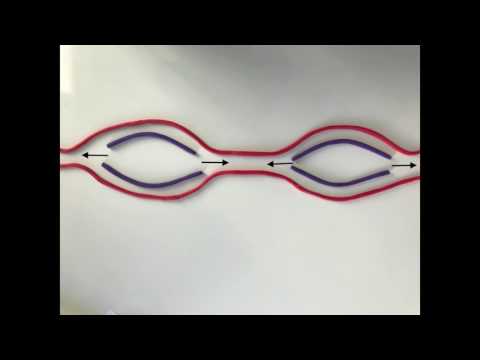
- The video explains the differences between prokaryotic and eukaryotic replication mechanisms, noting that both processes are semi-conservative and bidirectional.
- Key distinctions arise from the number of DNA polymerases involved, the number of origins and termination points for replication, and the nature of chromosomes.
Prokaryotic Replication Characteristics
- Prokaryotic genomes typically have a single origin of replication with two termination points located opposite to the origin.
- The speed of prokaryotic replication is significantly faster than that of eukaryotes due to simpler genomic structures.
Eukaryotic Replication Characteristics
- Eukaryotic genomes are larger, containing multiple chromosomes with numerous origins of replication spaced 30,000 to 300,000 base pairs apart.
- Unlike prokaryotes, eukaryotic termination points are not fixed; they occur where adjacent replication forks meet.
Differences in DNA Polymerases
- Prokaryotes possess three types of DNA polymerases (I, II, III), while eukaryotes have five distinct types (alpha, beta, gamma, delta, epsilon).
Chromosomal Structure Implications
- Prokaryotic chromosomes are circular; upon completion of replication, they leave a 3' end exposed which can be filled by DNA polymerase.
- In contrast, linear eukaryotic chromosomes cannot fill gaps left after primer removal due to lack of free 3' ends. This leads to progressive shortening after each replication cycle.
Telomeres as a Solution
- To prevent loss of genetic information at chromosome ends during replication cycles, eukaryotic chromosomes contain repetitive non-coding sequences called telomeres.