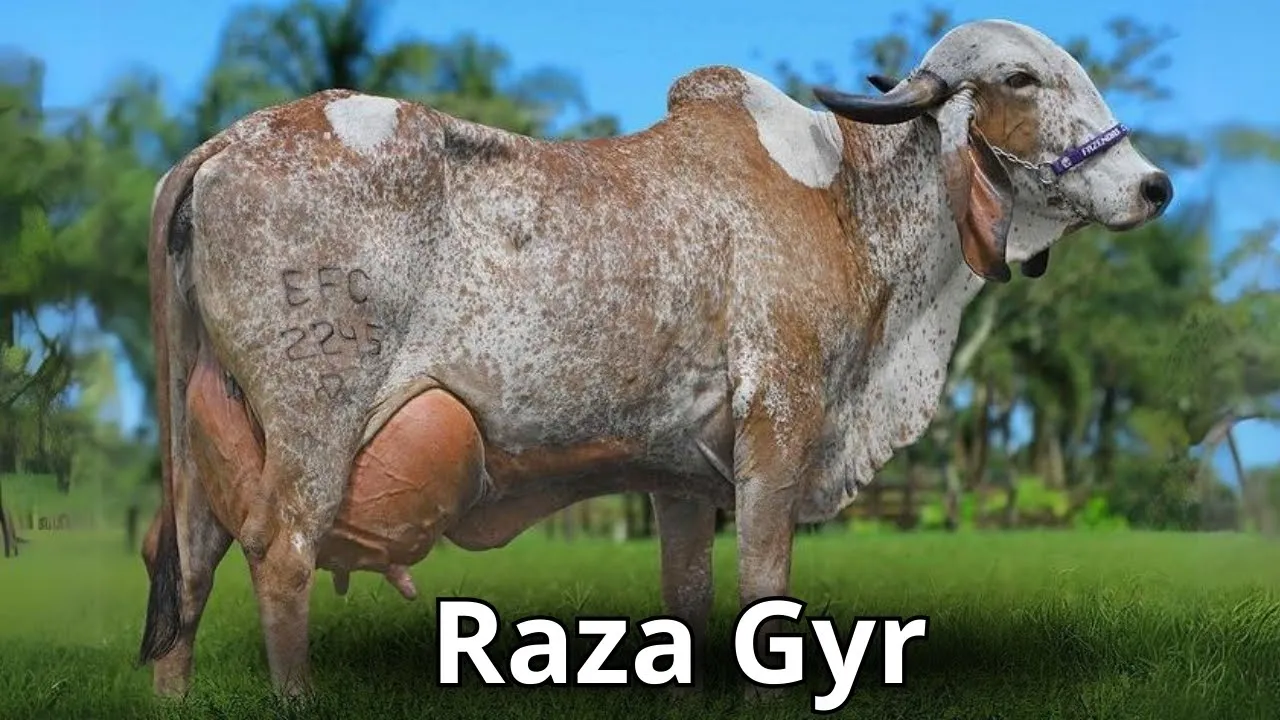
Raza de ganado Gyr. Elegancia, Poder y Legado en la Ganadería
New Section
The introduction highlights the beauty and significance of the Gir cattle breed, emphasizing its elegance, heritage, and importance in Brazilian agriculture.
Gir Cattle: An Introduction
- The Gir breed is celebrated for its history and grandeur, symbolizing resistance and genetic excellence in the vast plains where they roam.
- Gir cattle are crucial in Brazilian agriculture due to their resilience to heat, diseases, and parasites, making them ideal for tropical climates.
- Initially mistaken as a meat-producing breed, Gir cattle evolved through genetic selection and adaptation to become prominent in milk production as well.
The Evolution of Gir Cattle
This section delves into the origins and evolution of Gir cattle from India to Brazil, highlighting key figures and genetic advancements.
Origins of Gir Cattle
- Originating from Goyerad in western India, Gir cattle were gifted by the Maharaja of Badaver to Brazilian rancher Celso Garcia Sith.
- The introduction of these cattle sparked a genetic revolution led by Krishna (a bull), propelling the breed's market value significantly.
Gir Cattle in Brazil
This part explores the impact of Gir cattle on Brazilian agriculture and their substantial contribution to milk production.
Influence of Gir Cattle
- By 1989, Gir cattle accounted for around 80% of Brazil's milk production, showcasing their dominance in the industry.
- With an estimated population reaching 5 million in 2010, Gir cattle remain vital due to their resilience against various challenges like heat and diseases.
Characteristics of Gir Cattle
This segment details the physical attributes and productivity metrics associated with Gir cattle.
Physical Traits
- Describes unique physical features such as convex profiles, pendulous ears with spiraling horns that grow upwards and backwards.
- Highlights characteristics like loose hanging skin, short thick neck in males contrasting with thin neck in females.
Productivity Metrics
Focuses on key productivity metrics related to weight parameters and milk production capabilities of Gir cattle.
Productivity Insights
- Weight ranges for bulls (450-600kg) versus cows (350-450kg), showcasing gender-based differences within the breed.
- Details on birth weights (23.2 - 27.3kg), weaning weights (157.5kg), daily weight gains during lactation period (1.19kg/day).
Raza Gir: Características y Producción
This section discusses the Holstein crosses by F1 Gear, focusing on milk production, genetic factors, and environmental influences affecting the Aguir breed.
Milk Production and Genetic Factors
- Holstein crosses by F1 Gear achieve average yields of 2,235 kilograms of milk in the third lactation.
- Gir cows' milk is highly valued for its fat content (4.14%), protein content (3.28%), and average somatic cell count of 150,000 cells per milliliter.
- Reproductive parameters for Gir cattle include a first-service age of around 15 months and an intercalving period of approximately 390 days on average.
Maternal Ability and Adaptation
- Gir cattle exhibit good maternal ability leading to enhanced survival and growth rates in calves.
- The breed shows excellent adaptation to tropical conditions, particularly high humidity levels between 60% and 80%, with an optimal temperature range from 20 to 35 degrees Celsius.
Selección y Mejoramiento Genético en la Raza Gir
This section delves into the selection process within the Gir breed, highlighting distinct functions based on historical considerations.
Selection Process and Functionality
- The Gir breed offers varied selection options with well-defined functions initially categorized as meat or dairy types.
- Differentiation in production capabilities led to diverse biotypes within the breed without creating separate varieties but enhancing specific traits related to milk or meat production.
Mejoramiento Genético y Producción Lechera en Ganado Gear
This part explores genetic improvement efforts in increasing milk production within the Gear cattle population.
Genetic Improvement for Milk Production
- Genetic enhancement and selection processes aimed at boosting milk yields have been successful in regions like Rio de Janeiro, Sao Paulo, and Minas Gerais.
- Initial dairy cows from Gear herds were originally sourced from beef herds imported into Brazil due to their surplus milk production capabilities compared to beef cattle.
Impact on Calf Feeding