Clase 4 Materiales Endopostes 01/09
Introduction to Endodontic Prefabricated Posts
Overview of Class and Topics
- The instructor discusses the class on prefabricated endodontic posts, mentioning updates made to the channel for better access.
- Today's focus is on prefabricated endocostes, building upon previously covered topics related to folded costs within the general post system.
Historical Context of Endodontic Posts
- The discussion includes a historical perspective on endopost systems, emphasizing their role in anchoring teeth with significant coronal destruction.
- Early posts were metallic (gold and silver), evolving into ceramic options by the 1980s, leading to fiber-reinforced posts introduced in 1988.
Types of Endodontic Posts
Classification of Endodontic Posts
- There are two main categories: custom-made and factory-produced posts. Customization can involve materials like acrylic or metal.
- Prefabricated posts come in various types based on commercial brands and kits available in the market today.
Active vs. Passive Posts
- Active posts are typically metallic and can be screwed into place, while passive ones are cemented without threading.
- Passive options include cast or injected ceramic posts that do not require screwing into the canal.
Selection Criteria for Endodontic Posts
Considerations for Post Selection
- When selecting a post type, factors such as anatomical shape and retention must be considered; conic shapes offer less retention than parallel ones.
- A combination of cylindrical-conical designs may provide both anatomical fit and adequate retention depending on clinical needs.
Material Properties
- The choice of material should align with clinical cases; metallic passive prefabricated posts have specific preparation requirements for optimal cementation.
Advantages and Disadvantages of Fiber-Reinforced Posts
Benefits of Fiber-Reinforced Systems
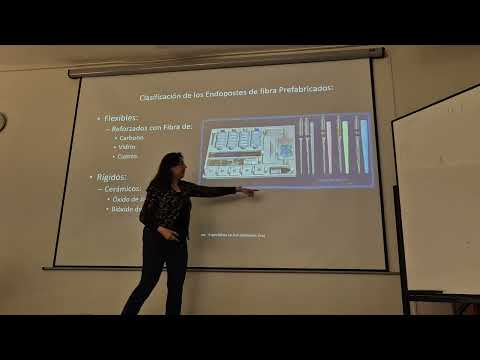
- Fiber-reinforced posts can be flexible or rigid; flexible types include carbon fiber while rigid options consist of ceramics like zirconium oxide.
Challenges with Adaptability
- While fiber-reinforced systems allow for quicker procedures compared to traditional methods, they may struggle with adaptability due to non-circular canal shapes.
Biomechanical Considerations
Force Distribution in Dental Structures
- Fiber-reinforced systems mimic dentine properties better than metal or ceramic alternatives, distributing forces more evenly across dental structures.
Risk Factors Associated with Post Use
- Improper length selection can lead to root fractures due to excessive force concentration at weak points within dentine.
Clinical Implications
Importance of Case-Specific Decisions
- Clinicians must evaluate each case's unique anatomy when deciding between different post types based on structural integrity and expected forces during function.
Restoration Techniques
- Various techniques exist for customizing fiber posts using composite materials to ensure proper fit within irregularly shaped canals.
Conclusion: Future Directions in Endodontics
Evolving Practices in Dentistry
- Current trends emphasize minimally invasive techniques aimed at preserving tooth structure while effectively restoring functionality through advanced adhesive technologies.
Discussion on Post and Crown Adhesion in Endodontics
Importance of Adhesion
- The necessity of using fixation resins is questioned; alternative materials can provide better anchorage and adhesion without resin modification.
- The absence of a supporting crown can lead to root fractures due to the concentration of forces, emphasizing the need for cellular effects in post placement.
Relationship Between Dentin and Resistance
- The resistance of endodontically treated teeth is directly related to the remaining dentin, particularly radicular dentin, which interacts with the endocanal system.
Case Studies and Practical Applications
Use of Anchors
- A case example illustrates the use of an anchor with a post; decisions on fixed or variable posts depend on specific clinical situations.
Preparation Techniques
- Emphasis on careful preparation when entering canals; radiographic assessment is crucial for proper alignment with adjacent teeth.
Conduct Preparation and Adhesive Systems
Conduct Preparation Cautions
- Caution is advised during canal preparation; understanding the axis relative to neighboring teeth helps avoid procedural errors.
Adhesive System Considerations
- Different adhesive systems require varying approaches, such as total acid etching versus self-adhesive cements based on manufacturer guidelines.
Cementation Techniques
Cement Application Process
- Proper cleaning and drying are essential before applying adhesive systems; different brands may have unique requirements for intraradicular cementation.
Dual-Cure Cements
- For dual-cure cements, waiting times vary according to manufacturer instructions before initiating light curing processes.
Inhibition Factors in Resin Polymerization
Impact of Collagen Presence
- The presence of collagen in endodontic procedures can inhibit resin polymerization if certain cements containing collagen are used, affecting adhesion quality.
Acid Etching Necessity
- Evaluating whether acid etching is necessary depends on the type of cement used; autoadhesive cements may not require it but still produce some acidification.
Customizing Restorative Materials
Personalization Techniques
- Customizing composite materials for specific clinical cases enhances restoration effectiveness, especially in complex root canal scenarios.
Instrumentation Details
- Specific instruments like those from 3M SP are recommended for manual mixing techniques required during restorative procedures.
Turn any video into a summary like this
YouTube links, meetings, lectures. With transcripts, search, and chat.