Justo a Tiempo - Sistema Kanban
Study of the Toyota Production System
Overview of the Case Study
- The case study focuses on a small factory in Kurashiki, Japan, which is part of the Toyota production system.
- This factory has only 15 employees and specializes in casting processes and molding parts for its client, Matsu, a micromotor manufacturer located 50 kilometers away.
Management Structure
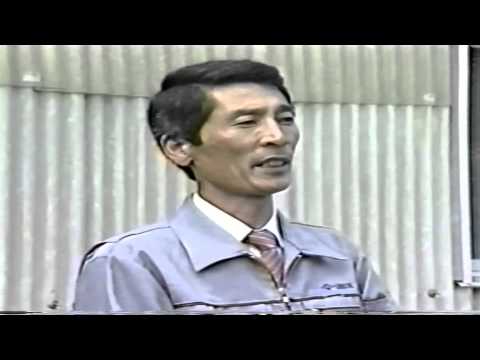
- The factory is managed by Mr. Koshai, who oversees order processing from clients, and Mr. Goada, who manages molding operations.
- The management structure emphasizes efficient communication and coordination between the manufacturing team and their client.
Introduction to Kanban System
- A key aspect of this production process is the Kanban system or instruction cards used for delivery management.
- Kanban serves as a tool to ensure that parts are supplied timely for subsequent processes; it can be adapted based on purpose and content.
Functions of Kanban
Function 1: Inventory Management
- The first function involves clearly labeling each part to avoid unnecessary storage; it clarifies what parts are available and in what quantity.
Function 2: Transportation Instructions
- Kanban also provides transportation instructions; every moving piece must have an attached card indicating its destination.
Function 3: Production Initiation
- The third function acts as an instruction sheet for production; removing a card signals that production should begin immediately.
Operational Workflow with Kanban
- In practice, required parts are retrieved and transported to the sandblasting line where cards are removed and placed into a special mail box.
- Twice daily, all cards from this mailbox are taken to an order box for distribution as instructions back to the manufacturing plant.
Order Processing Cycle
- Orders for upcoming deliveries are pre-arranged via fax; once received, corresponding items are retrieved from finished goods inventory.
Final Steps in Production Process
Order Processing and Kanban Cycle
Overview of Order Processing
- Once the process is completed, items are sent to the finished goods warehouse with an attached card.
- Twice daily, processing cards in the order box are taken to the order board as instructions for molding processes.
Molding Process and Card Management
- When items are retrieved for molding, processing cards are removed and placed in a mail box; they are then sorted, distributed, and added to the order box with requisition or supply instructions.
- The cycle continues with materials; when molded items are taken from storage to supplies or requisition, material cards are also removed and placed in the mail box.
Material Handling
- Materials are brought from storage according to card instructions for casting.
- After final casting, items go back to their respective warehouses. Post-processing includes applying anti-corrosive coatings before returning them with attached cards.
Kanban System Implementation
Understanding Raw Material Orders
- The raw material order card indicates what needs ordering when quantities grow; it is placed on the order board to signal necessary orders.
- When raw materials are dispatched, cards return to their origin point.
Kanban Control Mechanism
- The kanban cycle is controlled by subsequent process activities.
- This illustrates lean production principles and how customer deliveries are managed effectively.
Quality Improvement Initiatives
Identifying Defects
- Mr. Govda realizes there’s a need for defect prevention; he collaborates with client Mr. Cosabi to investigate achieving zero defects.
Establishing Standards
- It becomes evident that operators lack clear standards for addressing defects; initial quality levels were far below current achievements.
Action Plan Development
Implementing Zero Defects in Manufacturing
Introduction to the Plan
- The announcement of a comprehensive plan by Mr. Govda aimed at achieving zero defects involved all personnel, emphasizing collective effort.
- A thorough investigation revealed numerous defects, leading to a commitment from everyone to eliminate their root causes.
Inspiration and Immediate Action
- Mr. Govda experienced an epiphany regarding the urgency of addressing defects, focusing on immediate action as a key principle.
- This inspiration prompted an examination of how to create an effective and immediate workflow for defect elimination.
Establishing Effective Processes
- Two foundational pillars were established: the creation of INE-SEGU for immediate processes and a central market flow.
- Initial designs showed inefficiencies with workers spending excessive time merely observing machines rather than engaging in productive tasks.
Redesigning Workflow
- A new combined work standard sheet was developed based on time observation and movement measurement, transitioning from a straight line layout to a U-shaped design.
- After several iterations, this new workflow was implemented successfully under Mr. Fujimoto's guidance, who trained others effectively.
Achieving Efficiency and Quality Control
- Transitioning from two tables to one reduced processing time significantly, allowing more focus on defect inspection; this led to achieving zero defects.
Establishing Effective Delivery Systems
Key Points in Establishing a Concrete Purpose
- The first point emphasized the need for a concrete purpose, aiming for 100% compliance in rapid product delivery to customers to avoid issues and establish a central market flow.
Enhancements in Delivery Platforms
- The second point focused on creating a platform for improvements by adjusting delivery measures, making them easier to manage and suitable for small batches. New designs were created for batches of 40, 30, and as small as 10 items.
Observing Movement and Market Flow
- The third point involved monitoring the movement of goods. A central market flow was established as vital for Cambano's delivery system, aiming to reduce both production base size and delivery time by cutting finished product storage by 50%.
Standards of Control Implementation
- The fourth point was about setting control standards for the market center, ensuring controls were in place whether work was complete or not. This ties back to maintaining strict adherence to rapid delivery effectiveness.
Achievements Through Continuous Improvement
- Small meetings were held to challenge changes aimed at reducing storage and achieving 100% efficiency in prompt deliveries. They successfully reduced inventory by approximately 70% under the BX model.
Impact of Improvements on Delivery Timeliness
Consistency in Delivery Performance
- As a result of these improvements, the punctuality index is around 90%, nearing consistent performance at 100%. This reflects significant advancements made through systematic adjustments.
Vital Role of Production Process Adjustments
- Improvements in production processes aligned with subsequent processes have been crucial for fully utilizing the implemented campán system at Ocayama factory. Operations halt when storage is full or below minimum levels.
Team Collaboration and Efficiency Gains
Successful Team Dynamics
- With effective collaboration among team members leveraging their knowledge and trust, they achieved notable success in managing both production and timely deliveries.
Overall System Effectiveness
Turn any video into a summary like this
YouTube links, meetings, lectures — with transcripts, search, and chat.