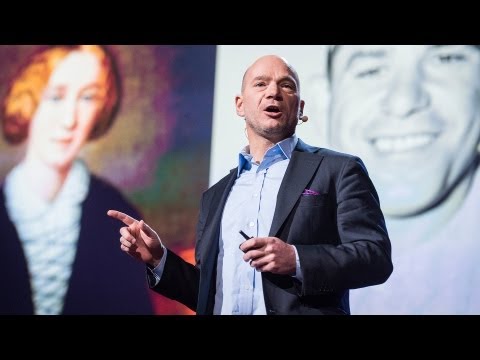
What will future jobs look like? | Andrew McAfee
The New Machine Age: Opportunities and Challenges
The Rise of Automation and Its Implications
- George Eliot's caution about the unpredictability of prophesy is echoed by Yogi Berra, emphasizing the difficulty in making predictions about the future.
- Advancements in technology are leading to automation in various sectors, such as self-driving cars reducing the need for truck drivers and AI systems like Siri automating customer service roles.
- Historical context shows that fears of technological unemployment have existed for over 200 years, yet economies have maintained near full employment until now.
- Current advancements in machine capabilities—understanding, speaking, hearing—signal a significant shift towards automation that could replace many jobs.
- The emergence of humanoid robots capable of performing tasks indicates a future where androids may take on more human jobs.
Economic Benefits of Technological Progress
- The concept of "the new machine age" suggests an era with increased technology but fewer traditional jobs; this is viewed positively as it can lead to economic growth.
- Technological progress contributes to rising output while decreasing prices, enhancing quality and volume—a sign of abundance rather than shallow materialism.
- As androids take over labor-intensive jobs, humans may be liberated from drudgery, allowing for a society focused on creativity and innovation.
- This potential societal shift resembles environments like TED Conferences where creators collaborate freely without the constraints of traditional work structures.
- The rise of makers and artists leveraging technology leads to unprecedented levels of innovation and creative expression.
Potential Challenges Ahead
- Despite optimism about technological advancements, there are significant challenges that must be addressed as we transition into this new machine age.
- A quote from physicist Freeman Dyson highlights technology as a vital gift that drives civilization forward; however, it raises questions about its implications for society at large.
- Economic challenges arise when machines dominate labor markets; an anecdote between Henry Ford II and Walter Reuther illustrates concerns regarding job displacement versus consumer purchasing power.
- Rising corporate profits contrast sharply with declining wages for workers, indicating a troubling trend for economic stability and middle-class prosperity.
Economic Inequality and Societal Challenges
The Decline of Median Income
- Median income in America has decreased over the past 15 years, leading to concerns about a vicious cycle of increasing inequality and polarization.
- The societal challenges stemming from this inequality require significant attention.
Misplaced Concerns About Technology
- The speaker dismisses dystopian fears regarding self-aware machines as not relevant to current societal issues.
- A story is introduced about two stereotypical American workers, "Ted" (college-educated professional) and "Bill" (non-college educated laborer), to illustrate diverging life paths due to economic changes.
Divergence of Life Paths: Ted vs. Bill
- In 1960, both Ted and Bill had similar full-time job prospects; however, automation has led their lives to diverge significantly.
- Ted has maintained stable employment while Bill has often left the workforce entirely, reflecting broader social trends affecting different demographic groups.
Social Consequences of Economic Changes
- Bill's declining engagement in society is evident through reduced voting participation and increased incarceration rates compared to Ted's stable family life.
- These trends threaten to overshadow progress made during the Civil Rights Movement, highlighting a growing divide between different socioeconomic classes.
Addressing Economic Disparities
- Short-term solutions include encouraging entrepreneurship and improving infrastructure while ensuring educational systems produce skilled individuals.
- Long-term strategies may involve radical interventions like guaranteed minimum income, which have historical support from notable figures across the political spectrum.
Education as a Key Factor
- Education plays a crucial role in engaging individuals like Bill; personal experiences highlight the need for more stimulating educational environments rather than traditional methods that may lead to disengagement.
Hope for Improvement Through Technology
Intervening in Troubled Communities
Addressing Unemployment and Economic Challenges
- The speaker emphasizes the need for intervention in troubled communities, acknowledging that current efforts may not be sufficient to address significant challenges.
- A notable statistic is presented: approximately five million Americans have been unemployed for over six months, highlighting the urgency of the situation.
- The speaker critiques simplistic solutions, suggesting that merely sending individuals back to Montessori education will not resolve deep-rooted unemployment issues.
Concerns About Inequality and Technological Advancement
- There is a concern about creating a society where advanced technologies exist alongside economic inequality, which could hinder opportunities for many.
- The speaker expresses optimism that society can do better than this bleak scenario due to increasing awareness of these issues.
Raising Awareness Through Innovative Approaches
- The realities of the new machine age and economic changes are becoming more recognized; innovative methods could further accelerate this awareness.
- Suggestions include engaging economists and policymakers in interactive experiences (e.g., playing "Jeopardy!" against AI or taking road trips in autonomous cars) to foster understanding of technological impacts.
Confidence in Problem-Solving Abilities
- The speaker conveys confidence that society has not lost its ability to tackle tough challenges despite current difficulties.
- A historical perspective is introduced by referencing quotes from influential figures separated by time and distance, emphasizing continuity in problem-solving approaches.
Historical Insights on Progress and Truth
- Winston Churchill's visit to MIT in 1949 is cited, stressing the importance of improving technical production means for societal abundance.
- Abraham Lincoln's belief in the people's capacity to handle crises when provided with truth underscores the significance of transparency.
Turn any video into a summary like this
YouTube links, meetings, lectures. With transcripts, search, and chat.