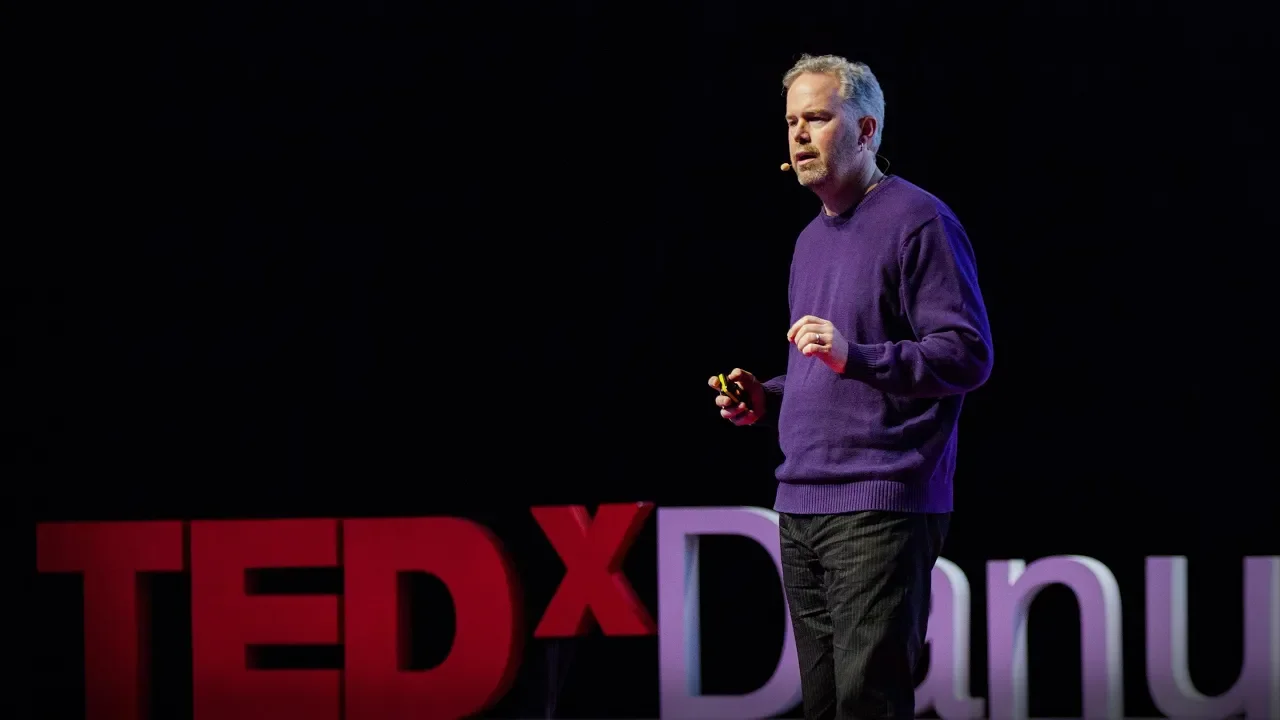
What if we replaced politicians with randomly selected people? | Brett Hennig
How Should We Live Together?
The speaker introduces the topic of how people should live together and manage common resources. This question has always been important, but it is even more crucial now due to issues like rising inequality, climate change, and the refugee crisis.
The Importance of the Question
- The question of how to live together has always been significant.
- It is particularly important today due to pressing global issues.
- Examples are given of historical figures who attempted to answer this question, such as Plato and certain rulers.
Democracy's Success
- While some answers to this question have been brutal and inhumane, democracy has had recent success.
- Democracy has experienced a significant increase in the number of democracies over the past 200 years.
- Francis Fukuyama suggested that we have reached the end of history with liberal democracy as the answer.
Challenges with Democracy
- Despite its appeal in theory, there are challenges with democracy in practice.
- Our politics is broken, politicians lack trustworthiness, and powerful vested interests distort the political system.
Resolving the Paradox
- There are two ways to resolve this paradox: giving up on democracy or fixing the broken system.
- The speaker proposes fixing the system by bringing practice closer to the ideal through a process called "sortition" or random selection.
Sortition: Random Selection
- Sortition involves randomly selecting people from society and putting them in parliament for a period of time.
- This diverse group would simulate how society thinks if given time, information, and a good decision-making process.
- Decisions made by this group would build on collective wisdom and prove that diversity can be more effective than ability alone.
Timestamps may not be exact due to limitations in the transcript.
The Role of Sortition in Democracy
In this section, the speaker discusses the concept of sortition as an alternative to elections in democratic systems. Sortition involves randomly selecting citizens to fill political positions, aiming for a more representative government.
Sortition as an Alternative to Elections
- Sortition would replace elections and make the parliament more representative of society.
- Random selection was used in ancient Athens and is known as a kleroteria.
- Ancient Athenians believed that elections were aristocratic devices and sought to avoid career politicians.
Modern Resurgence of Sortition
- Random selection has experienced a resurgence in modern times.
- Many examples exist where random selection has been successfully implemented in politics.
- Despite initial skepticism, evidence shows that when given responsibility, people act responsibly.
Advantages and Challenges of Sortition
- Sortition is not a perfect solution but offers improvements over the current system.
- The question is whether it would be better than the existing system, and the answer is yes.
- Distorting influences will still exist, but sortition provides a more inclusive approach.
Implementing Sortition in Democracy
This section explores potential steps towards implementing sortition in democratic systems. Various initiatives are already experimenting with sortition in different contexts.
Experimentation with Sortition
- Several ongoing initiatives are experimenting with sortition:
- Introduction to schools, workplaces, and other institutions
- Policy juries and citizens' assemblies
- Examples from Bolivia, Australia (newDemocracy Foundation), US (Jefferson Center), and Ireland (Irish government)
- Campaign for change led by the Sortition Foundation in the UK
Moving Towards Change
- The next step could be establishing a second chamber in parliament filled with randomly selected citizens, such as a citizens' senate.
- Campaigns for a citizens' senate exist in France and Scotland, and it could be implemented in Hungary as well.
- Sortition can act as a catalyst for change within the existing system.
Replacing Elections with Sortition
- When the current system becomes unsustainable, elections can be replaced with sortition to create a more inclusive democracy.
Timestamps are provided based on the transcript.
Turn any video into a summary like this
YouTube links, meetings, lectures. With transcripts, search, and chat.