1.3.1. Chapitre 3 conclu partie II 2 3 (vidéo 12)
Introduction to Sociology of Sports - Chapter III: The Definition of Sports
In this section, the discussion revolves around the historical construction of definitions related to sports, particularly focusing on the complexities that emerged in defining sports from the 1970s onwards.
Evolution of Sports Definitions
- A shift towards institutionalization led to a search for a consensus definition of modern sport as competitive physical practice.
- The increase in licensed practitioners from 6 million to about 10 million between 1970 and 1980 highlighted a growth in participation but also introduced complexities due to multi-sport individuals and officials.
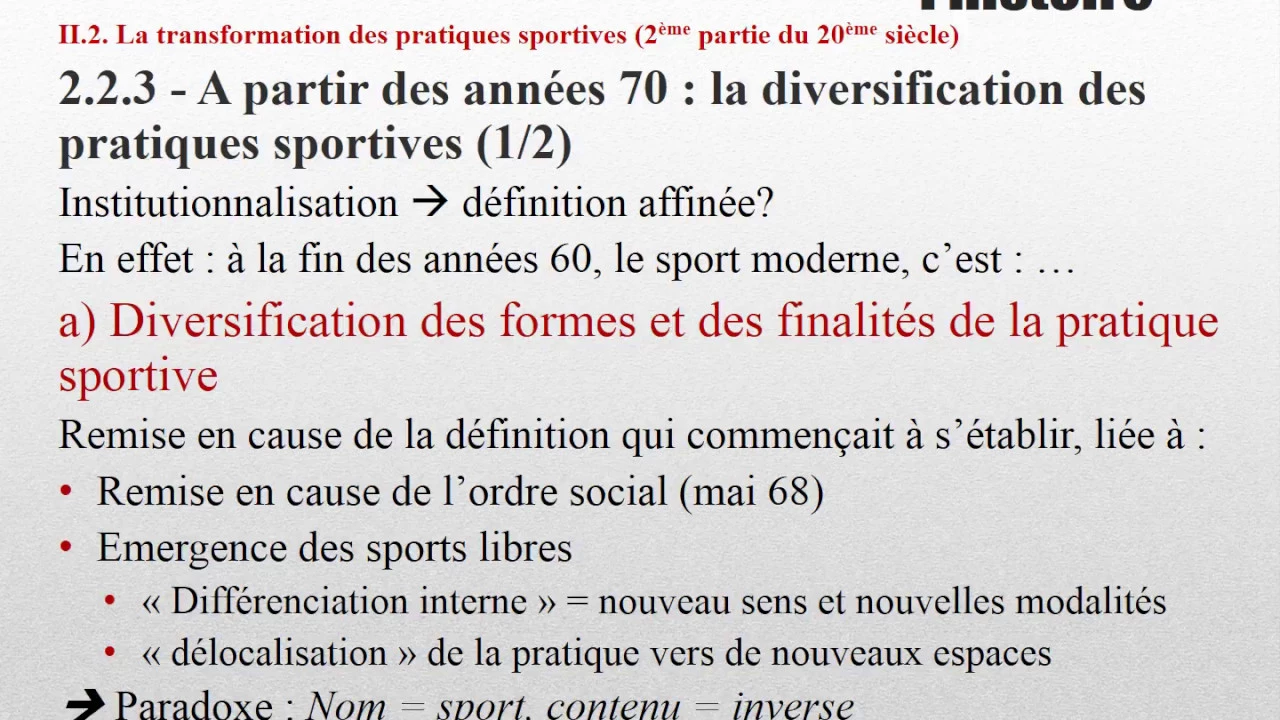
- The diversification of sporting practices in the 1970s challenged traditional notions of what constitutes sport, prompting a reevaluation of established definitions.
Impact of Societal Changes
- The societal upheaval triggered by events like May '68 resulted in a rejection of traditional sporting values such as institutionalization, competition, and pursuit of records.
- Emergence of non-institutionalized, self-organized sporting activities reflected a broader societal shift towards individualism and freedom post-May '68.
Diversification and Differentiation
- Introduction of new practices like free climbing and windsurfing signaled a departure from traditional competitive sports towards more hedonistic and ecologically conscious activities.
- The internal differentiation within sports saw the rise of counter-current practices emphasizing freedom and distinctiveness from mainstream sporting norms.
Sociological Perspectives on Sporting Trends
- Societal trends towards body maintenance, well-being, autonomy, and self-governance influenced the rise of non-competitive, leisure-oriented physical activities.
- Increasing emphasis on individual choice and autonomy led to the popularity of self-directed sports like jogging, aerobics, and fitness training.
Shifting Values in Sporting Culture
- Transition from asceticism to hedonism reflected changing societal values with an emphasis on immediate pleasure during physical activities rather than delayed gratification.
Pour le Jeu et le Sport: Sociological Perspective
In this segment, the speaker discusses the various aspects of sports and games from a sociological standpoint, emphasizing different motivations and dimensions beyond traditional competitive sports.
Societal Perspectives on Sports and Games
- The speaker highlights diverse motivations for engaging in activities like games and sports:
- Emphasis on social interaction
- Concern for personal well-being, including health
- Exploration, particularly in outdoor activities
- Pursuit of adventure and self-transcendence through novel experiences