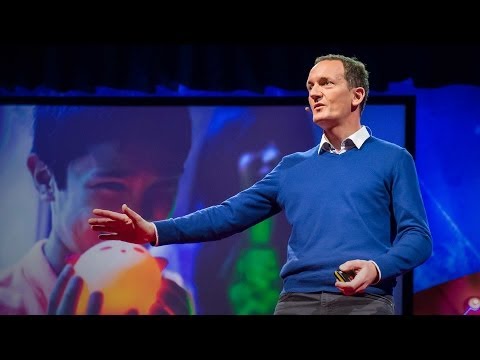
Steve Howard: Let's go all-in on selling sustainability
Introduction and Background
The speaker introduces themselves as someone who has worked on sustainability for many years. They mention their experience in climate change NGOs, forestry issues, and development and agriculture issues in the U.N. system. They also mention joining IKEA's team three years ago.
Working on Sustainability
- The speaker has dedicated their life to working on sustainability.
- They have set up a climate change NGO called The Climate Group.
- They have worked on forestry issues in WWF.
- They have worked on development and agriculture issues in the U.N. system.
Joining IKEA's Team
- Three years ago, the speaker found themselves talking to IKEA's CEO about joining their team.
Global Middle Class Growth
The speaker discusses the growth of the global middle class and its impact on resource scarcity.
Three Billion People Joining the Global Middle Class
- By 2030, three billion people are expected to join the global middle class, coming out of poverty.
- This poses a challenge as there are already two billion people in the global middle class today.
- Resource scarcity becomes a bigger issue with this increase in population.
Global Warming Challenge
The speaker highlights the alarming trend of global warming and emphasizes the need for action.
Heading Towards Six Degrees Celsius Warming
- Instead of heading towards one degree or three degrees or four degrees warming, we are heading towards six degrees Celsius warming.
- Even just one degree of warming has already caused significant changes in weather patterns.
- It is crucial for CO2 emissions to peak globally by the end of this decade and then decrease.
Urbanization and City Growth
The speaker discusses the rapid growth of cities and its implications for sustainability.
Twelve Cities to 500 Cities
- When the speaker's grandmother was born, there were only 12 cities in the world with a million or more people.
- Now, there are nearly 500 cities with a million people or more.
- The current century is witnessing unprecedented urbanization and city growth.
Importance of Sustainability
The speaker emphasizes that sustainability has become a necessity rather than an option.
From Nice-to-do to Must-do
- Sustainability has shifted from being a nice-to-do to a must-do.
- It is about what we do right here, right now, and for the rest of our working lives.
Business Impact on Sustainability
The speaker discusses what businesses can do to have a positive impact on sustainability.
IKEA's Sustainability Strategy: "People and Planet Positive"
- IKEA has a sustainability strategy called "people and planet positive" to guide their business towards having a positive impact on the world.
- Other companies also have sustainability strategies.
- Businesses should aim to have a positive impact on the world.
Customer Expectations for Sustainability
The speaker highlights customer expectations regarding sustainability and business involvement.
Customers Care About Sustainability
- After addressing day-to-day issues, such as getting kids to school or paying bills, customers care about big issues like climate change.
- Customers want sustainability to be easy, affordable, attractive, and expect businesses to help meet these expectations.
Evolution of Sustainable Products
The speaker reflects on the evolution of sustainable products over time.
Early Compromises in Sustainable Products
- Early sustainable products often involved compromises in terms of functionality or aesthetics.
- Examples include detergents that washed whites grayer, energy-efficient light bulbs that took time to warm up, and rough recycled toilet paper.
Making Beautiful and Sustainable Products
The speaker emphasizes the importance of making beautiful, functional, affordable, and sustainable products.
Choices in Product Development
- Today, we have choices in product development.
- We can make products that are beautiful or ugly, sustainable or unsustainable, affordable or expensive.
- The goal should be to make beautiful, functional, affordable, and sustainable products.
Transition to LED Lighting
The speaker discusses the benefits of transitioning to LED lighting for energy efficiency.
Benefits of LED Lighting
- LEDs are the next best thing to daylight.
- Incandescent bulbs waste energy and should have been sold as heaters instead.
- LEDs save 85% of electricity compared to incandescent bulbs and last for more than 20 years.
Going All-In on Sustainable Practices
The speaker emphasizes the need for businesses to fully commit to sustainable practices.
Banning Halogens and CFLs
- IKEA has decided to ban halogens and CFLs over the next two years.
- Businesses need to go all-in on sustainability by investing in new technologies and lowering costs.
- This allows everyone to afford the best sustainable options.
Raw Materials and Sustainability
The speaker discusses the importance of considering raw materials in sustainability efforts.
Opportunities with Raw Materials
- While recycled materials offer fantastic opportunities, natural raw materials are still necessary.
- Cotton is highlighted as a brilliant textile but requires consideration for sustainability.
The Impact of Better Cotton on Farmers
In this section, the speaker discusses the positive impact of using better cotton on farmers' livelihoods.
Benefits of Using Better Cotton
- Using better cotton leads to increased yields and reduces input costs by 60% for farmers with low incomes.
- This improvement in yield and cost reduction helps farmers come out of poverty.
- Hundreds of thousands of farmers have already benefited from using better cotton.
Achieving 100% Better Cotton Target
The speaker explains the ease of achieving a 100% target compared to lower percentage targets.
Advantages of Setting a 100% Target
- Setting a 100% target is easier to achieve than lower percentage targets like 90% or 50%.
- When aiming for 100%, it provides clarity and eliminates any ambiguity in meeting the goal.
Responsible Forestry Practices
The speaker emphasizes the importance of responsible forestry practices and collaboration in preserving forests.
Choice between Illegal Logging and Responsible Forestry
- It is crucial to choose responsible forestry practices over illegal logging and deforestation.
- Collaboration with organizations like the Forest Stewardship Council helps set standards for forestry practices.
Certification and Expansion of Forestry Practices
The speaker highlights efforts to certify forestry areas and plans for future expansion.
Certification Efforts and Future Goals
- Through collaboration with partners, IKEA has certified 35 million hectares (about the size of Germany) of forestry.
- IKEA aims to double the volume of certified material in the next three years.
Transition to Renewable Energy
The speaker discusses IKEA's commitment to renewable energy and its transition towards 100% renewable energy usage.
Embracing Renewable Energy
- IKEA aims to produce more renewable energy than it consumes as a business by 2020.
- Installation of solar panels and ownership of wind farms are steps taken towards achieving this goal.
- Solar panels pay for themselves within seven or eight years, providing free electricity thereafter.
Business Responsibility in Supply Chain
The speaker emphasizes the need for businesses to take responsibility for their supply chains and protect human rights.
Ensuring Ethical Supply Chains
- Businesses must ensure ethical supply chains by auditing factories and protecting human rights.
- Collaboration with organizations like UNICEF and Save the Children helps develop principles for child rights protection.
Measuring What Matters
The speaker highlights the importance of measuring important aspects in business operations.
Importance of Measurement
- Measurement is essential as it reflects what a business cares about and allows for better management.
- Closing gender gaps in leadership positions is an example where measurement can drive change.
Taking Action on Sustainability
The speaker encourages businesses to prioritize sustainability efforts and take action.
Making Sustainability a Priority
- Sustainability is no longer just a nice-to-do but a must-do for businesses.
- Businesses should be discerning consumers, support companies acting on sustainability, and lead change themselves.
Examples of Sustainable Businesses
The speaker mentions other businesses that are already taking action towards sustainability.
Examples of Sustainable Companies
- Google, Lego, Nike, Patagonia, Timberland, and Marks & Spencer are mentioned as companies with strong sustainability strategies.
- While no business is perfect, setting clear directions and being transparent are key in driving sustainable practices.
Timestamps have been associated with the corresponding bullet points to help navigate the transcript effectively.
Turn any video into a summary like this
YouTube links, meetings, lectures. With transcripts, search, and chat.