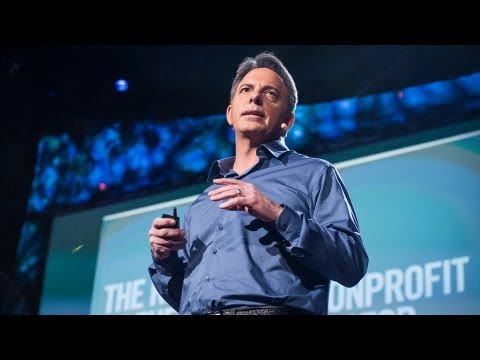
The way we think about charity is dead wrong | Dan Pallotta
Social Innovation and Entrepreneurship
Introduction to Social Innovation
- The speaker introduces the topic of social innovation and social entrepreneurship, sharing a personal anecdote about being a father to triplets.
- The speaker humorously notes that being gay and raising triplets is their most socially innovative act, setting the stage for discussing deeper issues in charity.
Critique of Charity Models
- The speaker questions whether the nonprofit sector plays a significant role in changing the world, highlighting skepticism around its effectiveness.
- They acknowledge that while business can uplift economies, it often neglects the most disadvantaged populations who require support beyond market solutions.
Role of Nonprofit Sector
- Emphasizing that philanthropy serves as a "market for love," the speaker argues that nonprofits are essential for addressing needs that cannot be monetized.
- They express concern over why major social issues like breast cancer and homelessness remain unresolved despite charitable efforts.
Systemic Issues in Nonprofits
- The speaker identifies systemic problems within nonprofits, noting they operate under constraints that limit their potential impact compared to for-profit sectors.
- They discuss compensation disparities between nonprofit leaders and those in lucrative business roles, suggesting this discourages talent from entering the nonprofit field.
Ethical Dilemmas and Perceptions
- A stark contrast is drawn between societal reactions to high earnings in profit-driven industries versus those in nonprofits, revealing biases against financial success in altruistic endeavors.
- This creates an ethical dilemma where talented individuals opt for higher-paying jobs rather than contributing to meaningful change through nonprofits.
Marketing Challenges
- The discussion shifts to marketing practices; nonprofits face scrutiny when spending on advertising while businesses are encouraged to invest heavily without question.
- The speaker cites statistics showing significant salary differences between MBA graduates and nonprofit executives, illustrating economic barriers faced by charities.
Success Stories Through Effective Marketing
- Highlighting successful fundraising campaigns like AIDSRide and breast cancer walks, the speaker emphasizes how strategic marketing can lead to substantial donations.
The Disadvantages of the Nonprofit Sector Compared to For-Profit Entities
Market Share and Advertising Restrictions
- The nonprofit sector has failed to gain market share from the for-profit sector over 40 years, primarily due to restrictions on marketing. Charities are not allowed to advertise their benefits as freely as consumer brands.
- This disparity in advertising leads consumers to favor for-profit entities, resulting in a flow of dollars away from nonprofits.
Risk Aversion in Fundraising
- Nonprofits face scrutiny when fundraising efforts do not yield high returns quickly, unlike for-profits that can take risks without fear of reputational damage.
- The reluctance to innovate in fundraising hampers revenue growth, which is essential for addressing large social issues.
Time and Investment Challenges
- For-profits like Amazon can operate at a loss for extended periods while building market dominance; nonprofits lack this luxury and face backlash if they do not provide immediate aid.
- Nonprofits cannot attract capital through profit-sharing mechanisms available to for-profits, leading to a scarcity of resources necessary for growth.
Historical Context and Ideological Barriers
- From 1970 to 2009, only 144 nonprofits surpassed $50 million in annual revenue compared to over 46,000 for-profits. This highlights the scale disparity faced by nonprofits.
- The Puritanical roots of American capitalism create an ideological barrier where financial incentives are viewed negatively within charity work, limiting potential growth.
Overhead Misconceptions
- A prevalent question regarding how much donation money goes directly to causes versus overhead creates misconceptions that overhead is inherently negative.
- This belief discourages necessary investments in organizational infrastructure that could facilitate growth and ultimately benefit the cause more effectively.
Fundraising as an Investment Opportunity
- Investing in fundraising is crucial; it can multiply available funds rather than diminish them.
The Impact of Overhead on Charitable Giving
The Financial Success of Fundraising Initiatives
- The speaker discusses the financial success of fundraising for AIDS and breast cancer, highlighting an initial investment of $350,000 that grew to $194 million in five years after expenses.
- In 2002, the organization achieved its highest revenue year for breast cancer research, netting $71 million after expenses before facing sudden closure due to sponsor withdrawal.
Misconceptions About Overhead Costs
- The abrupt end was attributed to sponsors distancing themselves due to media criticism over a perceived high overhead cost (40%).
- This led to the loss of 350 employees who were labeled as "overhead," illustrating a misunderstanding of necessary investments in growth and future potential.
The Fallacy of Comparing Overheads
- The speaker critiques the moral superiority often associated with low-overhead fundraising efforts compared to professional organizations with higher overhead but greater impact.
- A comparison is made between a bake sale generating only $71 versus a professional fundraiser yielding $71 million, emphasizing the importance of scale over percentage costs.
Potential for Increased Charitable Contributions
- Charitable giving in the U.S. is about 2% of GDP ($300 billion), with only 20% directed towards health and human services; increasing this by just 1% could yield an additional $150 billion annually.
- If more funds were allocated toward health charities willing to invest in growth, it could triple contributions within that sector.
Rethinking Charity Metrics
- The speaker urges a shift from focusing on low overhead rates to evaluating charities based on their ambitious goals and progress metrics.
- Emphasizing a "generosity of thought," he advocates for changing perceptions around charity effectiveness and investing in solutions that genuinely address societal needs.
Legacy and Future Vision
Turn any video into a summary like this
YouTube links, meetings, lectures. With transcripts, search, and chat.