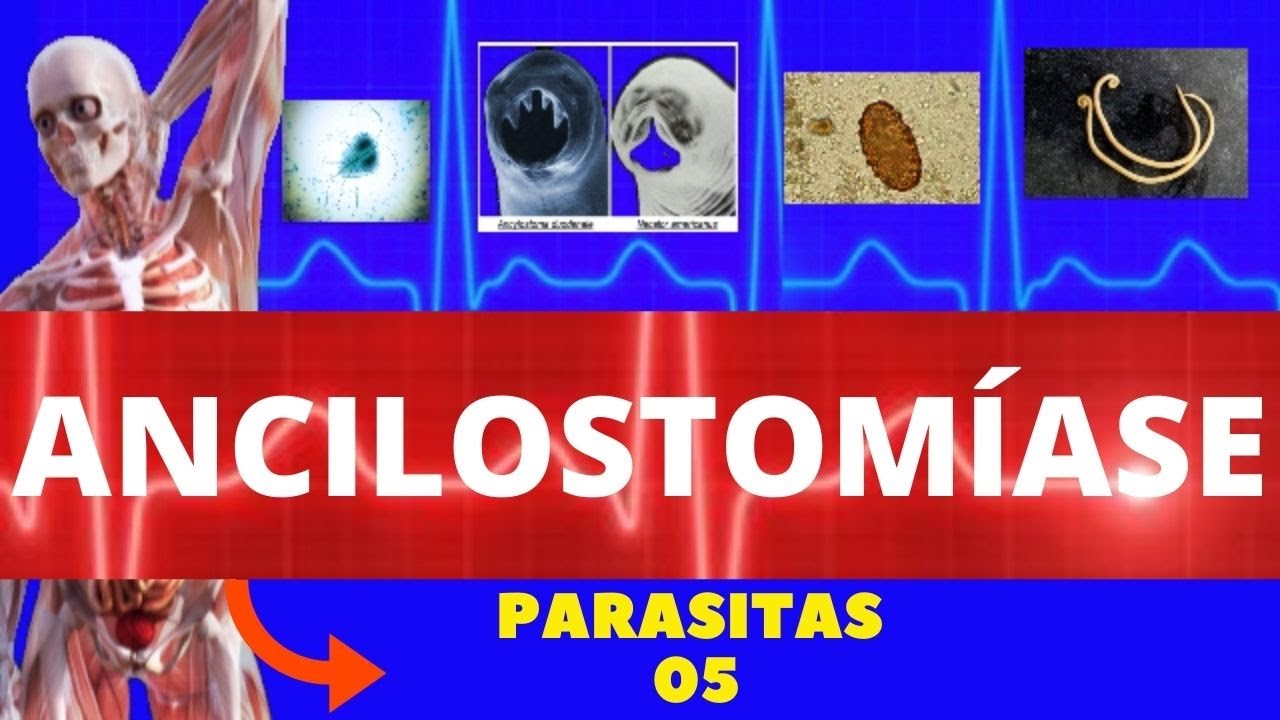
ANCILOSTOMÍASE (AMARELÃO) - ANCYLOSTOMA DUODENALE | NECATOR AMERICANUS - PARASITOLOGIA
New Section
In this section, the speaker introduces the topic of parasitology, specifically focusing on ancilostomiasis, also known as "amarelão" or "Jeca Tatu disease." The discussion highlights the prevalence of this condition in impoverished areas with poor sanitation and introduces the two main agents responsible for ancilostomiasis.
Ancilostomiasis: Overview
- Ancilostomiasis is also known as "amarelão" or "Jeca Tatu disease," prevalent in impoverished regions with poor sanitation.
- Two main agents causing ancilostomiasis are Ancylostoma duodenale and Necator americanus, each thriving in different climatic conditions.
- Ancylostoma duodenale is common in temperate and tropical climates like Africa and the Middle East, while Necator americanus prefers tropical climates like Brazil and the Caribbean.
Morphology of Agents
This section delves into the morphology of Ancylostoma duodenale and Necator americanus, highlighting key differences between these parasitic agents.
Morphology Comparison
- Ancylostoma duodenale is characterized by having two prominent teeth, belonging to the family Ancylostomatidae.
- In contrast, Necator americanus lacks teeth but possesses cutting plates instead of teeth.
Life Cycle Explanation
Here, the life cycle of ancilostomiasis parasites within a human host is elucidated, detailing how infection occurs and progresses.
Life Cycle Breakdown
- The cycle begins with a person harboring either Ancylostoma duodenale or Necator americanus in their intestines.
New Section
In this section, the speaker discusses the transmission and effects of parasites on the human body.
The Impact of Parasites
- A person walking barefoot on contaminated ground can unknowingly pick up parasite eggs.
- Once inside the body, parasites travel through the bloodstream to the lungs, causing respiratory issues.
- Parasites mature in the intestines, laying eggs that can contaminate others if proper hygiene is not maintained.
New Section
This part delves into how parasites manifest within a human host and their associated symptoms.
Parasite Manifestation
- Parasites initially cause skin-related issues upon entry into the body.
- They progress to affect the respiratory system, leading to coughing and breathing difficulties.
- Mature parasites in the lungs trigger further respiratory symptoms like hemoptysis (coughing up blood).
New Section
Here, the focus shifts to gastrointestinal symptoms caused by parasites and their impact on nutrient absorption.
Gastrointestinal Effects
- Parasites descending into the gastrointestinal tract lead to abdominal pain and digestive disturbances.
- Presence of parasites in the intestines results in nutrient deficiencies and anemia due to blood loss.
- Nutrient depletion from parasitic infestation can cause weakness and fatigue in individuals.
New Section
The discussion transitions towards diagnosing parasitic infections and available treatments.
Diagnosis and Treatment
- Diagnosis involves assessing clinical symptoms alongside laboratory tests such as stool examinations for parasite eggs.