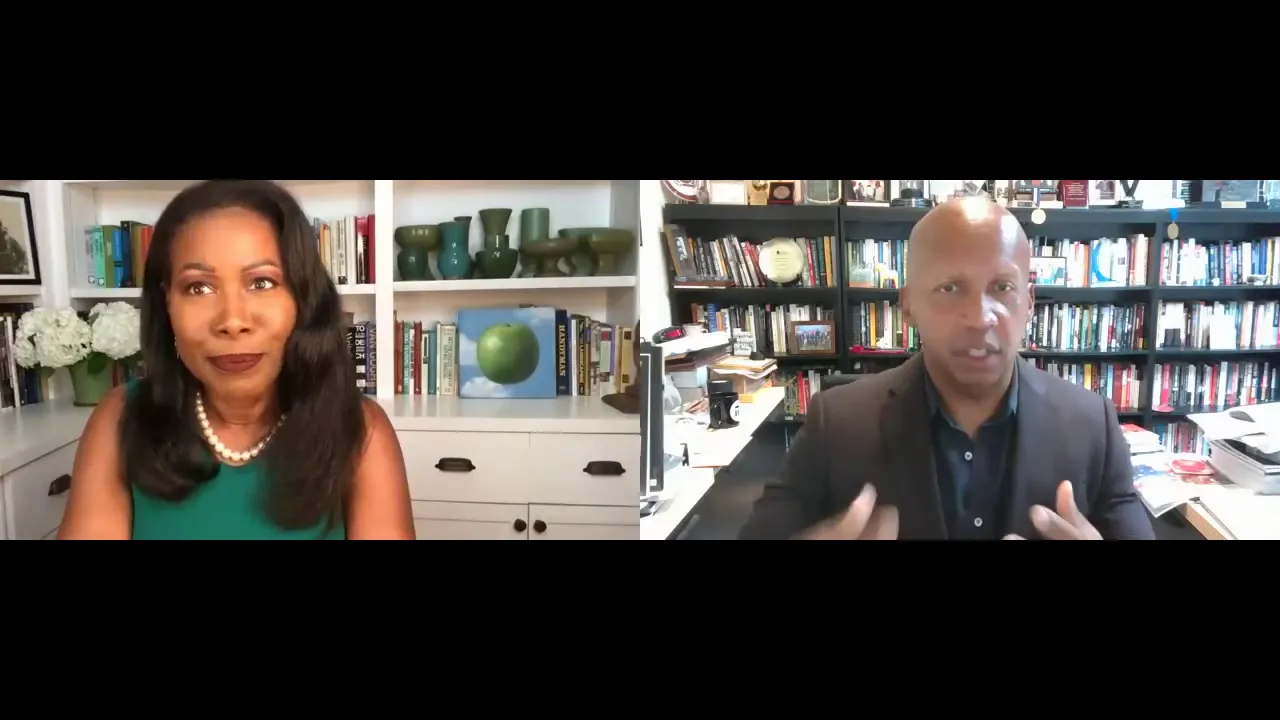
Isabel Wilkerson, "Caste" (with Bryan Stevenson)
Introduction to Isabel Wilkerson and Brian Stevenson
Overview of Guests
- Isabel Wilkerson is introduced as an accomplished journalist, the first African-American woman to win a Pulitzer Prize in journalism.
- Her latest book, "Caste: The Origins of Our Discontents," has been recognized as a must-read by Oprah Winfrey and is currently a New York Times bestseller.
- Brian Stevenson, founder of the Equal Justice Initiative, moderates the conversation. He is also an acclaimed author known for "Just Mercy."
Setting the Stage for Discussion
- Brian expresses excitement about discussing with Isabel Wilkerson, highlighting her impact as a writer.
- He mentions that reading "Caste" has been therapeutic for him and sets up the discussion on its significance.
The Impact of "Caste"
Reception and Significance
- Brian praises "Caste" as deserving every major book award in America due to its profound insights.
- He likens Isabel's writing process to that of a chef who takes time to perfect their craft before presenting it.
Author's Perspective on Reception
- Isabel reflects on her lengthy writing process, emphasizing that she spends more time creating than engaging with public reception.
- She acknowledges her thrill at people reading her work but emphasizes that this moment feels like just a small part of her overall journey.
Exploring Themes in "Caste"
Background and Development
- Brian notes Isabel’s early interest in journalism and how it shaped her career trajectory leading to significant achievements.
- He describes "Caste" as essential reading for sociology students due to its interdisciplinary approach combining history, sociology, and narrative non-fiction.
Conceptual Foundations
- Isabel explains that narrative non-fiction requires drawing from various disciplines (e.g., sociology, anthropology), which enriches storytelling.
- She discusses how her previous work led her to explore deeper concepts beyond racism—introducing the idea of caste systems as fundamental societal structures.
Understanding Racism vs. Caste
Deeper Insights into Racism
- Isabel shares insights from her earlier work about systemic issues faced by African Americans fleeing oppressive environments during Jim Crow laws.
- She argues that traditional definitions of racism are insufficient; instead, she introduces 'caste' as a more comprehensive term reflecting deep-rooted societal hierarchies.
Understanding Caste in America
The Concept of Caste
- Caste is described as an "artificial arbitrary often random graded ranking" that determines an individual's societal value, affecting their access to resources and assumptions about intelligence and beauty.
Historical Context of American Caste System
- The American caste system originated with the arrival of colonists in Virginia and enslaved people who built the country for free, lasting for 246 years.
Impact of Language on Understanding History
- There is a significant effort to find language that accurately describes the experiences of marginalized groups, emphasizing how terminology can shape understanding.
Terrorism and Lynching
- The term "terrorism" was used to describe the broader impact of lynching beyond just the victims, highlighting millions who were terrorized and lost wealth due to displacement.
Global Comparisons: India and Germany
- The author draws parallels between the caste system in India (specifically regarding Dalits) and Jewish experiences during Nazi Germany, aiming for a global perspective on caste systems.
Exploring Historical Connections
Importance of Historical Awareness
- Many people lack knowledge about their own country's history; understanding these connections is crucial for recognizing contemporary issues related to caste.
Insights from Other Cultures
- The author sought insights from India's caste system to better understand America's hierarchy, focusing on behaviors, similarities, and differences.
Charlottesville's Influence
- Events in Charlottesville highlighted connections between symbols of confederacy and Nazism, prompting a deeper investigation into historical memory related to civil rights.
Eugenics: A Shared History
Interconnectedness Between Nations
- Research revealed that German eugenicists engaged with American eugenics leading up to World War II, indicating a shared dialogue around racial laws.
Jim Crow Laws' Influence on Nuremberg Laws
- American Jim Crow laws served as a model for Nazi Germany's Nuremberg laws; this connection illustrates how ideologies can transcend borders.
Post-War Reflections
Holocaust Memorialization
- Post World War II has seen extensive investigations into the Holocaust; memorialization efforts reflect society's ongoing struggle with historical narratives.
Understanding Caste and Historical Narratives in America
The Importance of Narrative in Memorialization
- The speaker reflects on the absence of narratives about the Holocaust in memorial spaces, emphasizing the need for storytelling to inform visitors' experiences.
- They highlight a lack of historical work in the U.S. regarding enslavement and its consequences, suggesting that this gap prevents a deeper understanding of current societal issues.
- The contrast between Germany's handling of Nazi history and America's treatment of symbols from the Jim Crow era is discussed, illustrating how dominant castes shape public memory.
Education and Collective Memory
- The speaker notes that Germany has made significant efforts to educate about the Holocaust, creating a shared understanding among its citizens about their history.
- They recount visiting various museums dedicated to Holocaust remembrance, which serve as educational tools for acknowledging past atrocities.
- Acknowledgment of collective responsibility towards memory is emphasized; however, they point out that America still struggles with historical awareness.
Disparities in Historical Awareness
- Many Americans remain unaware of their own history, particularly regarding African American experiences during Jim Crow, indicating a national disconnect.
- The speaker stresses an added responsibility to educate others about these histories to foster understanding and empathy within society.
Storytelling as a Tool for Change
- The importance of integrating history with narrative storytelling is highlighted as an effective method for engaging audiences and conveying complex truths.
- A specific story about Ralph Abernathy illustrates how black leaders used language to inspire hope amidst oppression while addressing dignity through respect.
Psychological Burdens and Social Divisions
- Discussion centers around the psychological burdens faced by Black Americans due to systemic disrespect and marginalization throughout history.
- The concept of caste systems creating artificial divisions is introduced; it limits empathy and community connectedness among different racial groups.
Barriers to Empathy
- Endogamy within caste systems restricts social mobility and relationships across racial lines, further entrenching divisions within society.
- This separation hinders collective well-being and mutual understanding among communities.
Understanding Caste and Race in Society
The Construction of Race
- The speaker discusses how anti-miscegenation laws and caste hierarchies curate race, limiting who individuals can marry or relate to, thereby reinforcing societal divisions.
- It is emphasized that race is a social construct, created only about 500 years ago, highlighting the arbitrary nature of racial categorization.
- The speaker suggests that society could have used various characteristics for categorization but chose race, indicating a deliberate construction of these divisions.
Historical Context and Its Impact
- The metaphor of an old house illustrates how deeply ingrained these societal structures are; people often cannot see the foundational elements (joists and beams) that support them.
- Race is compared to skin while class represents accents, clothing, and education—elements that contribute to social mobility yet reinforce existing divisions.
Consequences of Caste Systems
- Hierarchical caste systems create barriers that prevent individuals from forming meaningful relationships across divides, leading to missed connections with potentially significant others.
- The speaker argues that America’s history of racial injustice creates a pervasive "smog" affecting everyone’s freedom to love and connect authentically.
Metaphors for Understanding Caste
- Language around caste helps articulate the constraints imposed on individuals by societal expectations; everyone feels burdened by these artificial lines.
- A cast on broken bones serves as a metaphor for how caste systems hold people in place within their assigned roles in society.
Social Dynamics Within Caste Systems
- In theatrical terms, everyone knows their role within the caste system; stepping out of line disrupts the expected order, illustrating how rigidly defined these roles are.
- This understanding extends beyond individual experiences to affect broader societal interactions and perceptions.
Personal Reflections on Racial Experiences
- The speaker shares emotional anecdotes from personal experiences related to Little League baseball, reflecting on the lingering effects of Jim Crow laws and societal segregation.
Experiences of Microaggressions and Racial Dynamics in Professional Spaces
Encountering Microaggressions
- The speaker reflects on the civil rights narrative, highlighting the challenges faced when entering predominantly white spaces, including microaggressions and humiliations that arise from these encounters.
Personal Reflections on Racial Experiences
- The speaker recalls childhood experiences, such as going to stores with their mother, where they faced subtle forms of discrimination like change being placed on counters instead of in hands.
Family Dynamics and Anxiety
- A discussion about the anxiety experienced by the speaker and their mother during these interactions is presented, illustrating how familial relationships are affected by societal norms and expectations.
Reevaluating Past Experiences Through Writing
- The speaker discusses how writing a book prompted them to reevaluate past experiences, particularly those related to class and race while covering stories in Chicago.
Documenting Experiences for Reflection
- Emphasizing the importance of documenting experiences, the speaker notes that many incidents included in their work are not necessarily extreme but rather mundane yet impactful moments reflecting systemic issues.
An Interview Experience Highlighting Racial Bias
- A specific incident is recounted where the speaker was denied an interview due to racial bias; despite being a New York Times correspondent, they were asked for identification which led to confusion and frustration.
Processing Discrimination Over Time
- The speaker reflects on processing this experience years later, recognizing it within a broader context of societal expectations regarding race and professionalism.
Broader Implications of Such Incidents
- The impact of these microaggressions is discussed as having far-reaching effects on individuals' ability to perform their jobs effectively, suggesting that such experiences can drain energy and morale across various sectors.
Insights on Justice and Historical Narratives
Personal Experience in the Legal System
- The speaker reflects on a personal experience of wanting to be featured in a publication but was unable to due to not being interviewed.
- They share their experience arguing cases at the U.S. Supreme Court, particularly focusing on a significant case that ended life sentences without parole for children convicted of non-homicides.
- A courtroom incident is recounted where the judge mistakenly thought the speaker was a defendant, highlighting biases and assumptions within the legal system.
- The speaker emphasizes the importance of humor in navigating difficult situations, especially when representing vulnerable clients facing severe consequences.
- Reflecting on their achievements, they acknowledge that despite their qualifications, they still face humiliating moments that require resilience.
Historical Context and Powerful Narratives
- A powerful story from World War II is introduced about an essay contest regarding Hitler's fate post-war, illustrating deep societal issues.
- The narrative includes a poignant moment involving a young African-American girl who won with her impactful statement about racial identity and justice.
- The speaker urges listeners to confront uncomfortable historical truths rather than ignore them, likening it to avoiding dangerous basements during storms.
- They stress the necessity of understanding America's history with race and caste systems to address current societal challenges effectively.
- The discussion highlights how collective memory differs between nations (e.g., Germany vs. America), emphasizing the need for awareness and education.
Power Dynamics and Social Change
- A reference is made to Dr. Foster's experiences as a black doctor in an era of systemic racism, questioning why some are blind to their own privileges while others suffer under oppression.
- The conversation shifts towards transformation through power dynamics, citing examples from South Africa post-apartheid as well as Rwanda’s military intervention leading to change.
- Questions arise about how America's lack of power transfer affects its ability to confront caste systems honestly and constructively.
- The implications of demographic changes projected for 2042 are discussed concerning historical majority status in America and its potential impact on social structures.
Understanding Power Dynamics in America
The Role of Demographics and Power
- Discussion on the potential numeric majority of people of color in the U.S. and the implications for power dynamics without historical reckoning.
- Warning that mere demographic changes may not lead to equitable power distribution, risking a replication of past injustices.
- Emphasis on the need for collective reflection on what kind of nation we aspire to be, highlighting an opportunity for creating a fairer society.
Insights from Historical Context
- Praise for Isabelle Wilkerson's narrative style, likening her closing argument skills to those of a masterful lawyer summarizing complex evidence effectively.
- Recognition of Wilkerson’s multifaceted expertise as historian, sociologist, and writer aimed at persuading readers towards understanding systemic issues.
Vision for a Caste-Free World
- Expression of desire for a world devoid of caste systems where differences are celebrated rather than divisive.
- Call to recognize shared humanity beyond superficial differences, advocating for love and community connection across diverse backgrounds.
Personal Reflections on Heritage
- Acknowledgment of how personal history shapes identity; sharing stories about ancestors who overcame adversity through education and resilience.
- Reflection on familial sacrifices made for education, illustrating how love manifests through the pursuit of knowledge despite socioeconomic challenges.
Distinctions Within Black Experiences
- Introduction to discussions about varying experiences within Black communities due to historical contexts like enslavement and immigration patterns.
- Exploration into how these distinct histories influence contemporary American life and perceptions among different groups within the Black community.
Understanding the Caste System and Immigrant Experiences
Historical Context of Hierarchy
- The discussion begins with a historical overview of individuals entering a bipolar hierarchy since the 18th century, where those not fitting into English colonists or enslaved Africans had to navigate this structure.
- Various immigrant groups, such as Irish, Polish, and Hungarians, were categorized as "white" upon arrival in America, losing their original identities in the process.
- Immigrants from Asia, Central America, and Africa faced challenges in a society that clearly delineated social hierarchies based on race.
Impact of Caste Systems on Immigrants
- The caste system creates pressure for individuals in the middle to distance themselves from those at the bottom to succeed.
- Black immigrants are unique in that they often benefit from maintaining their cultural identity and accents, unlike white immigrants who are encouraged to assimilate by anglicizing names and customs.
- This dynamic further entrenches divisions among people of African descent despite shared experiences of exploitation through colonization and enslavement.
Shared Experiences Among African Descendants
- The speaker emphasizes that all people of African descent share common experiences of abuse due to historical injustices like colonization and slavery.
- Despite these shared backgrounds, a caste system exacerbates divisions within communities that should be united against common struggles.
Crafting Narrative Nonfiction
- A question arises about the author's writing process for organizing extensive research involving over a thousand interviews.
- The author explains using Microsoft Word for transcription and organization; establishing an effective architecture is crucial for managing research materials efficiently.
Structuring Research Effectively
- Each main character has dedicated files organized by life stages and geographical contexts, resembling family trees for clarity in storytelling.
- Emphasizing structure is vital for successful writing; it aids both organization during research and coherence in narrative delivery.
Engaging with Global Perspectives
- The author reflects on presenting at conferences abroad where discussions reveal differing perceptions about race; one instance involves an African poet's provocative statement regarding black identity in Africa.
- This interaction highlights varying understandings of racial identity across cultures and prompts deeper exploration into how these concepts are perceived globally.
Understanding Race and Caste Systems in Different Societies
The Social Construct of Race
- The concept of race is a social construct that varies by region; for instance, in some cultures, identifying as "black" may not be necessary when everyone around shares similar physical traits.
- In many societies, identity is more closely tied to family lineage and ethnicity rather than skin color. This changes when individuals move to places like the U.S. or the UK, where they are categorized as "black."
Navigating Caste Systems
- Upon arriving in a new country, individuals often confront pre-existing hierarchies that force them to navigate complex social dynamics related to caste.
- The discussion raises questions about how passing (the ability to be perceived as belonging to a different racial group) affects the caste system's persistence or subversion.
Purity and Pollution Concepts
- In contrast to other societies where certain bloodlines might elevate status, the U.S. has historically viewed any evidence of black ancestry as toxic.
- The "one drop rule" exemplifies how American society maintains purity within its dominant caste while enforcing strict boundaries against intermarriage and proximity with subordinated castes.
Historical Context of Pollution
- Laws and customs have historically dictated interactions between castes; mere contact with someone from a lower caste was seen as polluting for those in higher positions.
- Examples include African Americans being barred from swimming in public pools due to fears of pollution or having their drinking glasses destroyed after use.
Consequences of Caste Systems
- Individuals often seek ways to escape humiliation associated with their caste but may face heartbreaking decisions that require renouncing their identities.
- Literature on passing highlights the emotional toll it takes on individuals who must sever ties with their heritage for acceptance into a different societal group.
Creating Meaning Through Narrative
- Crafting narratives around personal histories can provide context and foster new relationships with one's past, particularly regarding roles assigned based on race.
- Acknowledging historical constraints faced by ancestors allows individuals to reclaim their stories boldly without fear of judgment.
Reaction to a Historic Nomination
Significance of the Nomination
- The nomination of a woman of color as the Democratic vice-presidential candidate is described as momentous, marking a significant milestone in U.S. history after 244 years.
- This event highlights the long struggle for representation, referencing Shirley Chisholm's presidential run in 1972 as an early attempt at breaking barriers.
Personal Reflections on Identity
- The nominee's background is noted for its intersectionality, being the child of immigrants from Jamaica and India, symbolizing diverse histories coming together.
- There’s an acknowledgment of emerging platforms that allow new generations of Black journalists and lawyers to tell their stories and shape narratives.
Generational Responsibility
- A question arises about feeling a generational obligation to honor historical struggles faced by ancestors who survived Jim Crow laws.
- The speaker reflects on how their upbringing influences their sense of duty towards educating future generations.
Legacy and Silence
- The impact of silence surrounding family histories is discussed; it fueled the speaker's desire to explore these untold stories.
- Rather than viewing this history as a burden, it is seen as a gift that fosters connection and understanding across generations.
Recognition of Lost Potential
- The conversation shifts to recognizing the talents lost due to systemic oppression, emphasizing that many individuals were unable to fulfill their potential under oppressive systems like slavery and segregation.
- It’s highlighted that millions were denied opportunities to thrive creatively or professionally due to societal constraints imposed by caste systems.
Hope for Future Generations
- The discussion concludes with reflections on freedom's potential impact on society, stressing the importance of acknowledging past injustices while fostering hope for future possibilities.
- A personal anecdote illustrates how shared experiences can transform fears into moments of collective joy during significant events.
Reflections on Joy and Honor at the Memorial
The Emotional Impact of Rain
- The speaker describes a moment at the memorial where rain transforms into a metaphor for "tears of joy," symbolizing the collective grief and honor for those who have been lynched in America, whose stories remain untold.
Significance of Understanding Through Literature
- As the speaker finishes reading a book at the memorial, they reflect on how literature can create joy and understanding for individuals seeking answers about their experiences and challenges.
Acknowledgment of Contributions
- The speaker expresses gratitude to the author for their extraordinary work, emphasizing its brilliance and urging others to read it. They highlight the importance of sharing knowledge and insights from such impactful literature.
Closing Remarks on Connection
- The conversation concludes with mutual appreciation, as both speakers express a desire to reconnect in person in the future. There is an acknowledgment of each other's significance during challenging times.
Gratitude Towards Audience Engagement
- A representative from Politics and Prose thanks both speakers for their powerful discussion and acknowledges the audience's participation, encouraging them to acquire copies of the discussed book.