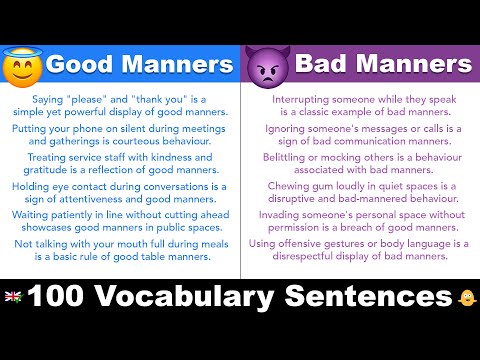
Good Manners vs. Bad Manners - 100 English Vocabulary Sentences *POLITE ENGLISH*
Good Manners: Key Principles and Practices
Fundamental Displays of Good Manners
- Saying "please" and "thank you" is a simple yet powerful display of good manners.
- Holding the door open for others exemplifies kindness and consideration in social interactions.
- Punctuality reflects respect for others' time, highlighting its importance in good manners.
- Offering sincere compliments fosters positive interactions and demonstrates thoughtfulness.
Social Etiquette Essentials
- Respecting personal space is crucial in maintaining comfort during social situations.
- Promptly responding to messages shows good communication etiquette and respect for others' time.
- Acknowledging others' contributions by sharing credit is a hallmark of graciousness.
- Keeping your phone on silent during gatherings displays courtesy towards those present.
Communication Skills and Consideration
- Avoiding interruptions while someone else speaks is fundamental to respectful communication.
- Waiting patiently for your turn showcases self-control and respect in conversations.
- Offering your seat to those in need, such as the elderly or pregnant women, reflects compassion.
- Listening attentively without interrupting indicates genuine interest and consideration for others’ viewpoints.
Mindfulness in Interactions
- Being mindful of tone and language ensures effective communication with good manners at its core.
- Covering your mouth when coughing or sneezing promotes hygiene and consideration for others’ health.
- Respecting cultural differences enhances global understanding and demonstrates inclusivity in manners.
- Treating service staff with kindness reflects one's character and appreciation for their work efforts.
Compassionate Behavior
- Offering assistance to someone in need showcases empathy and politeness in action.
- Respecting yourself before leaving a conversation signifies self-respect intertwined with good manners.
- Valuing differing opinions fosters an environment of mutual respect among individuals, essential for good manners.( t = 201 s)
- Being aware of body language contributes significantly to effective communication, reflecting one’s politeness.( t = 201 s)
Public Conduct Guidelines
- Avoiding gossip maintains a positive atmosphere around oneself, showcasing integrity.( t = 248 s)
- Respecting privacy illustrates high regard for personal boundaries, which is vital in social settings.( t = 248 s)
- Maintaining eye contact during conversations signals engagement and attentiveness.( t = 248 s)
- Helping carry belongings demonstrates kindness that enhances interpersonal relationships.( t = 248 s)
Environmental Responsibility
- Disposing of rubbish properly reflects responsible behavior towards the environment as part of good manners.( t = 297 s )
- Avoiding offensive comments about appearance helps maintain a respectful dialogue among peers.( t = 297 s )
- A firm handshake coupled with eye contact during introductions conveys confidence alongside courtesy.( t = 297 s )
- Expressing empathy during difficult times highlights compassion as an integral aspect of good manners.( t = 297 s )
Negative Behaviors to Avoid
- Using offensive language undermines respectful interaction; it should be avoided at all costs ( t =357).
- Sending thank-you notes after receiving gifts shows gratitude; neglect can reflect poorly on one’s character (357).
- Speaking with food in one’s mouth violates basic table etiquette (357).
- Apologizing sincerely if you bump into someone demonstrates humility (357).
Conclusion: Recognizing Bad Manners
- Interruptions while speaking are classic examples of bad manners (563).
- Ignoring messages or calls signifies poor communication skills (563).
- Cutting ahead in lines displays rudeness contrary to societal norms (563).
- Making offensive jokes about others reveals insensitivity (563).
Bad Manners: What Are They?
Common Examples of Bad Manners
- Invading someone's personal space without permission is a breach of good manners, highlighting the importance of respecting boundaries.
- Criticizing someone's appearance or choices reflects poor judgment and is considered bad manners, indicating a lack of empathy.
- Oversharing personal information and ignoring social cues are behaviors that demonstrate a disregard for others' comfort.
- Not cleaning up after oneself in shared spaces shows disrespect towards communal living and shared responsibilities.
- Ignoring dietary restrictions when hosting events can alienate guests and reflects poorly on one's consideration for others.
Impolite Behaviors in Social Settings
- Refusing to help those in need, especially when capable, exemplifies selfishness and bad manners.
- Constantly checking your phone during meals is seen as impolite, suggesting disinterest in the company present.
- Not offering your seat to individuals like the elderly or pregnant women demonstrates a lack of basic courtesy.
Disruptive Actions During Conversations
- Talking over others disruptively in group settings indicates poor listening skills and bad manners.
- Failing to express gratitude towards service staff undermines their efforts and reflects negatively on one’s character.
- Mocking or imitating someone derogatorily is not only rude but also harmful to interpersonal relationships.
- Active listening is crucial; failing to do so during conversations is disrespectful and indicative of bad manners.
- Public displays of anger or frustration without control are manifestations of poor etiquette.
Inconsiderate Behaviors in Public Spaces
- Leaving messes in public restrooms signifies a lack of respect for shared facilities and community standards.
- Not holding the elevator for someone rushing shows inconsideration for others’ time and needs.
- Refusing to apologize after hurting someone's feelings fails to acknowledge the impact of one’s actions on others.
Cultural Sensitivity and Respect
- Using offensive gestures or body language can be deeply disrespectful, reflecting ignorance about social norms.
- Ignoring cultural traditions indicates a lack of awareness that can lead to misunderstandings or offense.
- Timely responses to invitations or RSVPs are essential; failing this shows disregard for social commitments.
Group Dynamics and Collaboration
- Speaking loudly in quiet environments like libraries disruptively showcases a lack of awareness regarding appropriate behavior.
- Overlooking contributions from peers diminishes morale within group settings, reflecting poorly on one's character.
- Refusal to share resources during collaborative activities highlights selfishness rather than teamwork.
Personal Conduct Considerations
- Not assisting someone struggling with heavy bags illustrates inconsideration towards those facing challenges.
- Excessive self-deprecation may come off as fishing for compliments, which can be perceived as bad manners.
- Poor hygiene or unpleasant body odor in close quarters creates discomfort among peers, showcasing neglect toward personal care.