Carbohidratos: Digestion Absorcion y Transporte
Processing, Digestion, and Absorption of Carbohydrates
Introduction to Carbohydrate Metabolism
- The class focuses on the processing, digestion, and absorption of carbohydrates, emphasizing their importance in nutrition.
- Key points of carbohydrate metabolism include digestion, transport, storage, degradation, and biosynthesis. This session will cover the first three aspects.
Digestion of Carbohydrates
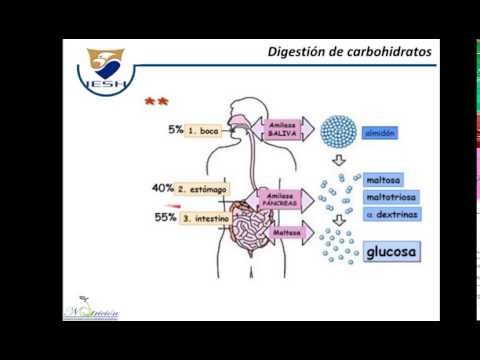
- Digestion begins in the mouth with salivary amylase breaking down starch into smaller molecules until they reach glucose.
- The majority of carbohydrate digestion occurs in the small intestine (duodenum and jejunum), while only 40% happens in the stomach.
Transport Mechanisms for Carbohydrates
- After digestion, glucose is transported via sodium-linked transporters into enterocytes before entering the bloodstream.
- Galactose also uses similar transport mechanisms linked to glucose and sodium for absorption into the bloodstream.
Metabolism in the Liver
- Fructose absorption occurs through specific glucose transporters before being metabolized in the liver.
- In the liver, glycolysis breaks down carbohydrates further; glycogen serves as a reserve polysaccharide that can be converted back to glucose when needed.
Regulation of Blood Glucose Levels
- Normal blood glucose levels are around 100 mg per 100 mL; regulation is crucial for maintaining homeostasis.
- High blood sugar triggers insulin release from pancreatic beta cells to facilitate cellular uptake of glucose.
Response to Low Blood Sugar Levels
- Conversely, low blood sugar stimulates glucagon secretion from alpha cells in the pancreas to release stored glucose from glycogen reserves.
Importance of Insulin Regulation
- Proper regulation by insulin is vital; imbalances can lead to conditions like diabetes. Current medications exist to help manage these processes effectively.
Synthesis and Release of Insulin
Understanding Insulin and Glucagon Functions
The Role of Insulin in the Body
- Insulin is released in response to glucose levels and binds to receptors on cell membranes, initiating signaling pathways that alter cellular functions.
- This binding leads to the synthesis of glucose transporters (GLUT4), which translocate to the plasma membrane, increasing glucose uptake for ATP production.
- In muscle tissue, insulin promotes amino acid catabolism and enhances protein synthesis while reducing glucose synthesis in the liver.
- In adipose tissue, insulin stimulates glucose synthesis and inhibits the release of free fatty acids, contributing to energy storage.
The Function of Glucagon
- Glucagon acts oppositely by binding to its receptors on cell membranes, triggering signaling cascades that activate processes like glycolysis but favor an anabolic state instead.
- It facilitates glycogen breakdown into glucose-1-phosphate; phosphatases then convert this into free glucose for release into the bloodstream, helping regulate blood sugar levels.
Carbohydrate Metabolism and Storage
- Upon carbohydrate consumption, excess sugars are stored primarily as glycogen in muscles and liver; any surplus is converted into fat, potentially leading to obesity.