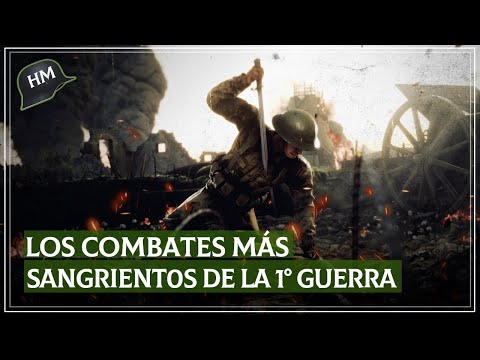
Las BATALLAS más BRUTALES de la Primera Guerra Mundial
The Battle of Verdun: A Turning Point in WWI
Introduction to the Horrors of War
- The transcript opens with a vivid description by Spanish journalist Gaziel, depicting a horrific scene of death and suffering in a mass grave during World War I.
- This event is highlighted as not only pivotal for the war's outcome but also as a symbol representing the brutal realities of warfare in 1916.
Strategic Context and Preparations
- In early 1916, German Chief of Staff Erik von Falkenhayn proposed a strategic shift to focus on defeating France, given the stalemate on other fronts.
- The plan involved mobilizing around 50 divisions to capture Verdun, aiming to exhaust French resources physically and morally through attrition.
- Extensive preparations included requisitioning civilian buildings, laying miles of telephone wire, camouflaging artillery, and constructing new railways for troop movement.
The Fortifications of Verdun
- Verdun was heavily fortified with over 60 strongholds built over decades, making it one of the most defensible locations in Europe.
- Key fortifications like Fort Douaumont featured advanced concrete bunkers and extensive military infrastructure designed for prolonged defense.
The Onset of Battle
- The battle commenced on February 21 at 7:15 AM with an intense bombardment from German artillery that lasted eight hours.
- Over one million shells were fired across a thirty-kilometer front using more than 1,300 ammunition trains to support this assault.
Early Developments and Tactical Shifts
- Despite initial successes capturing key positions like Fort Douaumont by February 25, casualties quickly escalated to equal numbers on both sides.
- By six weeks into the battle, approximately 100,000 soldiers had died; however, French forces maintained their position due to effective supply lines known as "la voie sacrée."
Innovations in Warfare
- New weapons such as flamethrowers were introduced by German troops to instill fear among French defenders while gas attacks caused significant casualties.
- Despite early advantages for Germany, French air power began to play a crucial role with units like Lafayette Escadrille achieving notable victories.
Stalemate and Strategic Reassessment
- By June 7th, Germans captured another critical fort but faced challenges due to shifting priorities after Russian advances elsewhere on the front.
- Internal tensions within German leadership emerged as plans failed to conserve resources effectively; instead, they led to greater losses than anticipated.
Conclusion: A Battle for Prestige
- As both sides continued fighting fiercely despite heavy losses—French artillery firing millions of shells—the battle became less about territory and more about national pride.
Battle of Verdun and the Somme: A Turning Point in WWI
Overview of the Battle of Verdun
- The offensive was solidified through new tactics involving light machine guns, rifle grenades, mortars, and light field cannons. France recaptured Fort Douaumont on October 24 and later regained Fort Vaux without resistance.
- By mid-December, France had recovered all lost territory after a series of attacks. Germany emerged physically and morally exhausted from the prolonged conflict at Verdun.
- Casualties were staggering: France lost approximately 370,000 soldiers (160,000 dead), while Germany suffered around 330,000 losses (140,000 dead). There were also significant numbers of prisoners on both sides.
Soldier Experiences and Aftermath
- Soldiers' accounts highlighted the psychological toll; one German soldier noted that extreme trials rendered him ineffective as both attacker and defender. A French soldier lamented losing most of his unit.
- The legacy of Verdun continues today with unexploded ordnance still present in the region. This raises questions about strategies that could have been employed to defeat France during WWI.
Strategic Decisions Leading to the Somme
- British military leadership recognized that victory required risk-taking; they opted for a risky strategy aimed at forcing a German withdrawal. However, this led to unprecedented casualties in history.
- The Battle of the Somme began as a distraction but resulted in over one million casualties combined between both sides over four months.
Contextual Background Before the Somme
- In late 1915, after more than a year into WWI, Germany occupied parts of Russian territory while Allies managed to halt their advance at Marne. British commanders met with allies to strategize for 1916.
- They decided on simultaneous attacks against Central Powers but later shifted focus to the Somme Valley in Picardy to unite British and French lines against Germany.
Execution of Plans During the Battle
- Despite intentions to surprise Germans with an offensive attack, Allied forces underestimated German fortifications which made invasion attempts nearly impossible.
- While Allies planned their assault on Somme, Germans launched an unexpected attack leading to heavy fighting at Verdun which diverted French troops away from supporting British efforts.
Initial Assault on July 1st
- On July 1st, 1916, Allied forces initiated bombings targeting fortified German positions before launching infantry assaults along key areas like River Somme.
- On this first day alone, over 120,000 British soldiers advanced believing they had overwhelmed German defenses due to prior bombardments.
Catastrophic Outcomes
- Contrary to expectations, many German front-line positions remained intact; thus when British troops attacked en masse they faced devastating fire from well-prepared defenders.
Battle of the Somme: A Turning Point in WWI?
Overview of the Battle's Impact
- The aftermath of a catastrophic event led to reduced intensity in confrontations for two weeks, with British initiatives consistently thwarted by German forces, resulting in 25,000 new British casualties.
- On July 12, Germany reinforced its troops by reallocating them from Verdun, which was initially the focus of the Somme battle. Despite ongoing clashes until December, French forces achieved victory without significant issues.
Key Offensive Actions
- Australian troops attempted an attack at Mücke Farm but were easily repelled by German forces. Ultimately, Canadian troops succeeded against the Germans on September 15.
- This date marked a pivotal moment as allies deployed tanks for the first time during the Battle of Flers-Courcelette. These early tanks were slow and lightly armed but crucial for breaching enemy lines.
Outcomes and Casualties
- The introduction of tanks allowed allies to gain four kilometers into German territory; however, subsequent battles between November 13 and 18 mirrored earlier bombardments with heavy losses.
- Historian Gary Sheffield noted that while the Somme was not a clear victory, it was essential for the Entente's eventual success in 1918 despite staggering casualties—over 620,000 total among Allies.
Reflection on Strategic Decisions
- Britain faced unprecedented losses in a single battle with over half being British soldiers. The destruction included significant aircraft losses (1,782).
- Post-battle reflections raised questions about Britain's strategy using Somme as a diversion from Verdun—a tactic described as "pajín" by soldier-poet Siegfried Sassoon.
The Third Battle of Ypres: A Costly Engagement
Context and Background
- The First World War saw one of its most emblematic confrontations at Passchendaele (Third Battle of Ypres), where both sides suffered heavy casualties without altering war dynamics significantly.
- In early years of WWI, major battles like Somme and Verdun were won by the Triple Entente; however, by 1917 they aimed to capture Ypres after previous failures.
Strategic Importance
- Capturing Ypres was vital for Allies to reach coastal areas and disrupt German submarine bases near Ieper. General Douglas Haig reported readiness following victories at Messines.
Tactical Challenges
- Haig’s past experience at Somme highlighted alarming casualty rates with minimal territorial gains; thus plans focused on capturing Passchendaele before advancing towards Ieper.
Terrain Considerations
- Understanding Flanders' terrain—characterized by sandy sedimentary rocks and canals—was crucial for planning military operations during this challenging campaign.
Battle Strategies and Outcomes in World War I
Initial Engagements and Tactical Movements
- The German Empire deployed between 77 and 83 infantry divisions, initiating conflict with the Battle of Bapaume, where British forces launched a night attack against German artillery defenses.
- Allied troops achieved some success by advancing over two kilometers on the northern flank; however, heavy rains delayed further progress until August 10.
- Despite suffering only 2,000 casualties over 14 days, German morale remained high due to their relatively low losses compared to the Allies.
Weather Impact on Warfare
- General Jones Charteris noted that weather conditions in Flanders worsened significantly during August, reminiscent of Indian monsoons.
- By September, both sides adapted their tactics: Allies increased artillery support while Germans fortified their front lines with additional weaponry.
Key Battles and Shifts in Momentum
- The Battle of Mena Road commenced on September 20 as Allies aggressively targeted German concrete fortifications and machine gun nests.
- Following a series of costly German counterattacks from September 26 to October 4, the Allies faced setbacks due to adverse weather conditions impacting morale.
Consequences of Continued Conflict
- After resuming combat nine days post-break due to weather issues, Allied forces experienced significant retreats against relentless German counterattacks.
- The Triple Entente celebrated a victory at the Battle of Messines despite incurring heavy losses—50,000 enemy casualties but also substantial own losses.
Final Stages and Reflections on Victory
- The Second Battle of Passchendaele involved Canadian forces capturing key positions but facing fierce resistance leading to strategic withdrawals.
- After three months of fighting with minimal territorial gain (only eight kilometers), estimates suggest Allied losses ranged from 200,000 to 350,000 soldiers compared to approximately 260,000 for Germany.
Conclusion